
Review · NEW ZEALAND
Auckland Dolphin and Whale Watching Eco-Safari Cruise
Wildlife decides what you see.
This 4.5-hour cruise takes you from downtown Auckland into the Hauraki Gulf Marine Park, where whales, dolphins, seals, penguins, and seabirds may appear among a chain of beautiful islands. I like the marine research connection, which gives the trip more purpose than a simple sightseeing boat ride, and I like the crew’s careful approach to wild animals. The $135.91 price is fair if you see several species and value the education, but wildlife sightings are never guaranteed.
The strongest part of the experience is often the dolphins. Pods may swim near the catamaran for half an hour or more, sometimes with young dolphins in view. The main drawback is that you can spend most of the day on choppy water and see few animals, or none at all. If that happens, the company offers a free return trip, though that is of limited use if you are visiting Auckland only once.
Key points before you book
- Auckland departure: Check in at the New Zealand Maritime Museum beside Viaduct Harbour, right in the city center.
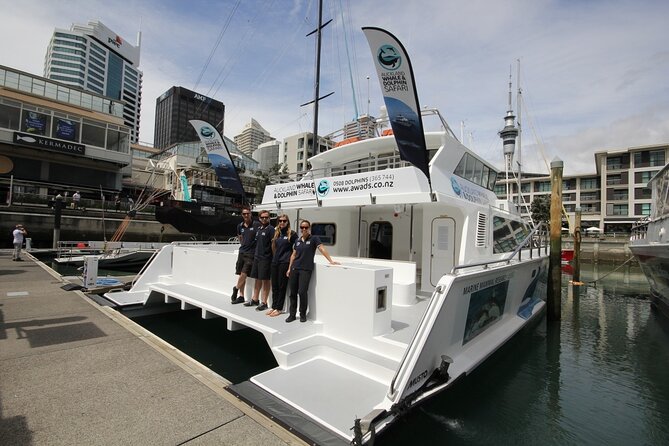
- A 65-foot catamaran: The custom-built boat has indoor and outdoor viewing areas, toilets, and snacks for sale.
- Marine scientists onboard: Commentary covers local wildlife, conservation work, islands, and current research.
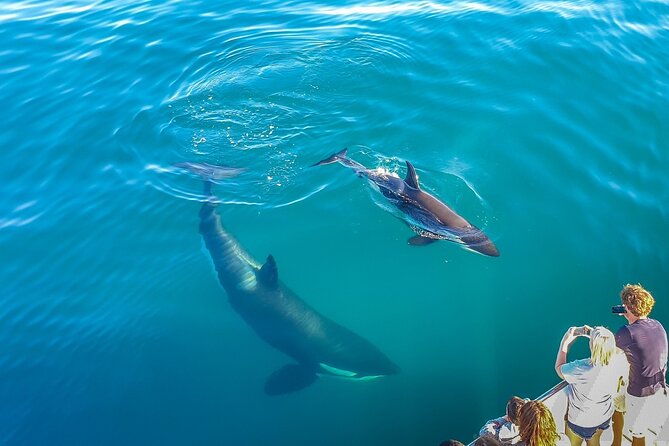
- Dolphins are the most reliable highlight: Bottlenose dolphins are often seen close to the boat, while Bryde’s whales and other species are less predictable.
- Weather matters: Bring warm layers, waterproof clothing, sunscreen, sunglasses, and a hat with a chin strap.
- A no-sighting safety net: If you see no marine mammals, you can return on another day without paying again.
Leaving Viaduct Harbour for the Hauraki Gulf
Your meeting point is on Eastern Viaduct, near the New Zealand Maritime Museum. This is a practical starting place if you are staying in central Auckland, and you will find public transport nearby. There is no hotel pickup, so you need to make your own way to the harbor.
Check in no later than 15 minutes before departure. The boat can carry as many as 99 people, and late arrivals risk losing their allocated seats. That warning matters because this is not a small private charter where the captain can casually wait for you.
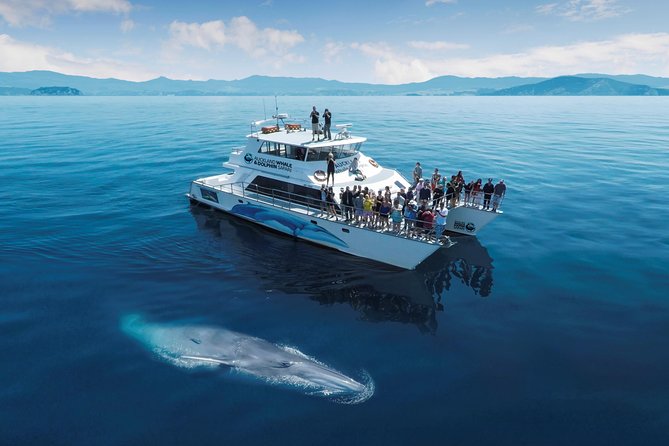
The boat is a 65-foot, or 20-meter, catamaran. It is designed for viewing rather than luxury. You can move between inside and outside areas, and the vessel is described as stable, though rough weather can still make the ride uncomfortable. One passenger called the water choppy, while another praised the steady boat. Both experiences can be true on the same route in different conditions.
If you are prone to seasickness, think carefully about the four-and-a-half-hour length. The trip requires good weather, but that does not mean perfectly calm water. A windy day can make the front deck exciting for some people and unpleasant for others.
More Whale and Dolphin Watching Tours in New Zealand:
- Auckland: Whale and Dolphin Watching Half-Day Eco Cruise
★ 4.5 · 1,072 reviews - Auckland: Tikapa Moana Whales, Dolphins and Islands Cruise
★ 3.9 · 292 reviews - Auckland: Tikapa Moana Dolphin, Whale and Island Cruise
★ 4.0 · 17 reviews
Viaduct Harbour, the bridge, and Waitemata Harbour
The first section gives you a different view of Auckland. From Viaduct Harbour, the boat heads across Waitemata Harbour and under or near the Auckland Harbour Bridge, depending on the route and wildlife conditions.
This part is not the main reason to book the trip, but it helps you see how quickly Auckland gives way to open water. The harbor views are especially useful at the beginning, before the crew begins focusing on marine life. Keep your camera ready, but do not spend the whole time looking through it. The city, bridge, and islands make a better memory when you occasionally lower the screen.
Commentary begins as the boat moves out. The guides explain the Hauraki Gulf Marine Park and the work being done with local marine scientists. The educational side is not filler. You learn what the crew is looking for, how different whales behave, and why the boat keeps a respectful distance from animals.
Audio quality can vary. One passenger found some commentary hard to hear from the back of the boat, especially when staff spoke quietly into the microphone. If the science matters to you, sit where you can hear clearly, and move closer to the main commentary area when possible.
Rangitoto and the island views
Rangitoto Island is one of the most recognizable sights in Auckland’s gulf. Its volcanic form is easy to spot from the water, and the cruise gives you a broad view that you will not get from the city waterfront.
You do not normally stop here for a walk. Think of Rangitoto as part of the moving scenery and as a useful marker as the boat leaves the inner harbor behind. The island views are a strong part of the trip even on a day when the animals are shy.
The Hauraki Gulf contains numerous islands and five marine preserves. The area is considered one of the world’s biologically diverse marine parks, with about 23 marine species recorded in the region. That does not mean you will see 23 species in one outing. It does mean the setting has real ecological value, and the crew can explain more than just the names of passing islands.
Searching for dolphins and whales
Once the boat reaches the Hauraki Gulf, the day becomes less predictable. The crew watches for movement, birds, splashes, and signs of feeding. You may see bottlenose dolphins, Bryde’s whales, seals, blue penguins, or several kinds of seabirds.
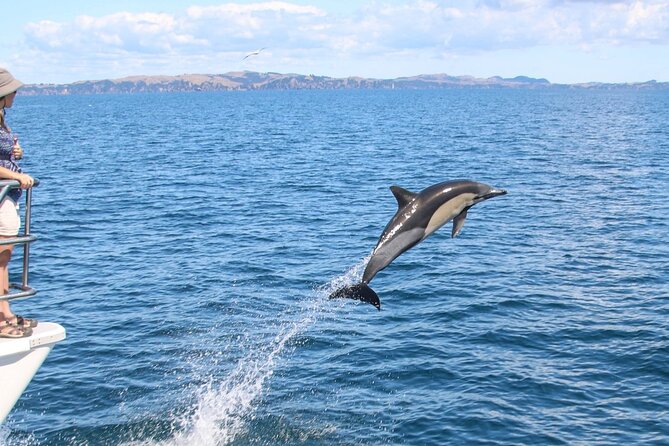
Dolphins often provide the closest encounters. They may travel in pods beside the boat or play near the bow. Several outings have included dozens of dolphins, with one pod remaining in view for close to 30 minutes. Seeing adults with babies can be especially memorable.
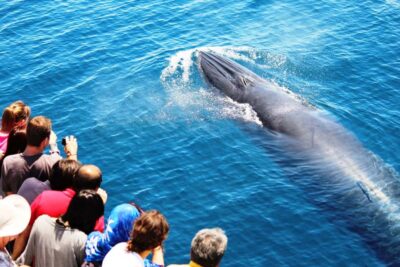
Whales are a different matter. Bryde’s whales are native to New Zealand waters and can appear in the gulf, but they are not guaranteed. Some trips produce two whale sightings, while others produce only a few dolphins or no marine mammals at all. The crew may alter the route and spend extra time searching, but it cannot control the movements of wild animals.
The company’s no-sighting policy helps soften the risk. If you see no marine mammals, you can take the trip again on another day at no extra charge. That is a useful promise for Auckland residents or people with flexible schedules. It has less practical value if you are on a short international visit.
More Dolphin Watching Cruises in New Zealand:
- Akaroa Dolphins ~ Harbour Nature Cruise
★ 5.0 · 2,143 reviews - Paihia/Russell: Hole in the Rock, Dolphins & Island Cruise
★ 4.6 · 821 reviews - Akaroa: Dolphin Nature Cruise
★ 4.9 · 440 reviews - Akaroa Harbour 2-Hour Dolphin Nature Cruise
★ 4.7 · 235 reviews
Motuihe and Motutapu from the water
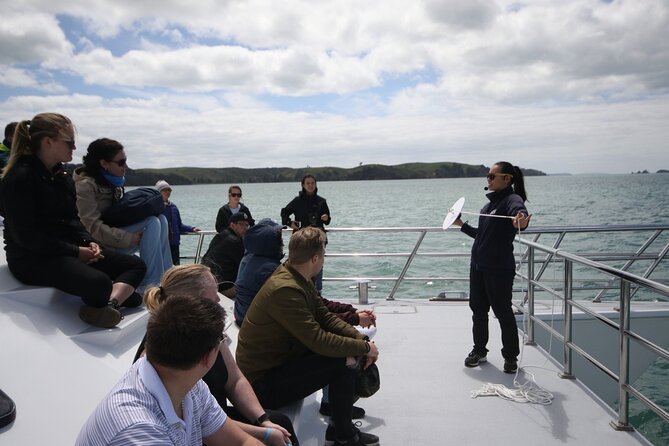
Motuihe and Motutapu islands are part of the gulf scenery as the search continues. From the boat, you get the broad coastal view rather than a shore excursion. These islands add variety to the route and help you understand how much open water lies close to Auckland.
This is also where you may appreciate the catamaran’s outdoor viewing space. Wildlife can appear on either side, so it helps to move around when the crew allows it. During busy departures, though, finding a fresh viewing position can be difficult. At full capacity, the boat may feel crowded, especially when rain pushes people under cover.
The crew asks people to rotate during animal sightings so everyone gets a chance to look. That is fair, but you should expect some jostling when a dolphin pod surfaces close to the boat. Arriving early and choosing a good seat gives you more options later.
Tiritiri Matangi and the seabirds
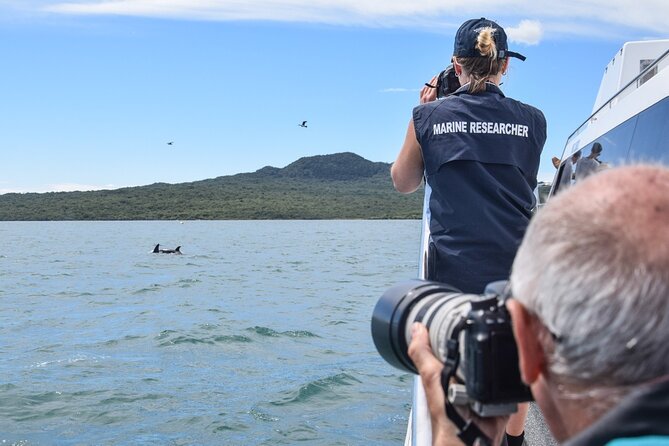
Tiritiri Matangi Island appears as one of the route’s notable points. The trip does not present itself as a landing visit, so you should treat it as a scenic and ecological reference rather than a separate island tour.
The birdlife can be excellent. Bring binoculars if you have them, though the crew may help point out birds from the boat. Possible sightings include Australasian gannets, petrels, shearwaters, and white-fronted terns. Blue penguins may also appear, but they are small and easy to miss.
Birds provide welcome action when whales are absent. You might see gannets plunge into the water or seabirds riding the air above the gulf. I like this part of the experience because it rewards patience. The cruise is not only a search for a dramatic whale tail. It is a moving lesson in the whole marine system.
Marine Mammal Conservation and respectful viewing
Every ticket contributes directly to marine mammal conservation. The onboard research scientists also share information about the studies and partnerships connected with the cruise.
That connection gives your fare more value. You are paying for a boat ride, crew, fuel, and a long search across the gulf, but you are also supporting work that tracks and protects marine life. The crew takes care not to crowd animals or force an encounter. If dolphins choose to approach, the boat can provide a close view. If they move away, the boat gives them space.
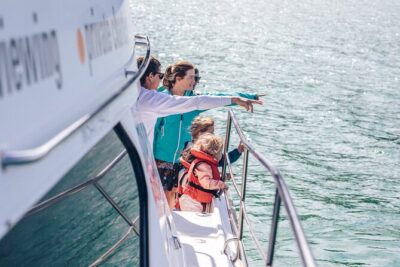
This is important for families. Children may focus on the excitement of spotting a fin, while the crew explains why the animals should not be chased or surrounded. The result is more responsible than a simple race to the nearest pod.
The scientific commentary also improves the trip when sightings are brief. A whale that surfaces once is still worth seeing, but you will understand more if you know what the crew is tracking and why the animal may disappear quickly.
Comfort, crowds, and what to bring
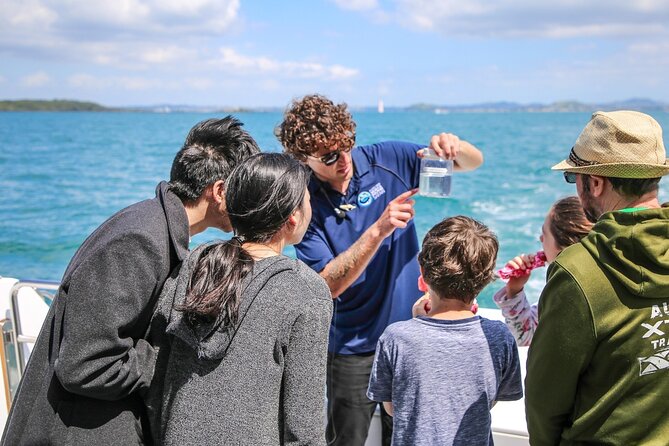
The boat has indoor and outdoor seating, toilets, and a shop with snacks. Food and drinks are not included, so bring money if you want to buy something onboard. The vessel offers enough room to view from different areas, but a full departure can feel tight.
The front deck is popular when dolphins approach, yet it can be windy and wet while the boat is underway. The rear outdoor area may be more comfortable for a longer stretch, but commentary can be harder to hear there. I would choose warm layers first, then move around once you understand the conditions.
Pack:
- Warm layers and weatherproof clothing
- Flat-soled shoes
- Sunscreen and sunglasses
- A sun hat with a chin strap
- Camera and binoculars
- Water or money for onboard drinks
Apply sunscreen even on a cool day. The wind can make the sun feel weak while you remain exposed for several hours. Flat-soled shoes are a sensible safety choice on a moving boat.
Most people can take part, and service animals are allowed. The tour is not a short hop. You need to be comfortable spending about 4.5 hours on the water, with the possibility of rough conditions.
Is $135.91 good value?
At $135.91 per person, this is not a cheap harbor cruise. The value depends on what you want from the day.
If you see dolphins, whales, penguins, seals, and seabirds, the price feels reasonable for a long cruise with specialist commentary. The conservation contribution adds a useful purpose, and the route includes far more than a quick trip around Auckland’s waterfront.
If you see only a few dolphins, the value becomes more personal. You are paying for the chance to find wildlife, not a guaranteed show. The crew can work hard, stay out longer, and search wider, but no operator can command a whale to surface.
I would compare this with other half-day activities in Auckland. You are giving up most of an afternoon, so book it when marine life is a main reason for your visit. If you simply want harbor scenery, a shorter and cheaper harbor cruise may suit you better.
The 91 percent recommendation rate and 4.6 rating from 1,792 ratings suggest that most people find the experience worthwhile, but the less positive accounts point to the same limits: unpredictable wildlife, choppy seas, crowded viewing areas, and occasional difficulty hearing commentary.
Who should book this safari?
I would recommend it to families, photographers, birdwatchers, conservation-minded visitors, and anyone who enjoys being on the water even when nature refuses to perform. It is also a good choice if you want to understand Auckland through its gulf rather than only through museums and city streets.
You should think twice if you need a guaranteed whale sighting, dislike open water, or have only one free hour in Auckland. The four-and-a-half-hour commitment is real, and a no-sighting voucher may not help if you leave New Zealand soon.
Book early if your schedule is tight, then check the forecast and arrive well before the 15-minute check-in deadline. If conditions are poor and the operator cancels, you will be offered another date or a full refund. Cancellations made at least 24 hours ahead also qualify for a full refund, while later changes generally do not.
Final verdict: book it for the gulf, not a guarantee
I think this is a strong Auckland day out, provided you accept the basic rule of wildlife watching: you are buying a chance, not a result. The best features are the passionate crew, the marine research connection, the island scenery, and the possibility of seeing dolphins close to the boat.
Book it if you would still enjoy a beautiful, educational cruise without a whale. Skip it if a whale sighting is the one thing that will make your Auckland visit successful. For most people who like the sea and care about how wild animals are treated, the conservation focus and free return option make the risk easier to accept.
FAQ
Where does the Auckland Dolphin and Whale Watching Eco-Safari depart?
It departs from Eastern Viaduct in Auckland Central, beside the New Zealand Maritime Museum at Viaduct Harbour.
How long is the cruise?
The experience lasts approximately 4 hours and 30 minutes.
What animals might I see?
Possible sightings include up to six types of whales, bottlenose dolphins, seals, blue penguins, Australasian gannets, petrels, shearwaters, and white-fronted terns.
Are whale and dolphin sightings guaranteed?
No. Wildlife sightings cannot be guaranteed because the animals are wild. Dolphins and whales are often found in these waters, but some trips see few or no marine mammals.
What happens if no marine mammals are seen?
You can take the cruise again on another day at no extra charge if no marine mammals are seen during your trip.
Is food included?
No. Food and drinks are not included, though snacks and drinks are available to purchase onboard.
What should I wear?
Wear warm layers and weatherproof clothing. Flat-soled shoes are advised because conditions can change and the boat may be moving in rough water.
How early should I arrive?
Check in at least 15 minutes before the scheduled departure. Late arrivals risk losing their allocated seats.
Can I cancel for a refund?
You can cancel at least 24 hours before the start time for a full refund. If the operator cancels because of poor weather or insufficient bookings, you will be offered another date or a full refund.
More Safaris in New Zealand
- Los Cristianos Respectful No-Chase Whale and Dolphin Safari
★ 4.6 · 12,782 reviews - Lisbon: Dolphin Watching with a Marine Biologist – Ocean Safari
★ 5.0 · 812 reviews - Wild Dolphin Watching and Snorkel Safari Off West Coast of Oahu
★ 5.0 · 795 reviews - Fazana: dolphin safari and sightseeing in Brijuni at sunset
★ 4.5 · 763 reviews
Just added around New Zealand
- Dolphin & Wildlife Encounters★ 5.0 · 6 reviews
- Swim With Wild Dolphins in Tauranga★ 4.5 · 189 reviews
- Half Day Dolphin & Wildlife Cruise – Tauranga★ 4.5 · 103 reviews
- Captain Cook and Dolphin Cruise★ 4.5 · 26 reviews
- Motuara Wildlife Sanctuary Tour and Dolphin Cruise from Picton★ 4.5 · 180 reviews
- Bird Watching and Dolphin Eco-Tour to Blumine Island★ 5.0 · 55 reviews
- The Original Full day Bay of Islands Cruise with Dolphins★ 5.0 · 13 reviews
- Hole in the Rock Scenic Cruise including Dolphins and Island stop★ 4.5 · 225 reviews
New Zealand Dolphin Watching Tours, compared.
Auckland: Whale and Dolphin Watching Half-Day Eco Cruise
Read our review →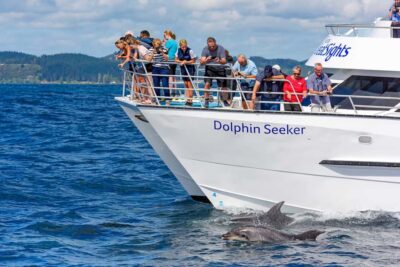
Paihia/Russell: Hole in the Rock, Dolphins & Island Cruise
Read our review →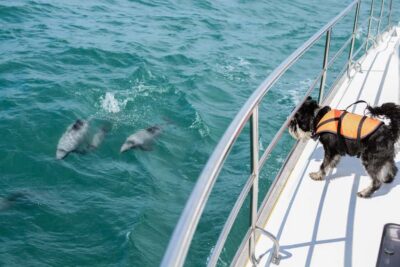
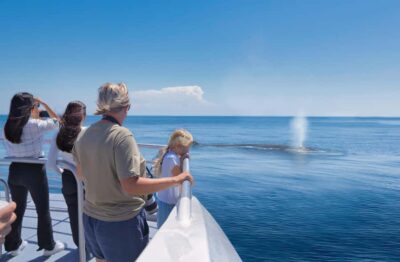
Auckland: Tikapa Moana Whales, Dolphins and Islands Cruise
Read our review →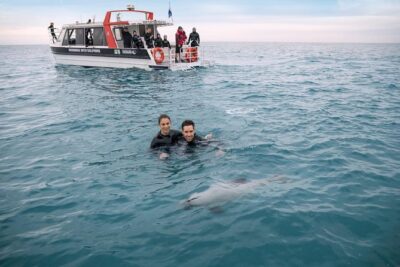
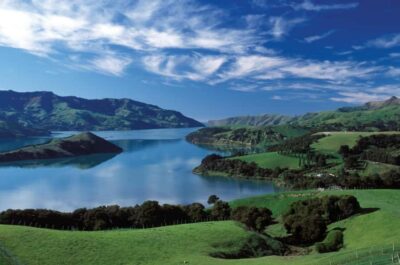
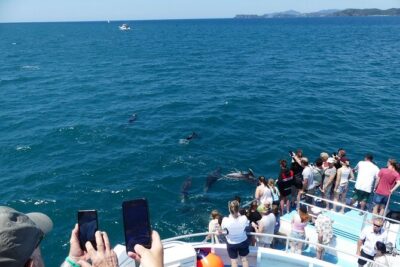
Hole in the Rock Scenic Cruise including Dolphins and Island stop
Read our review →Browse the lists this tour appears in