Review · FARO
Small Group Dolphin and Wildlife Watching Tour in Faro
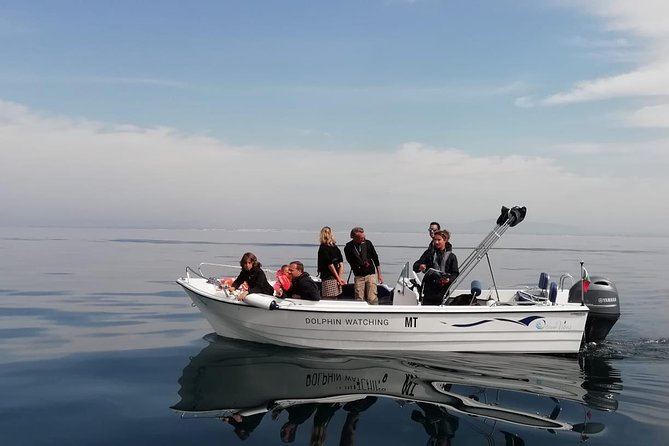
Dolphins are only part of the story. This small-group Faro boat tour carries up to nine people from the Ginásio Clube Naval through Ria Formosa Natural Park and out toward the Atlantic, with marine biologists explaining the wildlife and collecting research data. I like the careful approach to dolphins and the chance to see far more than one headline species.
I also like the early departure, when the sea is cooler and wildlife can be active, plus the personal feel of a boat guided by people such as Diogo, Pedro, Miguel, or Susanne. The main catch is the RIB boat seating. It can feel rough and tiring in large waves, especially if your back or neck is sensitive.
Key points before you book
- Only nine people per boat: A small group gives you more room to hear the guides and ask questions.
- Marine biologists lead the trip: You get explanations about cetaceans, birds, turtles, fish, and conservation rather than a simple sightseeing ride.
- Wildlife comes first: The boat keeps a respectful distance and allows animals to choose how close they come.
- The ride can be lively: RIB boats use jockey-style seats, and rough Atlantic conditions can make the trip physically demanding.
- Morning departures have practical advantages: The 8:30 a.m. outing avoids the strongest heat and can offer active wildlife conditions.
- Sightings are never guaranteed: Dolphins are common possibilities, but whales, orcas, sharks, and turtles depend on the day and season.
Leaving Faro through Ria Formosa
The meeting point is Ginásio Clube Naval at Estrada do Passeio Ribeirinho 58, close to Faro’s waterfront. The activity begins and ends here, which keeps the morning simple. You do not need to arrange a separate transfer to a distant marina, and the location is near public transportation.
At the start, the boat moves through the Ria Formosa Natural Park. This gives you a pleasant introduction before the open-water portion begins. You see Faro from the water and get a sense of the sheltered channels and coastal setting that make the Algarve more than just a beach destination.
The trip lasts about two and a half hours. That matters because the boat needs time to leave the protected water, reach areas where cetaceans are found, spend time watching them, and return to Faro. It is long enough to feel like a real wildlife outing without taking over your entire day.
I would choose the earliest available departure if you can. The 8:30 a.m. trip has been praised for its cooler temperatures, and you will have the rest of the day free for Faro, the islands, or the Algarve coast. Bring a sweatshirt or light jacket. Once the RIB gathers speed, the air over the Atlantic feels much cooler than it does on shore.
More Dolphin and Wildlife Eco Tours in Portugal
- Faro: Dolphin and Wildlife Watching in the Atlantic Ocean
★ 4.8 · 637 reviews - Algarve Dolphin Watching & Marine Life Eco Tour
★ 5.0 · 16 reviews - Dolphin watching and wildlife from Faro
★ 5.0 · 6 reviews
The RIB boat and what the ride feels like
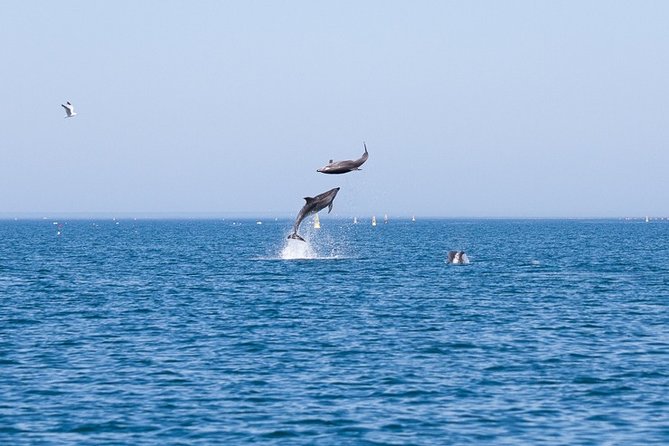
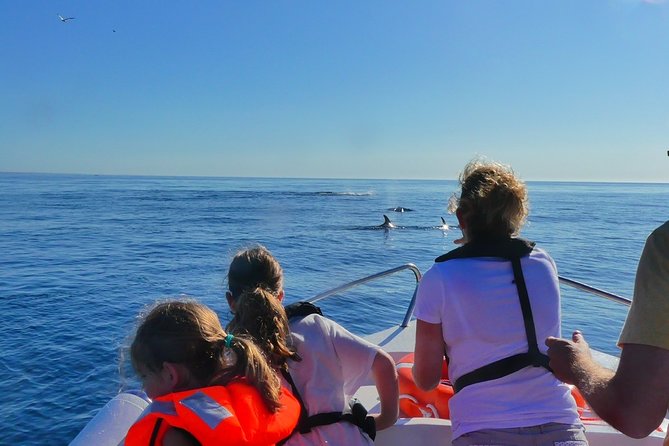
This is not a large sightseeing vessel with rows of padded seats and a covered cabin. It is a rigid inflatable boat, commonly called a RIB, designed for speed and maneuverability. The seating is in a jockey style, with passengers positioned astride raised seats rather than sitting on a flat bench.
That arrangement gives the skipper good control and helps the boat move quickly toward sightings. It also explains the mixed reaction to the ride. In calm conditions, many people find it comfortable enough and enjoy the speed. In rough water, you feel every rise and drop more clearly.
I would think carefully about this if you dislike small boats, get seasick, or have back and neck problems. One family described the ride as high-wave adrenaline, while another person found the seating painful after a rough return. Those are not complaints to ignore. The Atlantic can change quickly, and a pleasant morning can turn into a bumpy ride back.
The crew does appear to take safety seriously. A skipper has reacted quickly to unexpected waves, and the boat has slowed down when sea conditions worsened. On one outing, the return took longer because the crew reduced speed rather than crashing through the waves. That is the sensible choice, even if it means the trip lasts longer than expected.
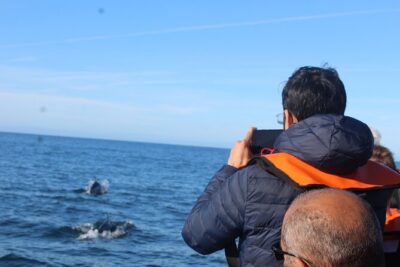
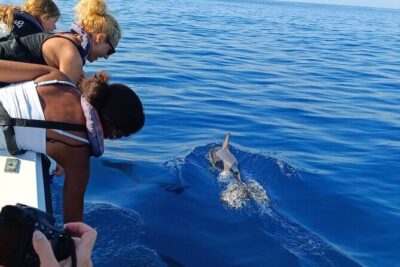
The boat has advantages for wildlife watching. When it slows, you can stretch and adjust your position. Its low profile puts you close to the water, which can make dolphins feel remarkably near when they swim alongside or pass beneath the boat. The tradeoff is that you have less protection from wind, spray, and motion.
Searching for dolphins in the Atlantic
Once the boat reaches the Atlantic, the marine biologists begin looking for signs of life. They watch the water, scan for fins, and identify birds that can point toward productive feeding areas. The search is part of the experience, not wasted time. You are learning how wildlife guides read the sea.
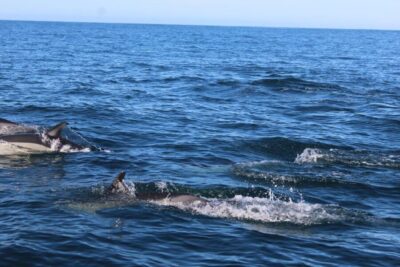
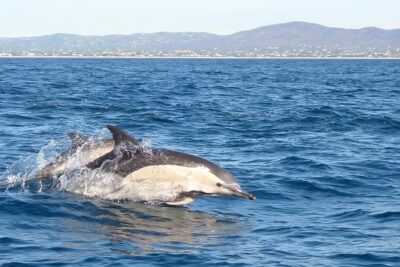
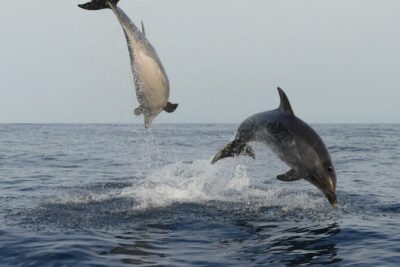
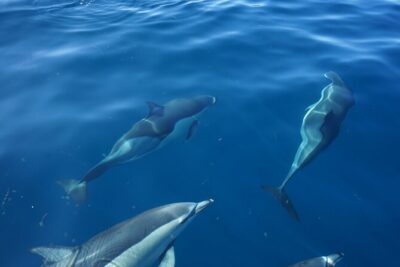
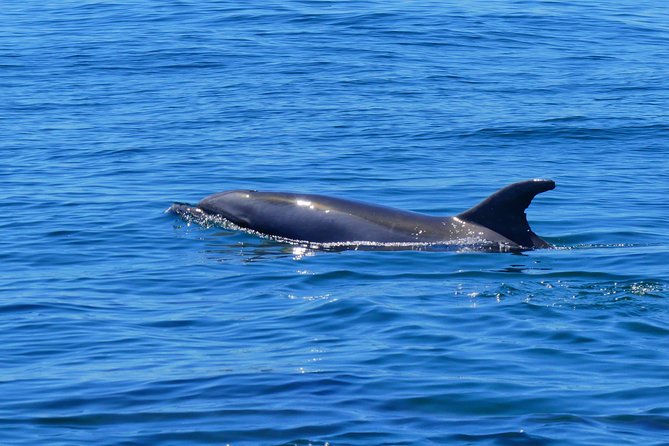
The most likely cetaceans are common dolphins and bottlenose dolphins. Striped dolphins and porpoises have also been seen on outings. On a fortunate morning, you might encounter several pods, with some dolphins moving beside the boat and others passing under it.
The scale of a sighting can vary sharply. You might see a small group in the distance, or you could find a large gathering with hundreds of animals. One especially strong outing included roughly 300 common dolphins, including mothers and young. That kind of encounter cannot be promised, but it shows why the crew spends time searching rather than rushing back after one brief glimpse.
The crew follows the wildlife instead of forcing contact. After finding dolphins, the boat keeps a respectful distance and allows the animals to decide if they want to approach. You may not get the closest possible photograph, but this is the right standard for a responsible wildlife trip.
The guides also limit the time spent with a group. One outing stayed with dolphins for about 30 minutes, following the rules before moving on. That balance protects the animals and keeps the search varied.
More than dolphins: whales, birds, and open-water life
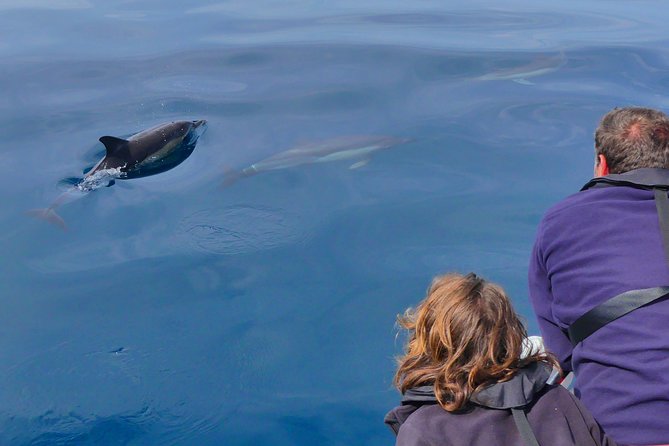
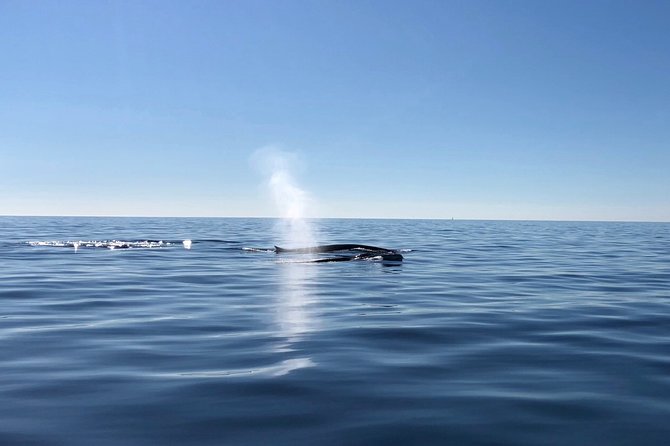
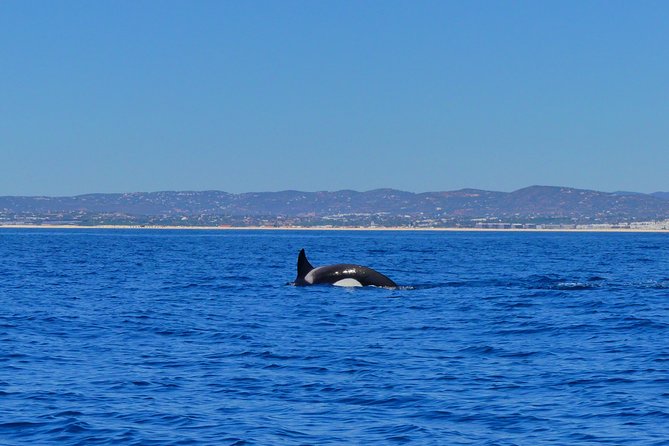
Dolphins are the main draw, but the Atlantic can offer a wider cast. Sightings have included fin whales, minke whales, bottlenose dolphins, common dolphins, turtles, ocean sunfish, and a Portuguese man-of-war. You may also see bluefin tuna, basking sharks, or other shark species.
Whales are less dependable than dolphins. The available information notes that spring is an important whale period, while tropical Bryde’s whales may also appear in spring, summer, and autumn. A trip can produce dolphins and no whales, so do not book with the idea that a whale is part of the package.
Birdwatching adds interest during the search. Possible species include northern gannets, shearwaters, storm petrels, and ospreys. The guides can explain what you are seeing and why certain birds spend time over open water.
Ocean sunfish are another memorable possibility. These large fish can appear near the surface, sometimes alongside other marine life. A turtle or sunfish may become the surprise highlight of a morning that began with hopes of seeing dolphins.
This variety gives the trip more value. Even if whales stay hidden, you are still out on a living marine ecosystem rather than riding directly to a single attraction. The experience rewards patience and attention.
More Dolphin and Wildlife Eco Tours in Faro:
- Akaroa Dolphins ~ Harbour Nature Cruise
★ 5.0 · 2,143 reviews - Auckland: Whale and Dolphin Watching Half-Day Eco Cruise
★ 4.5 · 1,072 reviews - Cocoa Beach Dolphin and Wildlife Tour
★ 5.0 · 1,052 reviews - Dolphin and Wildlife Adventure of St. Augustine
★ 5.0 · 864 reviews
Marine biologists who care about the animals
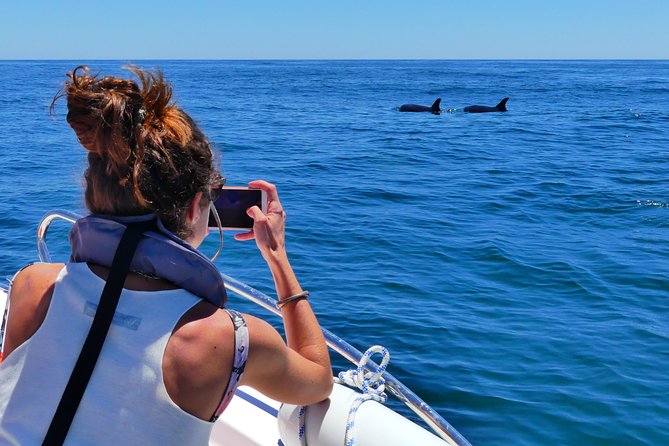
The strongest feature here is the crew’s scientific role. The people on board do not simply point at fins and repeat a few facts. They explain the species, answer questions, and collect information for research after a cetacean sighting.
Names mentioned by visitors include Diogo, Pedro, Miguel, and Susanne, although the crew can vary. Diogo and Pedro have been praised for explaining the animals clearly, while Miguel has been singled out for passion and strong field knowledge. The exact combination on your boat will depend on the departure.
I like the way the guides seem to share the excitement without turning the animals into a performance. They can be just as thrilled as you are when a whale surfaces, yet they still pay attention to distance and behavior. That makes the trip feel more thoughtful than a fast chase around the sea.
The research element also matters. Your ticket helps support an outing that records information rather than treating wildlife watching as pure entertainment. You will not be joining a formal scientific expedition, but the data collection gives the experience a useful purpose.
The guides have also been praised for speaking several languages among the people on board. The advertised language is English, so you should expect English guidance, but crew members may be able to help in other languages on some departures.
Small group value at $66.51
At about $66.51 per person, this is not the cheapest way to get onto the water in the Algarve. I think the price makes more sense when you consider the nine-person limit, the marine biologists, the research work, and the two and a half hours spent at sea.
A larger, cheaper boat may offer a more stable ride and more shelter. It may also carry many more people, making it harder to hear explanations or move your attention quickly when an animal appears. Here, the small group helps you see the water, ask questions, and receive a little more care from the crew.
The value depends heavily on your priorities. If you want guaranteed close-up animal contact, no wildlife tour can deliver that. If you want a fast sightseeing cruise with comfortable seats, this may not be your best choice. If you want a respectful search led by marine biologists, the price is easier to justify.
A strong dolphin sighting can make the cost feel modest, especially when several pods appear or a whale joins the scene. But you should pay for the process, not a promised result. Weather, sea conditions, animal movement, and luck all shape the outing.
Who will enjoy this Faro wildlife trip
I would recommend it to adults, older children, and families who are happy to accept nature on its own terms. Children as young as three and six have enjoyed the experience, and the excitement of spotting dolphins can be powerful for a family.
It also suits anyone who wants an ethical wildlife activity. The crew keeps its distance, avoids forcing contact, and shares information about animal behavior. That is a better choice than a trip built around chasing or feeding wildlife.
You should pause before booking if you are uncomfortable in small boats or prone to motion sickness. The sea may be smooth, but the crew cannot control sudden changes. The jockey seats are part of the boat design, not a temporary inconvenience.
Wear practical clothes and bring a jacket or sweatshirt. Hold onto your phone and camera carefully, since the boat moves fast and may bounce. Keep your attention on the sea too. One person who filmed everything later wished they had spent more time simply watching.
Service animals are allowed, most people can participate, and the activity is near public transportation. Confirmation is provided at booking. You can cancel for a full refund up to 24 hours before departure, but last-minute changes are not accepted. Poor weather or failure to reach the minimum group size can lead to a new date or a full refund.
Should you book Ocean Vibes Algarve?
I would book this tour if you want small-scale, science-led wildlife watching and you accept that the ocean makes the rules. The best reasons are the nine-person limit, the marine biologists, the respectful viewing style, and the chance to see dolphins, birds, sunfish, turtles, or whales in the wild.
I would skip it if you need a sheltered boat, gentle seating, or a guaranteed whale sighting. For everyone else, especially families and visitors who care about animal welfare, this is a strong use of a morning in Faro. Choose an early departure, dress for wind, and judge the trip by the quality of the search and the care shown to the animals, not only by the number of fins you photograph.
FAQ
Where does the dolphin tour start?
It starts at Ginásio Clube Naval, Estrada do Passeio Ribeirinho 58, 8000-541 Faro, Portugal.
Where does the activity finish?
The boat returns to the same meeting point at Ginásio Clube Naval.
How long does the tour last?
The planned duration is approximately two hours and 30 minutes. The return can take longer if the crew slows down because of difficult sea conditions.
How many people can join the boat?
The maximum group size is nine people.
What animals might I see?
Possible sightings include bottlenose dolphins, common dolphins, striped dolphins, porpoises, whales, orcas, northern gannets, shearwaters, storm petrels, turtles, ocean sunfish, bluefin tuna, sharks, and other marine life.
Is seeing dolphins guaranteed?
No. The crew searches for dolphins and other wildlife, but sightings depend on weather, sea conditions, animal movement, and luck.
Is the boat suitable for people who dislike rough seas?
The boat is a small RIB with jockey-style seating. Rough conditions can make the ride uncomfortable, particularly for people with back or neck problems.
What happens if the tour is canceled because of weather?
You will be offered another date or a full refund if poor weather causes cancellation. A full refund is also available if you cancel at least 24 hours before the start time.
More Small-Group Dolphin Trips in Faro
- Small Group 2 Hour Dolphin Cruise with Snorkeling to Shell Key
★ 5.0 · 1,523 reviews - Lisbon: Dolphin Watching with Marine Biologist – Small Group
★ 4.9 · 867 reviews - Small-Group Snorkel at Kealakekua Bay in Captain Cook, Big Island
★ 5.0 · 396 reviews - Small Group Dolphin Kayak Eco-Tour
★ 5.0 · 351 reviews
Just added around Faro
- Sunset Dolphin Watching with Marine Biologists★ 5.0 · 25 reviews
- Observing Dolphins in Faro★ 5.0 · 21 reviews
- Dolphin Watching from Fuzeta★ 4.5 · 31 reviews
- Dolphin watching and wildlife from Faro★ 5.0 · 6 reviews
- FARO Fantastic Dolphin Observation Tour and Marine Life★ 5.0 · 8 reviews
- Dolphin Watching from Faro★ 4.5 · 22 reviews
- Algarve Dolphin Watching & Marine Life Eco Tour★ 5.0 · 16 reviews
- From Faro: Dolphin Watching & 2 Islands Tour★ 4.4 · 73 reviews
Faro Dolphin Watching Tours, compared.
Dolphin and Wildlife Watching in the Atlantic Ocean
Read our review →