
Review · WHALE AND
Whale, Dolphin & Penguin Island Cruise
Algoa Bay rewards patience. This four-hour cruise from Port Elizabeth, now commonly called Gqeberha, gives you a calm way to look for whales, dolphins, African penguins, seals, and seabirds without packing a large boat with people. I like the small maximum group of 20 and the slower pace, which leave room for questions, better viewing, and a more personal connection with the crew.
I also like the strong conservation focus. The guides and skippers explain animal behavior and the pressures facing the bay, while a tree-planting campaign helps balance the cruise’s carbon footprint. The main caution is simple: wildlife is wild. You could see dolphins and penguins but miss whales, or encounter rougher water and rain even on a well-run outing.
Key points to know
- Humpback whale season runs roughly June to early December, with return journeys and calves more likely from October.
- Indo-Pacific bottlenose dolphins can appear all year, often close to the boat and riding the bow wave.
- St. Croix Island is the penguin stop, though numbers have fallen sharply and sightings are never guaranteed.
- The catamaran carries no more than 20 people, a useful advantage for photography and questions.
- The cruise starts at 8:00 am and lasts about four hours, returning to the Nelson Mandela Bay Yacht Club.
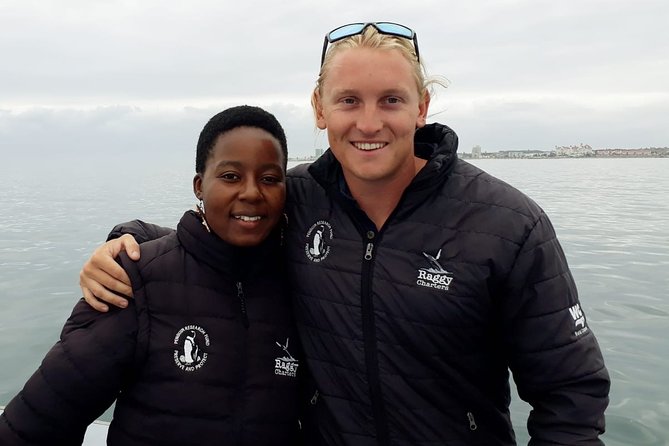
- Raggy Charters uses a conservation-minded crew, with tree planting to help offset the trip’s carbon footprint.
Setting Out From Port Elizabeth Harbour at 8:00 am
You meet the crew at the Nelson Mandela Bay Yacht Club, at Dom Pedro Jetty in Port Elizabeth Harbour. The cruise begins with a short briefing before you board a twin-engine catamaran and head into Algoa Bay.
That early start matters. Morning light can be good for photographs, and the schedule leaves much of your day free for other sights around Gqeberha. Since the cruise runs only once a day, you need to plan around 8:00 am rather than expect a choice of departure times.
The catamaran is small enough to feel more like a wildlife outing than a mass boat trip. With a maximum of 20 people, you should have a fair chance of finding a useful viewing position. The crew can also spend more time answering questions than they could on a crowded vessel.
The boat has twin engines, an important practical detail when you are several miles from shore. Safety receives frequent praise, and life jackets are available for all ages. The crew also handles choppy conditions carefully, though you should still use your own judgment about fitness and seasickness.
More Whale and Dolphin Watching Tours in the world:
- Tenerife: Eco-Yacht Whale and Dolphin Watching and Swimming
★ 4.7 · 15,619 reviews - Los Cristianos Respectful No-Chase Whale and Dolphin Safari
★ 4.6 · 12,782 reviews - From Funchal: Ecological Catamaran Dolphin Whale Watching
★ 4.5 · 8,204 reviews
The Whale Calendar Changes the Whole Experience
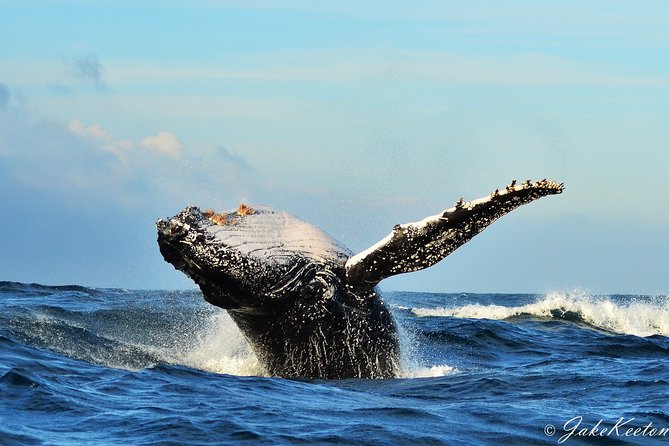
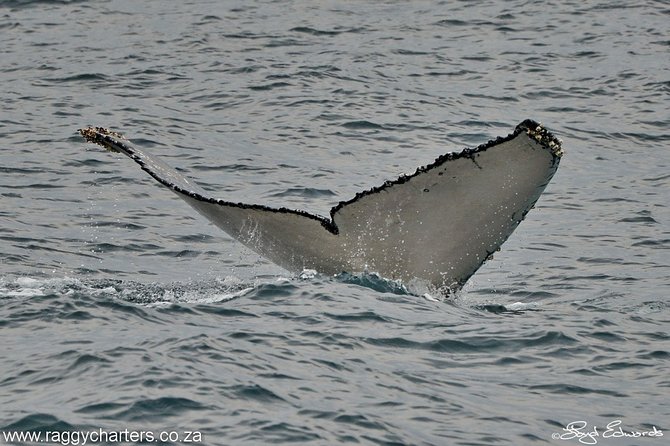
Whales are a major reason to book this cruise, but your timing matters more than any promise on a booking page. Humpback whales usually pass through Algoa Bay from June to early December as they move along the eastern coast of Africa toward breeding grounds.
From October, some begin the return journey. Females may travel with calves, giving you the chance to see a more memorable family group if conditions and luck line up. Southern right whales are usually seen close to shore from July through September.
Other possible sightings include Bryde’s whales and minke whales. The cruise team searches with care, but no responsible operator can guarantee a whale encounter. If whales are your main goal, choose a season when the species you want is more likely to be present, then accept that nature still controls the schedule.
This is also a good reason to value the slow pace. A boat that races from one point to another may cover more water, but a measured approach gives the crew time to watch for blows, fins, and changes in movement. It also creates a calmer viewing experience when a whale appears.
Dolphins Are the Most Reliable Stars
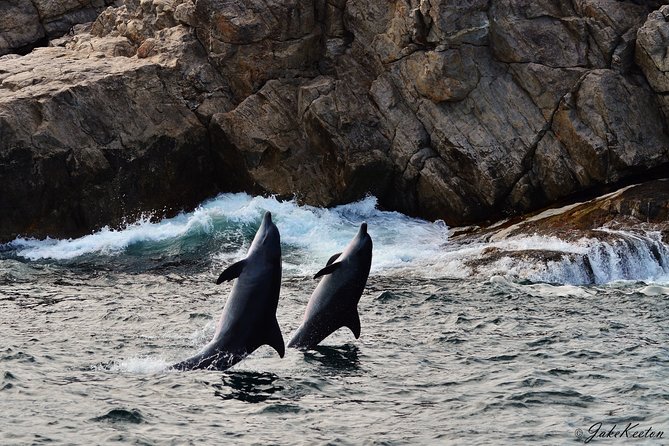
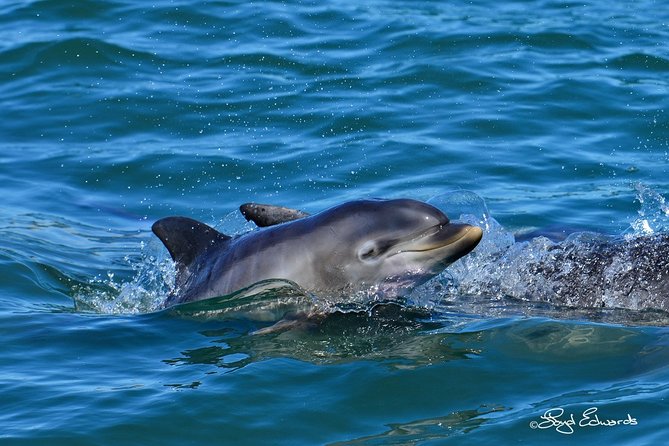
Dolphins are the safest bet on this outing. Indo-Pacific bottlenose dolphins live in the bay year-round and often gather in groups from 10 to 400. They favor shallow water near beaches and around St. Croix Island, and they may come close to the catamaran to ride the bow wave.
That behavior can make for excellent photographs, but keep your camera ready. Dolphins can appear suddenly, vanish just as quickly, and move around the boat rather than pose in one convenient place.
Common dolphins offer a different spectacle. They may gather in groups of 1,000 to 2,000 farther out at sea, especially around the Bird Island area, where they follow large shoals of baitfish. Seeing a huge pod moving at speed is less intimate than watching bottlenose dolphins near the bow, but it can be the most dramatic sight of the morning.
Humpback dolphins also occur in Algoa Bay. The supplied information does not give a reliable sighting season or frequency, so treat them as a welcome possibility rather than a target species.
The crew’s role makes a difference here. Guides explain the differences between dolphin species and help you read behavior instead of simply pointing at an animal. That extra context turns a quick sighting into something you can understand.
St. Croix Island and the African Penguins
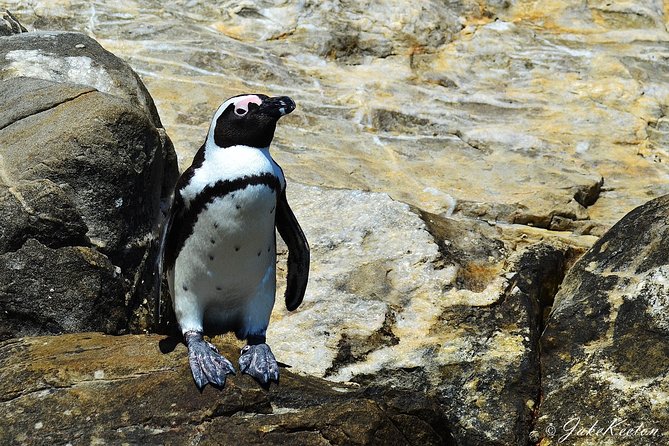
St. Croix Island is the cruise’s clearest purpose-built wildlife stop. The island is home to African penguins, and the boat allows you to see these endangered birds from the water.
The island is described as having once supported about 12,000 African penguins, making it Africa’s largest breeding colony. The population has fallen by 70 percent in a decade, with overfishing noted as one pressure. That statistic changes the mood of the stop. You are not simply looking at cute birds. You are seeing a colony that needs protection.
The breeding season reaches its peak from March through May. At that time, you might see chicks from the boat. Outside the peak period, penguins may still be present, but numbers and activity can vary.
Do not expect a walk on St. Croix Island. The experience is a boat-based viewing trip, so your encounter depends on how close the catamaran can safely approach and where the birds are gathered. You may see penguins on shore, in the water, or hunting for fish.
That uncertainty is part of the honest value of the trip. A zoo guarantees a penguin view. Algoa Bay gives you a chance to see wild animals in the place where they live, along with an explanation of why that place is under pressure.
More Dolphin Watching Cruises in the world:
- Funchal: Dolphin and Whale Watching Catamaran Cruise
★ 4.5 · 5,697 reviews - Costa Adeje: Whale & Dolphin Eco-Cruise with Snacks & Drinks
★ 4.6 · 5,096 reviews - Gran Canaria: Catamaran Dolphin Watch Cruise with Snorkeling
★ 4.4 · 4,761 reviews - Los Gigantes: Dolphin & Whale Watching Cruise with Swim Stop
★ 4.7 · 4,539 reviews
Seals, Seabirds, and the Wider Bay
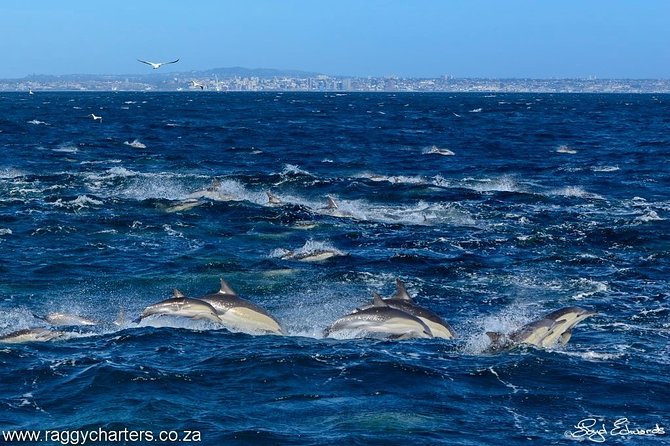
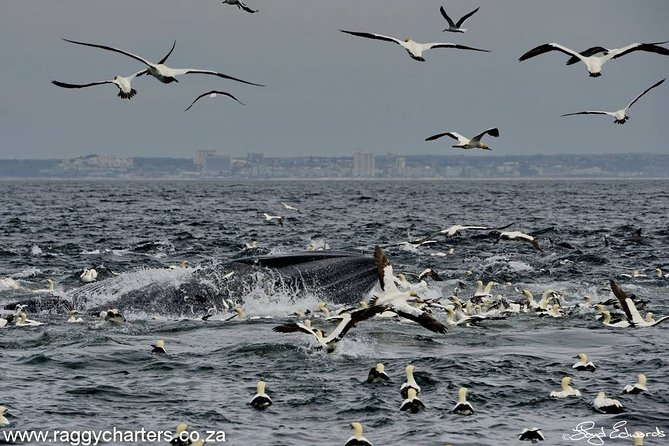
The wildlife list extends well beyond the three animals in the title. Cape fur seals may be seen resting or swimming, while several shark species can appear in the bay. Cape gannets add bright movement above the water.
The islands also support white-breasted cormorants, Cape cormorants, and endangered African black oystercatchers. Farther out, you might spot terns, petrels, skuas, shearwaters, and albatrosses.
These sightings require a different kind of attention. A whale usually draws every eye, but a guide can help you notice the smaller signs of a healthy marine system: birds working over baitfish, cormorants drying their wings, or seals tracking the same food source as dolphins.
St. Croix Island and the Bird Island group are part of Addo Elephant National Park. Rangers patrol the islands, adding a layer of protection to important breeding areas. The cruise therefore works as both a wildlife outing and a short lesson in how protected marine areas function.
The Crew Adds Real Value
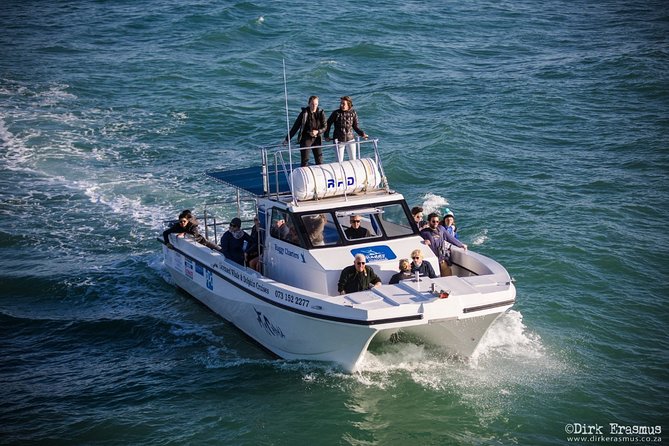
The strongest feature of this cruise is the crew. The team includes conservation-focused guides and skippers with detailed knowledge of the local ecosystem. Jake is named in one especially positive account, where his explanations helped turn the trip into an education in marine conservation.
That matters because animal sightings can be brief. A whale may surface only a few times. A dolphin pod may pass in seconds. Good interpretation helps you understand what you saw, even if your photograph is blurry.
The crew also receives praise for being friendly, attentive, and careful with safety. One outing took place in rainy weather and still produced dolphins and penguins, which says something about the team’s attitude when conditions are less than perfect. Another account describes choppy water handled with confidence.
You should still dress for changeable conditions and take the sea seriously. The information does not specify clothing, food, or drink arrangements, so confirm those details before departure rather than assume they are included. The stated duration is about four hours, and the boat returns to the starting point.
Is $185.19 a Fair Price?
At $185.19 per person, this is not a cheap harbor ride. The value depends on what you want from a marine excursion.
You are paying for about four hours on the water, a small group capped at 20, a twin-engine catamaran, an experienced crew, and access to several wildlife areas in one outing. The chance to see whales, dolphins, penguins, seals, and seabirds makes the price easier to justify for wildlife enthusiasts and photographers.
The group size is important. A lower-cost trip with a much larger crowd may save money but make it harder to hear the guide, move around, or get a clear view. Here, the slower pace and extra time for questions are part of the product.
There is also a conservation value, though it should not be treated as a reason to ignore the price. The tree-planting campaign is a positive effort to balance the cruise’s carbon footprint, and the crew’s conservation teaching gives the outing more substance than a simple animal-spotting trip.
If you are on a tight budget, compare the cost with other activities around Gqeberha before booking. If you are already arriving by cruise ship, check excursion pricing carefully. One person found that booking directly cost much less than taking the cruise line’s excursion, even though the same boats were used. The data does not give the exact saving, so the practical lesson is to compare rather than assume the ship package is best value.
Who Will Enjoy This Boat Trip Most?
I would choose this cruise if you want wildlife, small groups, and thoughtful guiding more than speed or luxury. It suits couples, families, photographers, bird lovers, and anyone curious about marine conservation.
Families can join because there is no age restriction and life jackets are available for all ages. Children should be comfortable on a moving boat and able to follow crew instructions. The outing also suits older adults who can board with assistance from family and crew.
You should think carefully before booking if you dislike open water, have concerns about your health or fitness, or need a fully step-free experience. People who can board with assistance are welcome, but the information does not promise specialized equipment or independent wheelchair access.
The trip also suits you if you accept imperfect wildlife conditions. Several outings produced memorable combinations, including dolphins, seals, penguins, whales, and even a hammerhead shark. None of that is guaranteed on your date.
Practical Details Before You Book
Confirmation arrives at the time of booking, and the activity is near public transportation. The meeting point is the Nelson Mandela Bay Yacht Club at Dom Pedro Jetty, Port Elizabeth Harbour, Gqeberha Central, postal code 6001.
The cruise begins at 8:00 am and ends back at the same place after about four hours. Because there is only one departure each day, arrive with enough time for the briefing and boarding.
The experience requires suitable weather. If poor conditions cancel it, you receive the choice of another date or a full refund. A minimum number of people is also required, and if that minimum is not reached, you are offered another date or experience, or a full refund.
Free cancellation applies up to 24 hours before the start time. Cancellations or changes inside that window are not refunded or accepted. The cut-off uses local time, so keep that in mind if you are booking from another country.
Should You Book the Algoa Bay Cruise?
I would book this if the chance to see wild marine animals matters more to you than a guaranteed checklist. The small boat, limited group size, patient pace, and strong crew reputation give it a clear advantage over a hurried sightseeing ride.
For the best odds, match your dates to the animals you most want to see. Choose June to early December for humpback whales, October onward for possible mothers with calves, July through September for southern right whales, and March through May if African penguin chicks are especially important to you.
Book with realistic expectations. You may see dolphins riding the bow wave, a large pod racing through the bay, penguins feeding, seals resting, and a whale surfacing nearby. You may also spend part of the morning searching. That uncertainty is not a flaw in the cruise. It is the nature of meeting wildlife on its own terms.
FAQ
Where does the cruise start and finish?
It starts and ends at the Nelson Mandela Bay Yacht Club, Dom Pedro Jetty, Port Elizabeth Harbour, Gqeberha Central, Gqeberha, 6001, South Africa.
What time does the cruise depart?
The cruise starts at 8:00 am. It lasts about four hours and returns to the meeting point.
How many people can join the boat?
The activity has a maximum of 20 participants.
Can I see whales all year round?
Humpback whales can be seen in Algoa Bay from June to early December. Southern right whales are usually seen close to shore from July through September. Sightings are not guaranteed.
Is there an age restriction?
No. There is no age restriction, and life jackets are available for all ages. Anyone who needs boarding assistance must be able to board with help from family and crew.
What happens if bad weather cancels the cruise?
You are offered a different date or a full refund if poor weather causes cancellation. The same choice applies if the minimum number of participants is not reached.
Just added around the world
- Bali : Dolphin Sunrise Experience Tour Private All Inclusive★ 4.5 · 6 reviews
- Dolphin Encounters, Ile aux Benitier & Crystal rock: Full-Day (Lunch & Transfer)★ 4.0 · 148 reviews
- Lovina Dolphin watching and swimming with Dolphin★ 5.0 · 3 reviews
- Terceira Island: Swimming with Wild Dolphins | Natural Habitat★ 5.0 · 17 reviews
- Catamaran Cruise to Ile Aux Bénitiers: Dolphin watch, Crystal Rock & Transfer★ 3.5 · 50 reviews
- Terceira Island: Whale & Dolphin Watching | Best Wildlife Tour★ 4.0 · 24 reviews
- Whales and Dolphins excursion on a Luxury Yacht in Canary Islands★ 5.0 · 93 reviews
- Whale & Dolphin Watching Boat Trip in Tenerife On a Sailing Boat (3 Hr)★ 3.5 · 10 reviews
Whale and Dolphin Watching Tours, compared.
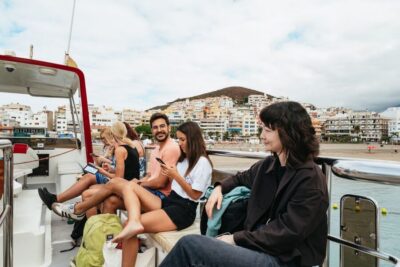
Eco-Yacht Whale and Dolphin Watching and Swimming
Read our review →
Los Cristianos Respectful No-Chase Whale and Dolphin Safari
Read our review →
Whale & Dolphin Eco-Cruise with Snacks & Drinks
Read our review →
Dolphin & Whale Watching Cruise with Swim Stop
Read our review →
Dolphin & Whale Watching Cruise, Drinks & Swim
Read our review →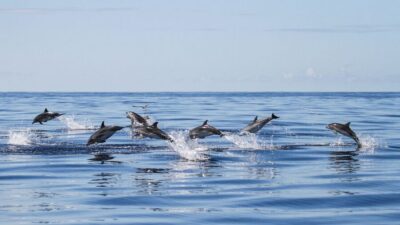
Browse the lists this tour appears in