
Review · AKAROA
Akaroa: Swimming with Wild Dolphins Experience
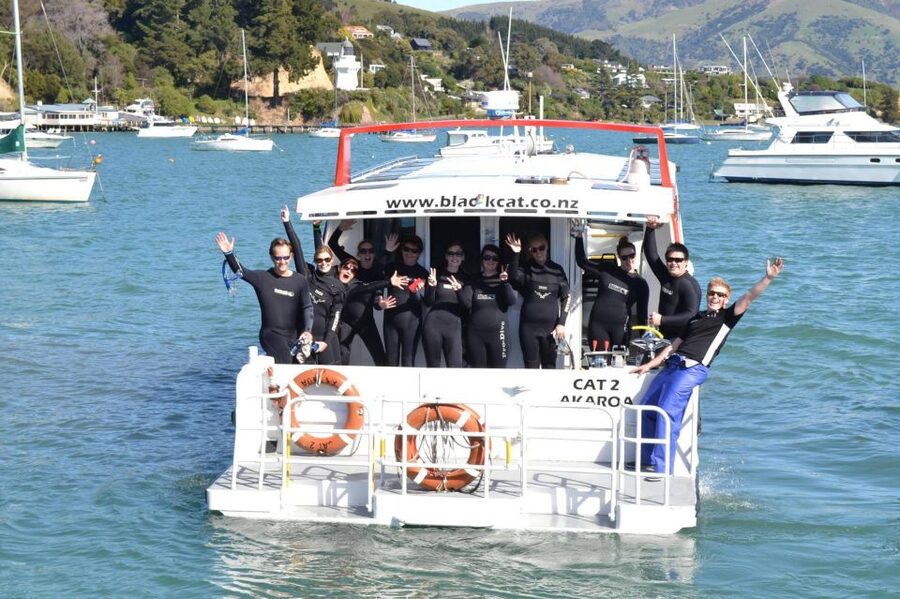
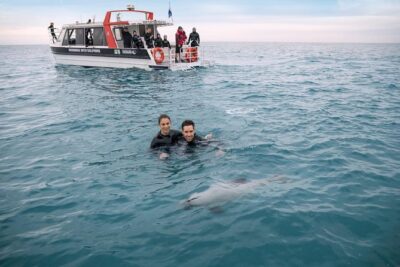
Wild dolphins set the rules. In Akaroa Harbour, you may swim beside Hector’s dolphins, the world’s smallest and rarest dolphin, under the care of a swim guide and skipper. I like the small limit of 12 swimmers per boat, and I like that the trip treats the dolphins as wild animals, not trained performers. The crew may also show you fur seals, seabirds, volcanic cliffs, and the wider story of local conservation.
The main catch is simple: a swim is never guaranteed. Dolphins may appear but stay too far away, and New Zealand rules allow no more than 45 minutes with them. At $123 per person, this is good value if you want a serious wildlife outing with quality gear and a full harbour tour, but it is a gamble if your only goal is getting in the water.
Key points to know before you book
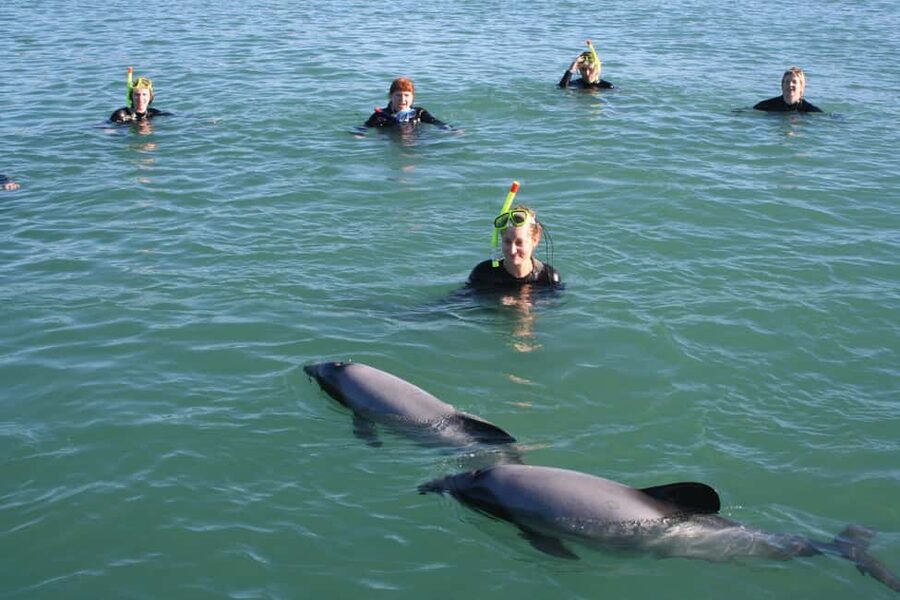
- Only 12 swimmers per boat: The small group makes it easier to hear instructions and gives you more room in the water.
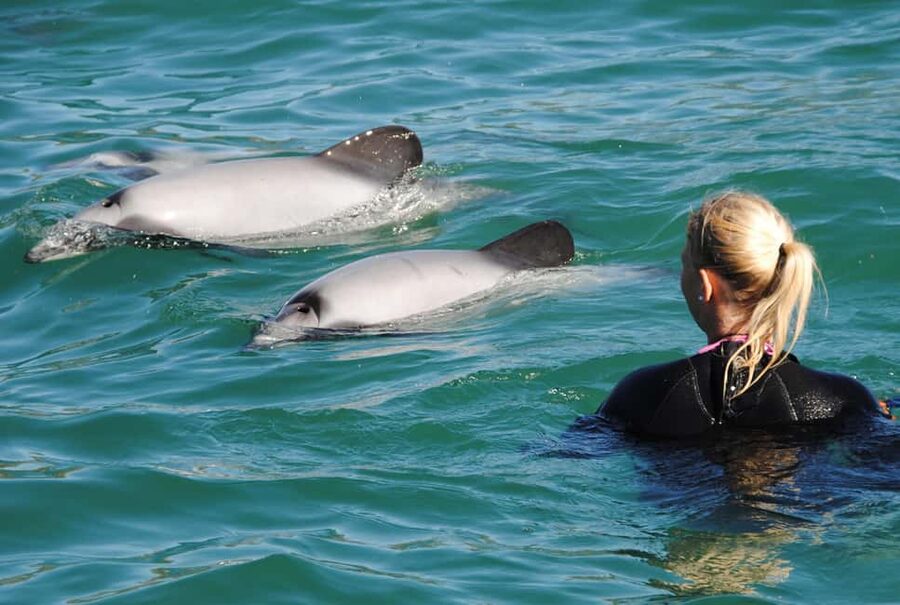
- Hector’s dolphins are truly wild: You cannot feed or touch them, and the crew cannot make them approach.
- A 3.5-hour harbour experience: The trip includes wildlife viewing, commentary, the dolphin search, swimming time, and warm facilities afterward.
- You need to swim from the boat: You may travel up to 50 metres between the boat and the dolphins, with no life jackets or swimming aids provided.
- Warm gear is included: A 5mm wetsuit, booties, gloves, goggles, hot showers, lockers, hot chocolate, and cookies are all part of the price.
- A good fallback exists: If no dolphins appear at all, Black Cat Cruises offers a complimentary Akaroa Nature Cruise, though an unsuccessful swim does not automatically bring a refund.
Meeting the boat in Akaroa Harbour
You meet at the Black Cat Cruises office in Akaroa, a small harbour town about 90 minutes by car from Christchurch city or Christchurch International Airport. That driving time matters. If you are using this as a Christchurch day trip, allow plenty of time for the road journey, the 3.5-hour outing, and the return drive.
The tour normally runs in the morning or afternoon. I would choose the departure that gives you the easiest road schedule rather than trying to squeeze this between several other activities. You need to arrive ready for a water-based trip, not a quick boat ride.
At the office, you receive your swim equipment and use the private male and female changing rooms. The operator supplies a premium 5mm wetsuit, booties, gloves, and goggles. You bring your own towel. Lockers are available, and hot showers wait for you at the end, which is more than a minor comfort after time in cool harbour water.
The equipment package adds real value. Hiring a wetsuit, gloves, and booties separately would be a nuisance, especially if you are on a wider New Zealand trip and do not carry water gear. The 5mm suit also gives you warmth and some buoyancy, but it does not turn the activity into a float session.
More Wild Dolphin Encounters in New Zealand:
- Swimming with Wild Dolphins in Akaroa
★ 4.5 · 261 reviews - Swim With Wild Dolphins in Tauranga
★ 4.5 · 189 reviews - From Christchurch: Kaikōura Day Tour With Dolphin Encounter
★ 4.6 · 12 reviews
The safety briefing sets the tone
Before boarding, the swim guide explains how to behave around the dolphins. You must not feed or touch them, and you are expected to remain calm and patient. This is important because wild dolphins may pass close by, circle the group, or ignore you completely.
You also receive a full safety briefing and instructions for getting in and out of the water. You must be able to swim and have a basic level of fitness. The boat may stop up to 50 metres from the animals, so you need to swim to and from the vessel without a life jacket or other swimming aid.
That requirement rules out this experience for anyone who is not comfortable in open water. It also means you should be honest about medical conditions that could limit your participation. The crew needs enough English communication for safety instructions and emergency procedures. If you do not speak English, the operator says you should be able to understand written safety information in your language and use agreed hand signals with the crew.
Children must be at least eight years old. Children from eight to twelve must be accompanied by an adult swimmer. Unaccompanied minors are not allowed.
Cruising past cliffs, seals, and seabirds
The boat is purpose-built for the activity, with an onboard toilet and a design that lets the crew get closer to wildlife and the harbour edges. The ride is not just transport to the dolphin site. Your skipper and nature guide provide commentary about Akaroa Harbour, its volcanic cliffs, and the conservation work connected with the area.
This part gives the trip value even if the dolphins keep their distance. You may see New Zealand fur seals and several marine bird species from the boat. One particularly unusual possibility is a white-flippered penguin. A December trip also produced a striking moment when an albatross chick landed about two metres from swimmers. That is luck, not a promised sighting, but it shows how much the outing depends on what is active in the harbour that day.
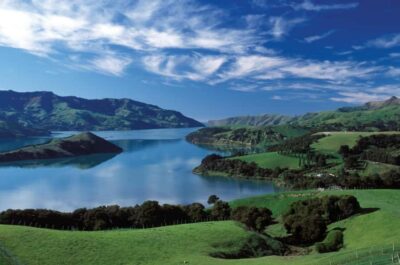
The coastline views also help fill the gaps between wildlife encounters. Akaroa Harbour is an old volcanic setting, with steep cliffs and sheltered water. The boat lets you see that setting from the water rather than from a roadside lookout. I like this broader approach because it keeps the day worthwhile when nature refuses to follow the schedule.
The captain and guide work as a team. Past departures have had crew members such as Charlotte, Chris, Harry, Thomas, Nicole, and skipper Drex. The most consistent praise goes to the crew’s friendly explanations, practical help, and good humour. That matters here. You spend several hours in a boat and wetsuit, so a crew that keeps the mood relaxed makes a genuine difference.
Finding the Hector’s dolphins
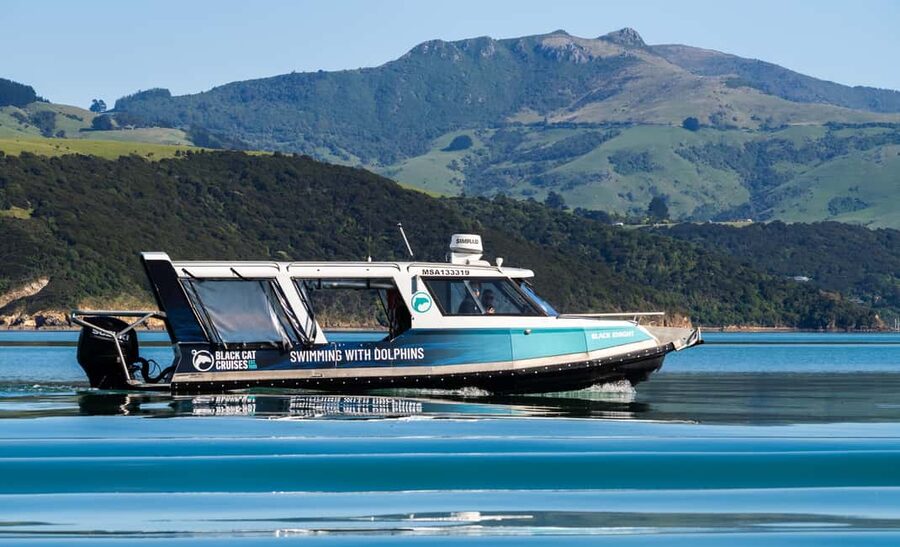
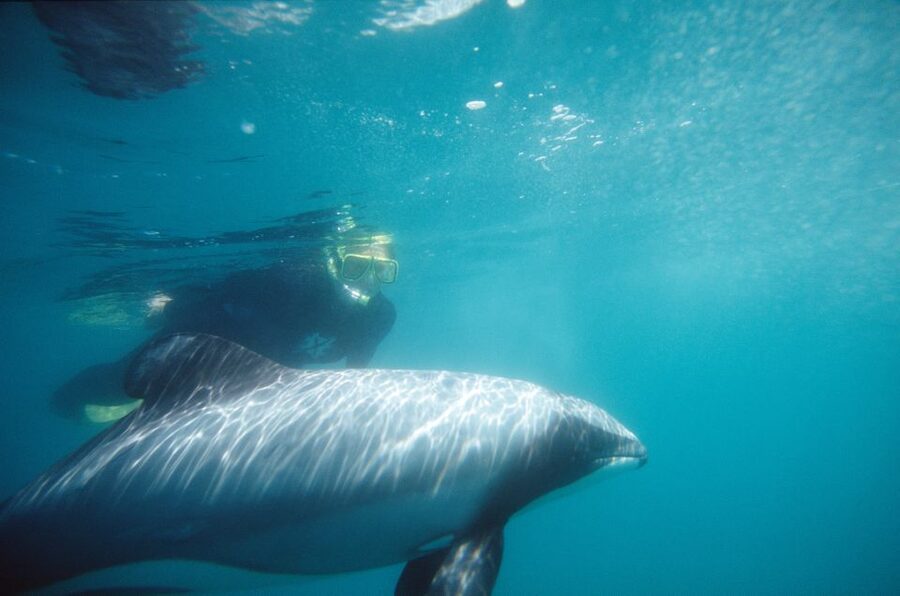
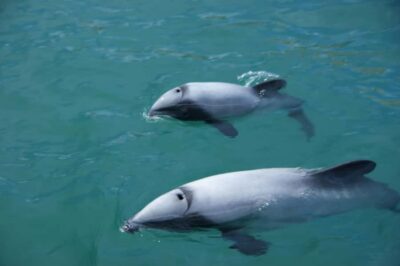
Hector’s dolphins are the reason to book this experience. They are small, rare, and found only in New Zealand waters. This is not a performance where an animal is called to a platform at a set time. The boat searches, watches, and waits for a suitable chance to enter the water.
Some departures have seen many dolphins close to the swimmers. Others have watched a pod of around ten from the boat without getting a swim. You should plan for both outcomes. Seeing dolphins near the boat is a worthwhile wildlife experience, but it is not the same as swimming beside them.
The guides explain how to enter the water and how to behave once you are there. Your job is to float, stay calm, and let the dolphins decide what happens. One useful practical tip is to avoid crowding the main group if the situation allows. A calm swimmer with a little space may get better close contact than someone pressing into a tight cluster.
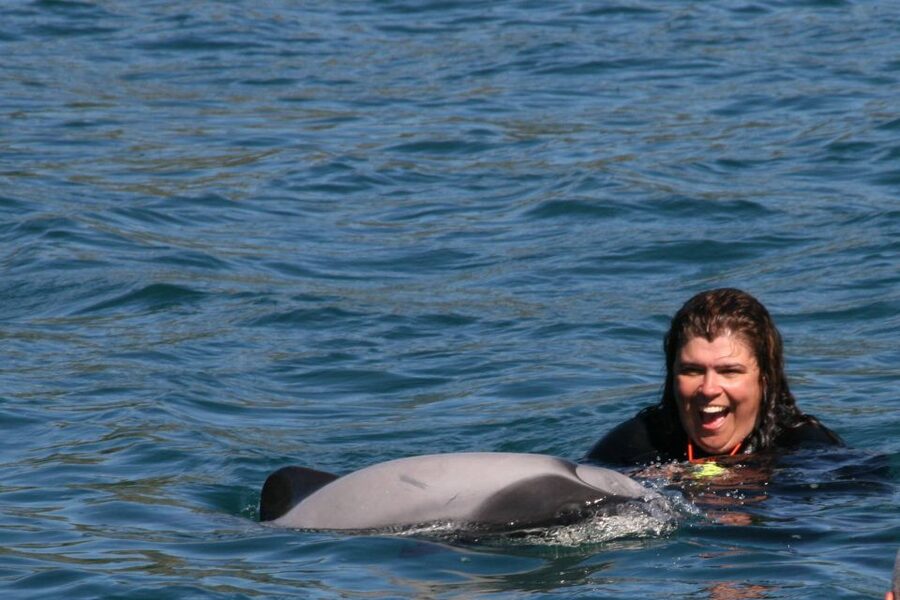
Patience helps. Sudden movements and loud reactions are not useful around wild animals. The crew will guide you, but no one can direct a dolphin toward you. The strongest moments come when the animal chooses to approach.
New Zealand’s Department of Conservation limits the time with dolphins to 45 minutes. That is the maximum, not a promise that every trip will use the full period. The crew may end the water portion sooner if conditions or animal behaviour require it.
A few more dolphin trips around New Zealand worth a look
- Akaroa Dolphins ~ Harbour Nature Cruise
★ 5.0 · 2,143 reviews - Auckland Dolphin and Whale Watching Eco-Safari Cruise
★ 4.5 · 1,790 reviews - Auckland: Whale and Dolphin Watching Half-Day Eco Cruise
★ 4.5 · 1,072 reviews - Paihia/Russell: Hole in the Rock, Dolphins & Island Cruise
★ 4.6 · 821 reviews
What the swim feels like in practical terms
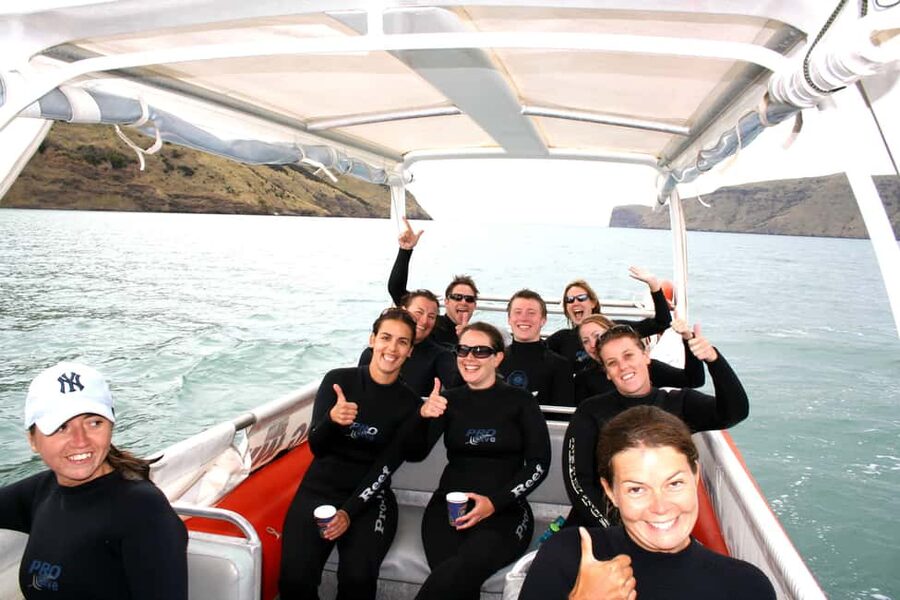
The 5mm wetsuit, gloves, and booties help protect you from the cool water, but you should still expect the swim to feel brisk. The activity is not a casual dip from a beach. You float in open harbour water and swim back to the boat when instructed.
A swim guide is in the water with you. That provides reassurance, but it does not remove the need for basic swimming ability. You should be comfortable following directions, staying with the group, and covering the distance back to the vessel.
You are not permitted to touch or feed the dolphins. This is both a safety rule and the right conservation approach. The value of the experience comes from observing natural behaviour, not trying to force an interaction for a photograph.
The small group size helps. With only 12 swimmers, the guide can give clearer instructions and keep a better eye on the group than on a large boat packed with swimmers. It also gives you a better chance of finding a little personal space in the water.
The guides try to take photographs while you swim. The images are available to download afterward, and past departures received them very soon after returning to shore. Treat the photography as a bonus rather than a guarantee. Wildlife, weather, water visibility, and the guide’s safety duties all affect what can be captured.
The warm finish adds real value
After the swim, you return to the changing rooms and hot showers. This is one of the smartest details in the whole outing. A warm shower changes the end of a cold-water activity from a scramble into a comfortable finish.
Lockers are included, so you do not need to keep your belongings beside the boat. Hot chocolate and cookies are also provided. They are simple touches, but they matter after several hours outdoors and help you warm up before heading back into Akaroa.
The facilities also make the $123 price easier to justify. You are paying for transport on the water, a small group, a swim guide, a skipper, safety instruction, specialist equipment, wildlife commentary, photography efforts, and the post-swim facilities. It is not cheap, but it is more than a short dolphin sighting cruise.
The price is harder to justify if your main goal is simply seeing dolphins. Akaroa also has two-hour nature and dolphin cruises that do not require swimming. Those are better choices if you want wildlife viewing without open-water demands, or if nobody in your group plans to swim.
If you are travelling with a mixture of swimmers and non-swimmers, an observer ticket is available for someone joining the outing without entering the water. If nobody in your party is swimming, book the separate Akaroa Harbour two-hour nature cruise instead.
What happens if the dolphins stay away
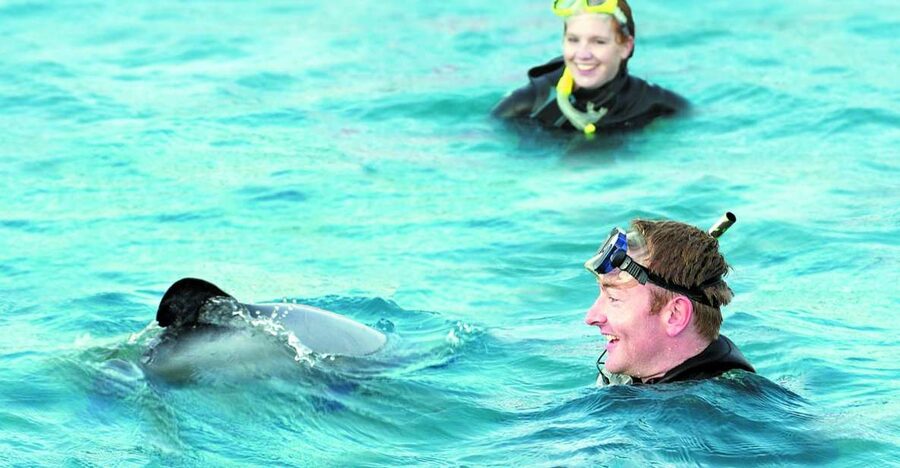
This is the question you should settle before paying. The crew has a high success rate, but a successful swim is not guaranteed. You may see dolphins from the boat and still never have them come close enough for a water encounter.
The published terms say there is no refund for an unsuccessful swim. If you do not see any dolphins at all, Black Cat Cruises offers a complimentary Akaroa Nature Cruise. That is a useful alternative, but it does not replace the experience you originally wanted.
Past departures show why you should keep expectations flexible. On one trip, the crew saw around a dozen dolphins but could not get them close enough for swimmers. On another, a pod stayed near the boat while the group missed out on full contact. In both cases, the harbour scenery, commentary, and wildlife still formed a worthwhile outing.
There have also been trips with close dolphin encounters and plenty of animals around the swimmers. The sensible attitude is to book a wildlife trip that includes a possible swim, not a guaranteed swim with a fixed number of dolphins.
Who will enjoy this most
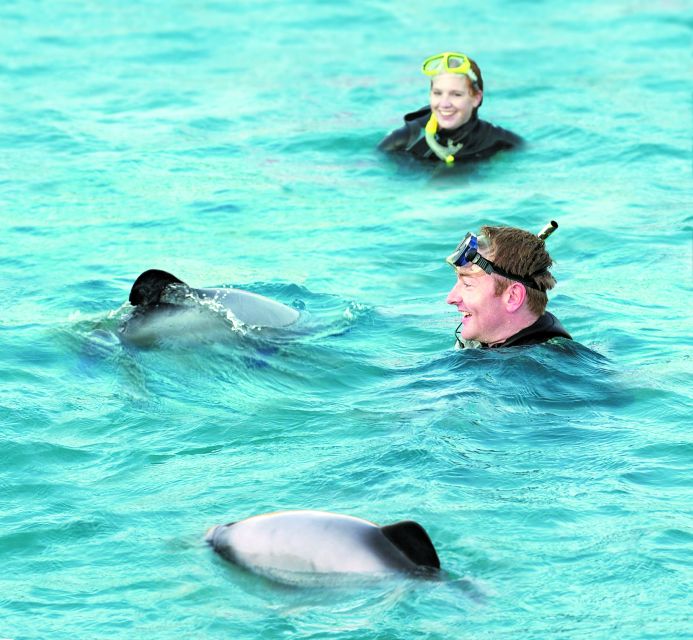
I would recommend this to confident swimmers who place a high value on ethical wildlife encounters. It suits people who can accept uncertainty and still enjoy a boat ride, coastal scenery, and other animals.
It is also a strong choice for families with older children. The minimum age is eight, and children aged eight to twelve need an adult swimmer with them. The adults in the group should be ready to supervise and swim, not simply watch from the boat.
You may prefer the non-swimming nature cruise if you dislike cold water, cannot swim the required distance, need a life jacket, or want a more relaxed wildlife outing. The dolphin trip is not suitable for someone hoping to sit back while the crew handles every part of the activity.
I would also think carefully about timing if you have a tight Christchurch schedule. Akaroa is already about 90 minutes from the city or airport by car, and the activity takes 3.5 hours. Add changing time and the return journey, and this is a major part of your day.
Booking advice and final call
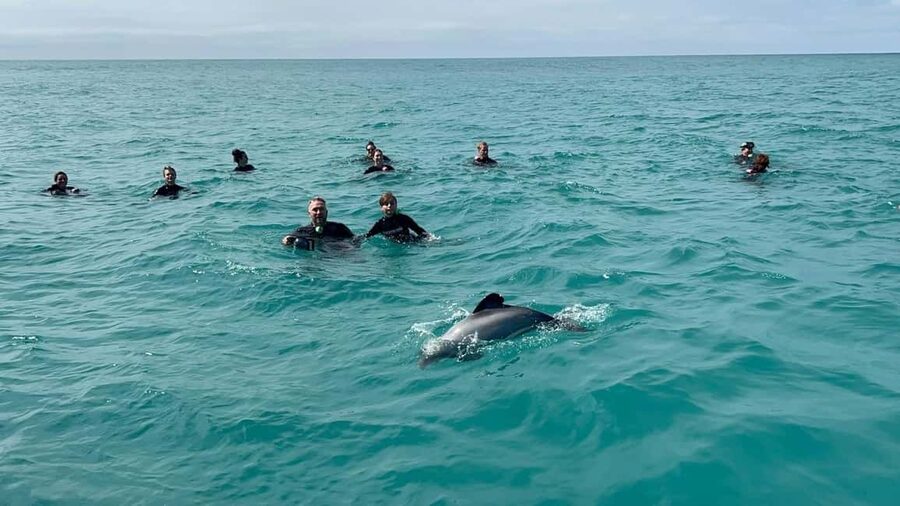
Book this experience if you want the best chance of a respectful, small-group swim with Hector’s dolphins and you are comfortable with the possibility of watching from the boat instead. The warm gear, hot showers, small group, and strong crew support make the $123 price reasonable for a full half-day outing.
Do not book it if a dolphin swim is the only acceptable result. Choose the two-hour harbour nature cruise instead if you prefer certainty, do not swim confidently, or have a non-swimmer group.
For the right person, this is a memorable Akaroa experience because the animals remain in charge. Charlotte, Chris, Thomas, Nicole, and the other crew members help you understand that from the start, then give you the tools to enjoy the encounter without chasing it. Bring a towel, arrive ready to swim, and leave room in your plans for nature to say no.
FAQ
Where does the Akaroa dolphin swim begin?
You meet at the Black Cat Cruises office in Akaroa.
How long does the experience take?
The experience lasts 3.5 hours and is usually offered in the morning or afternoon.
How far is Akaroa from Christchurch?
Akaroa is about 90 minutes by car from Christchurch city and Christchurch International Airport.
Are wetsuits and snorkelling equipment included?
Yes. The ticket includes a 5mm wetsuit, booties, gloves, goggles, and snorkel equipment.
Are life jackets provided?
No. Life jackets and swimming aids are not provided. You must be able to swim and have a basic level of fitness.
How far might I need to swim from the boat?
You may need to swim to and from the boat for distances of up to 50 metres.
Are dolphin swims guaranteed?
No. The dolphins are wild, so the crew cannot guarantee that you will swim with them. If you do not see any dolphins, the operator offers a complimentary Akaroa Nature Cruise, but unsuccessful swims do not receive a refund.
Can children join the experience?
Children must be at least eight years old. Children aged eight to twelve must be accompanied by an adult swimmer, and unaccompanied minors are not allowed.
Just added around New Zealand
- Dolphin & Wildlife Encounters★ 5.0 · 6 reviews
- Half Day Dolphin & Wildlife Cruise – Tauranga★ 4.5 · 103 reviews
- Swim With Wild Dolphins in Tauranga★ 4.5 · 189 reviews
- Captain Cook and Dolphin Cruise★ 4.5 · 26 reviews
- Motuara Wildlife Sanctuary Tour and Dolphin Cruise from Picton★ 4.5 · 180 reviews
- Bird Watching and Dolphin Eco-Tour to Blumine Island★ 5.0 · 55 reviews
- The Original Full day Bay of Islands Cruise with Dolphins★ 5.0 · 13 reviews
- Hole in the Rock Scenic Cruise including Dolphins and Island stop★ 4.5 · 225 reviews
Akaroa Dolphin Watching Tours, compared.
Browse the lists this tour appears in