
Review · FARO
Faro: Dolphin and Wildlife Watching in the Atlantic Ocean
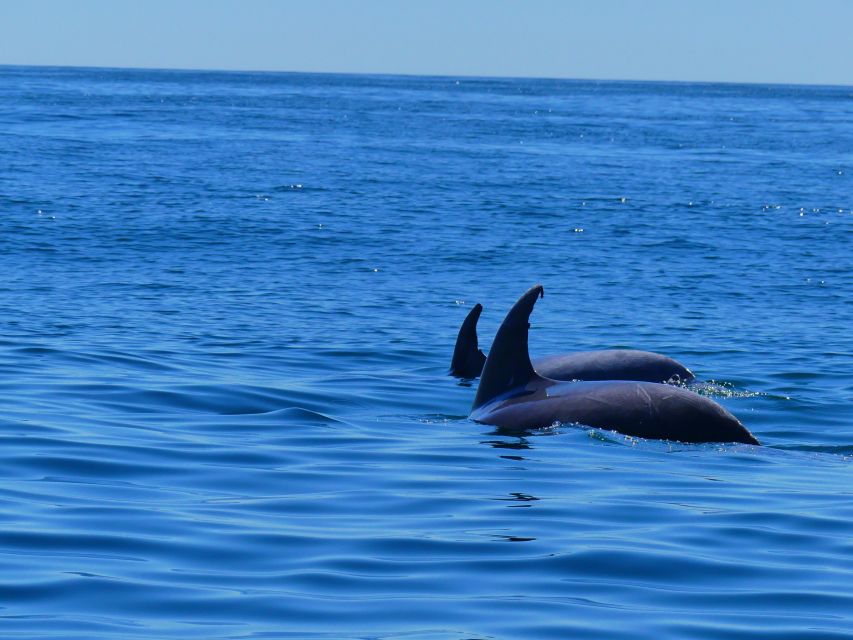
Wild dolphins make the Atlantic feel wonderfully close. Leaving Faro, you cross the Ria Formosa Natural Park before reaching open water, where marine biologists help you search for dolphins, whales, porpoises, seabirds, sharks, turtles, and other sea life. I especially like the careful, respectful approach to the animals and the chance to learn how scientists study dolphin populations. The big catch is simple: these are wild animals, so sightings are never guaranteed, and the Atlantic can make the ride quite bumpy.
I also like the small-boat feel, the broad views of Deserta and Culatra islands, and the enthusiasm of guides such as Miguel, Pedro, Ines, Alfredo, and Susanna, who have been praised for staying patient and keeping the search going. At $76 per person for 2.5 hours, this is good value if you care about wildlife and accept that nature does not run on a timetable.
Key points before you book
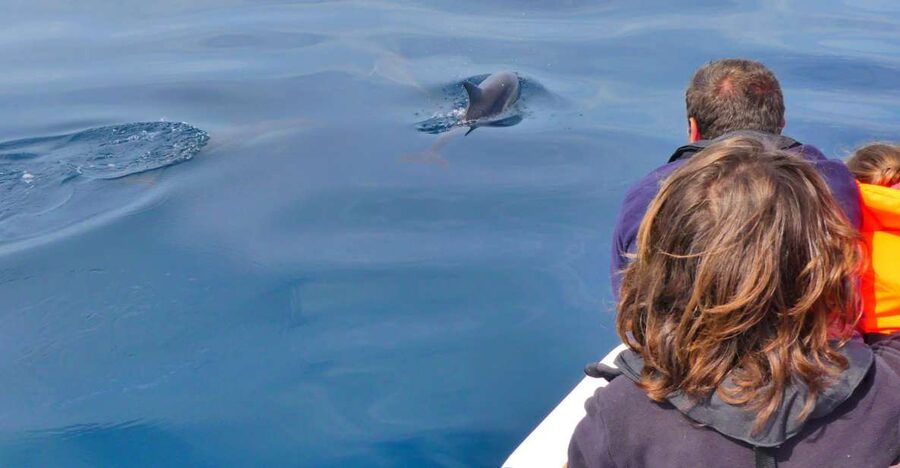
- Dolphins live here all year: Dolphins are resident in the area, while the best whale period is generally February through May.
- Two marine biologists guide the outing: Their role is not just to point at fins. They explain animal behavior, conservation, and how researchers collect data.
- The ride starts through Ria Formosa: You get views of marshland and the Barrier Islands before reaching the Atlantic.
- Expect an active boat ride: Wind, swell, and fast travel can make the trip bumpy. A jacket, water, sunscreen, and comfortable clothing are sensible.
- Wildlife sightings vary: The operator reports success on roughly nine out of ten tours, but no company can promise dolphins, whales, or orcas.
- The experience is built around respect: You must not feed or touch animals, and the guides limit observation of a dolphin pod to about 30 minutes.
Leaving Faro through Ria Formosa
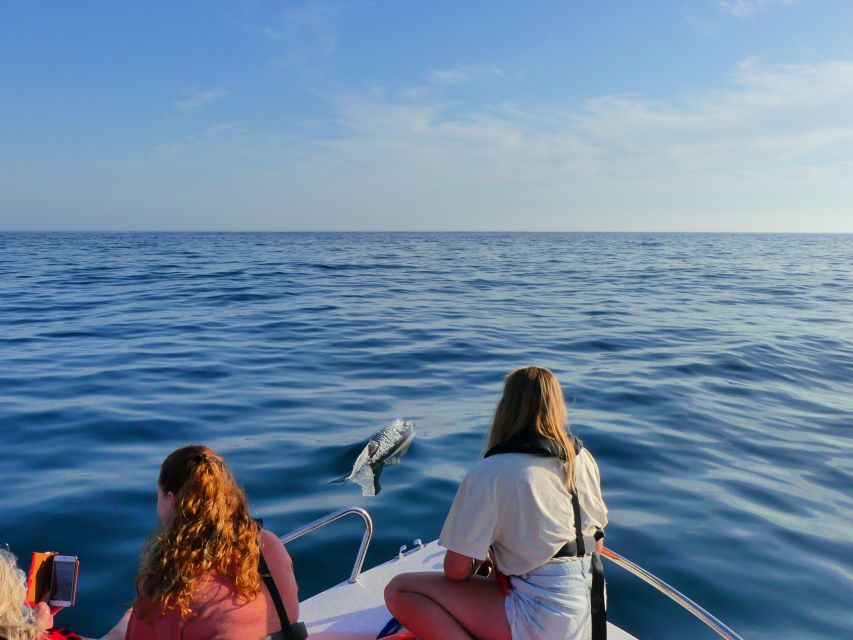
The meeting point is the Ocean Vibes Algarve office at Faro marina. Look for the shared shop with an Ocean Emotions banner. There is no hotel pickup, so you need to reach the harbor on your own.
The first part of the trip is more scenic than people sometimes expect. The boat crosses the channels and open stretches of Ria Formosa Natural Park, with views toward Deserta and Culatra, two of the Barrier Islands. Depending on the route and conditions, you may look across marshes, tidal water, and low island shores before the boat heads out toward the coast.
This opening gives you a useful change of pace. You are not thrown straight into a wildlife search. Instead, you get time to settle into the boat and see the setting that protects Faro from the Atlantic. It also helps explain why the area supports so much bird and marine life.
The crew provides life jackets and a short safety briefing. Listen closely, especially if you have not spent time on a fast boat. The trip may feel lively once you reach the open ocean, and the boat can bounce over the swell.
More Dolphin and Wildlife Eco Tours in Portugal
- Small Group Dolphin and Wildlife Watching Tour in Faro
★ 5.0 · 578 reviews - Algarve Dolphin Watching & Marine Life Eco Tour
★ 5.0 · 16 reviews - Dolphin watching and wildlife from Faro
★ 5.0 · 6 reviews
The Atlantic search for dolphins and whales
Once the boat reaches the Atlantic, the guides begin scanning the water. They look for fins, blows, movement, seabirds, and other signs that animals may be nearby. The search can take time. One outing described in the supplied feedback spent about 45 minutes looking before finding wildlife, while other groups found dolphins sooner.
That waiting is part of the deal. You are not visiting an aquarium with animals placed in a particular area. You are watching free-ranging creatures that may travel quickly, stay below the surface, or simply be somewhere else that day.
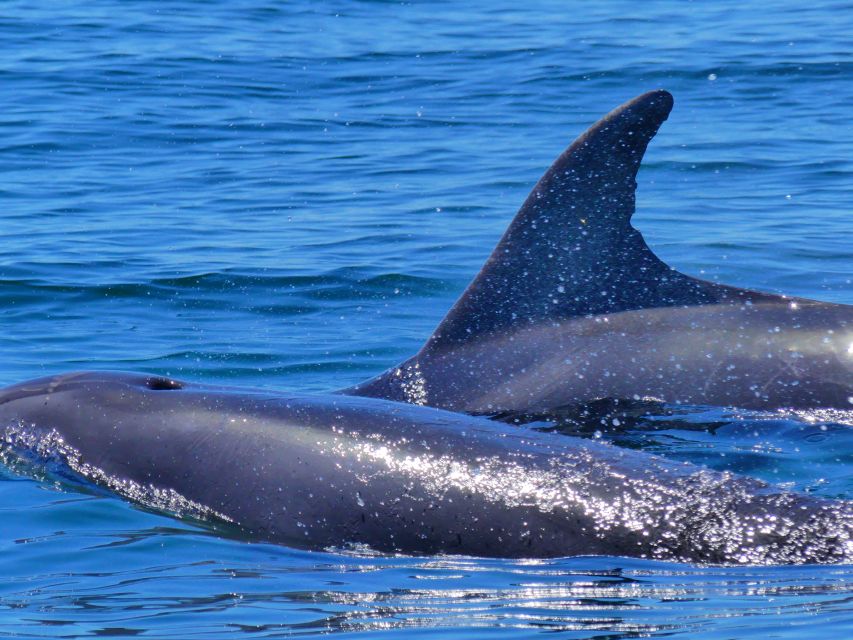
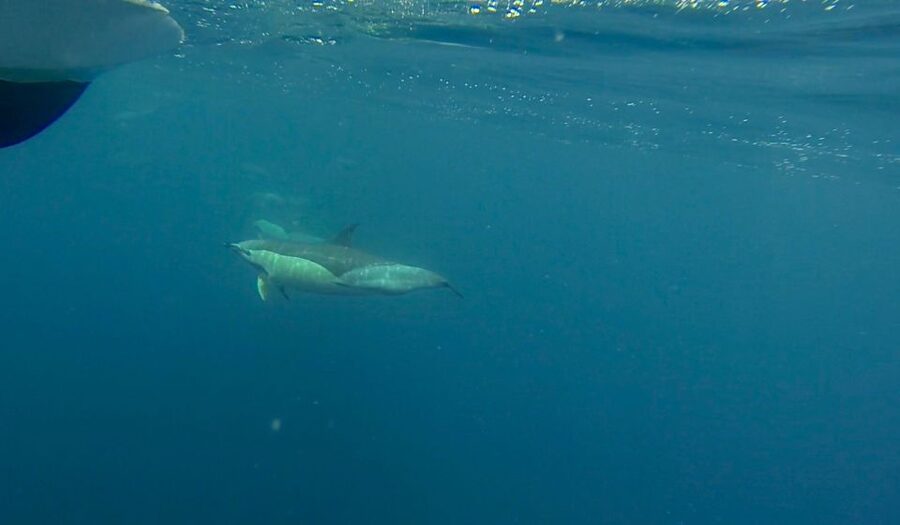
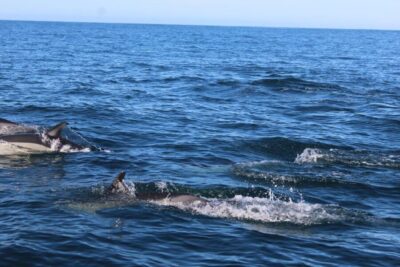
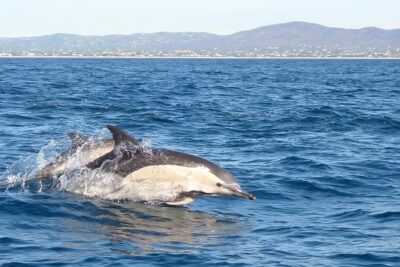
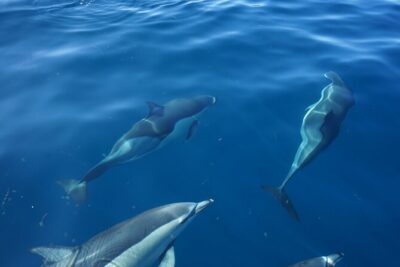
Dolphins are the most realistic target because they remain in the region throughout the year. Sightings have included common dolphins and bottlenose dolphins, sometimes in large groups. People have also seen striped dolphins, calves swimming with adults, and pods numbering in the dozens or even hundreds.
Whales are less predictable, but the possible list is impressive. Sightings have included fin whales, Bryde’s whales, and mother-and-calf pairs. February through May is described as the main whale season, making those months a sensible choice if whales matter more to you than dolphins.
Orcas and false killer whales are possible but clearly unusual. A June trip produced an especially remarkable mix of bottlenose dolphins, common dolphins, orcas, and glimpses of whales. That is a lucky day, not a standard promise. Go hoping for dolphins, and treat larger whales or orcas as a bonus.
What else might appear beside the boat
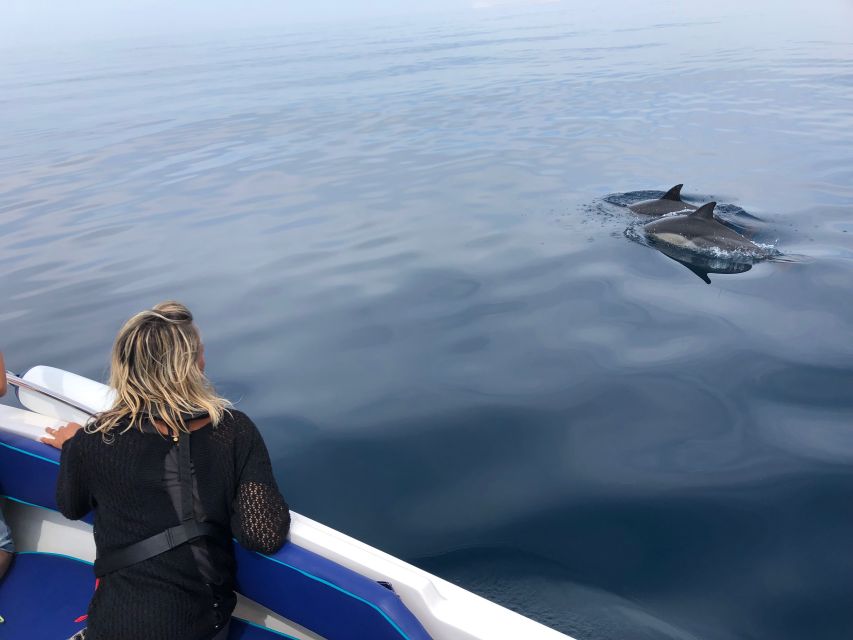
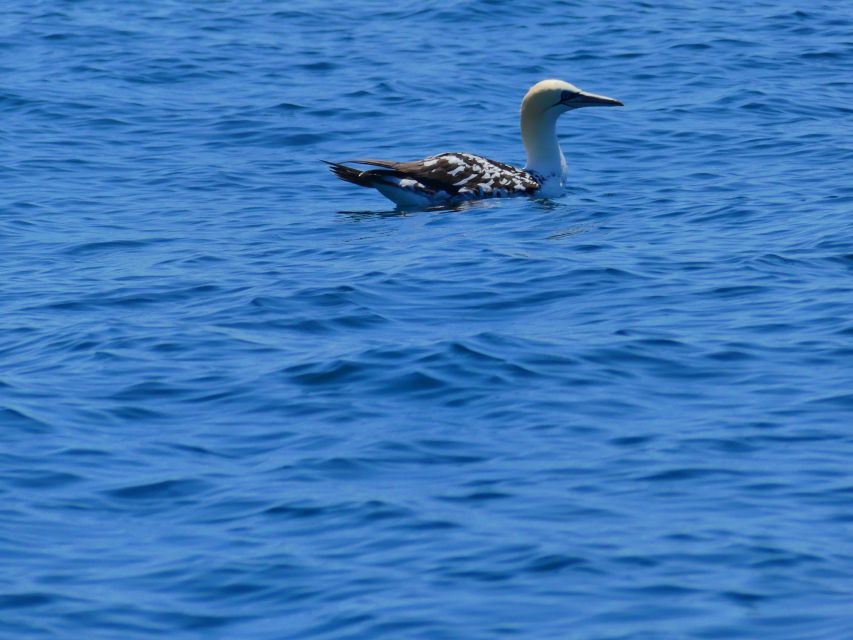
The tour is called dolphin watching, but the wider wildlife list gives it more depth. Gannets and shearwaters may pass overhead, and seabirds can help the guides locate feeding activity. Some outings have also included puffins, though you should not book on the assumption that you will see one.
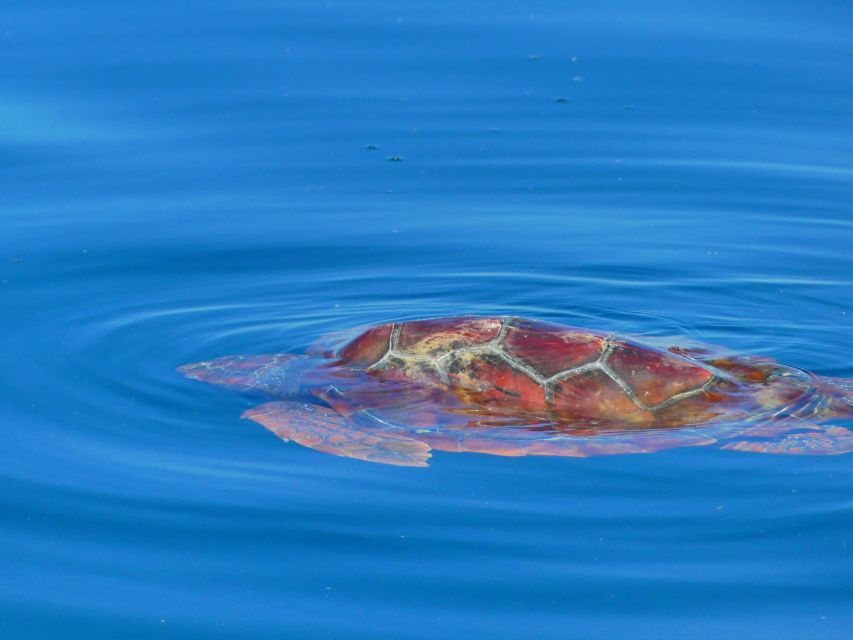
The water itself may reveal ocean sunfish, blue sharks, hammerhead sharks, tuna, and marine turtles. A shark sighting could be brief, and a sunfish may show only for a moment. Still, these possibilities make the search worthwhile even when dolphins are slow to appear.
This is where the marine biologists add real value. You are not simply waiting for a dorsal fin and then racing away. The guides explain what you are seeing, how different species behave, and why the animals may approach or avoid the boat.
They also discuss research methods and dolphin populations. That turns a pleasant boat ride into a lesson in how scientists observe animals without capturing or disturbing them. Guides such as Miguel, Pedro, Ines, Alfredo, and Susanna have been singled out for their warmth, humor, and serious attitude toward conservation.
Thirty minutes with a dolphin pod
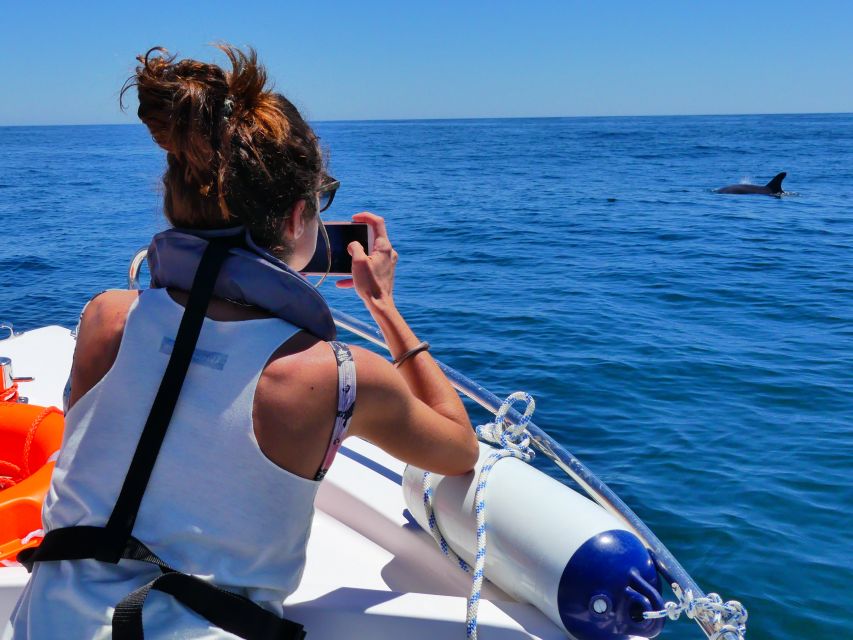
After the crew finds dolphins, the advertised plan allows about 30 minutes to watch the group. This limit matters. The boat does not stay indefinitely or chase the pod all afternoon.
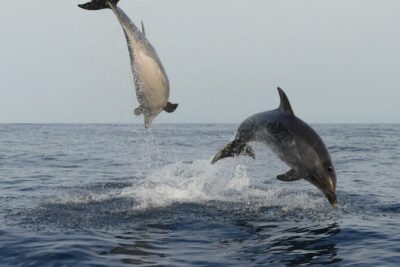
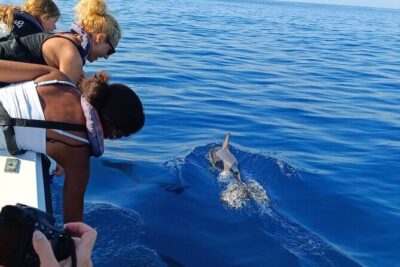
The guides aim to give the animals room and allow curious dolphins to decide if they want to come closer. Some groups have seen dolphins swim under and around the boat, leap beside it, or follow the boat for part of the return journey. These close approaches can feel thrilling, but they are most enjoyable when you understand that the animals are choosing the encounter.
You can ask questions during this period. Ask about calf behavior, feeding, communication, or how the crew identifies species. The educational side is especially strong here because you have a live example in front of you rather than a general talk delivered before departure.
The guides may extend the outing slightly if conditions and wildlife make it sensible. Several experiences ran longer while the crew searched or allowed extra viewing time. Do not count on an extension, though. Leave some spare time after the tour if you have dinner, a train, or another timed activity.
More Dolphin and Wildlife Eco Tours in Faro:
- Akaroa Dolphins ~ Harbour Nature Cruise
★ 5.0 · 2,143 reviews - Auckland: Whale and Dolphin Watching Half-Day Eco Cruise
★ 4.5 · 1,072 reviews - Cocoa Beach Dolphin and Wildlife Tour
★ 5.0 · 1,052 reviews - Dolphin and Wildlife Adventure of St. Augustine
★ 5.0 · 864 reviews
The return ride and Ria Formosa views
After the wildlife observation, the boat turns back toward Faro. The return can be quick and energetic, especially if the skipper uses the open water for a faster run. Some people love the roller-coaster feel. Others may find the seats less comfortable by the end, particularly after a choppy crossing.
Back inside Ria Formosa, the water may feel calmer. The marshes and islands give the last part of the trip a quieter character, and the changing light can make the return memorable. One outing even had extra time to watch the sunset.
The scenery is not the main reason to book this experience, but it helps the tour feel like more than a wildlife transfer. You see Faro’s coastal setting from the water and gain a better sense of how the lagoon and barrier islands meet the ocean.
How rough is the boat ride?
You should expect movement. The Atlantic can be windy and lumpy, even when Faro feels warm and calm on land. Several accounts describe the ride as bumpy, exciting, or like a roller coaster, while another person noted a sore backside after the fast boat journey.
Wear comfortable clothes and bring a jacket. Wind can feel cold on the water, even on a sunny day, and you may get a little wet when conditions are rough. Bring water and sunscreen as well.
The activity is not recommended for people with limited mobility, back problems, or pregnancy. Children under two cannot join. Assistance dogs are allowed, but other pets are not. Smoking, feeding animals, and touching marine life are not allowed.
If you are prone to motion sickness, think carefully before booking. The supplied information does not promise a calm ride, and the ocean search may involve extended time on moving water. That does not make the tour poorly run. It is simply the physical price of reaching open Atlantic habitat in a small boat.
Does $76 offer good value?
At $76, the tour sits in a reasonable range for a guided marine wildlife outing lasting 2.5 hours. Your ticket includes the boat, marine biologist guides, and a life jacket. It does not include transport from your hotel, food, or drinks, so factor in your own trip to the marina and bring water.
The value improves if you care about interpretation. A basic boat ride might give you a view of the coast and a chance of seeing dolphins. Here, the crew also explains species, behavior, research, and responsible viewing. That extra context stays useful even on a day when the animals remain distant.
The value is less certain if you need a guaranteed sighting. The company estimates that about nine out of ten trips are successful, but the one unsuccessful outing described in the feedback still involved an enjoyable boat ride and lively waves. That is honest, but it also tells you how to set your expectations.
I would book this for someone who sees wildlife as a bonus from nature, not as a product that must be delivered on demand. If your whole holiday depends on seeing a whale, consider booking early enough in your stay to leave room for another attempt.
The strongest part is the guiding
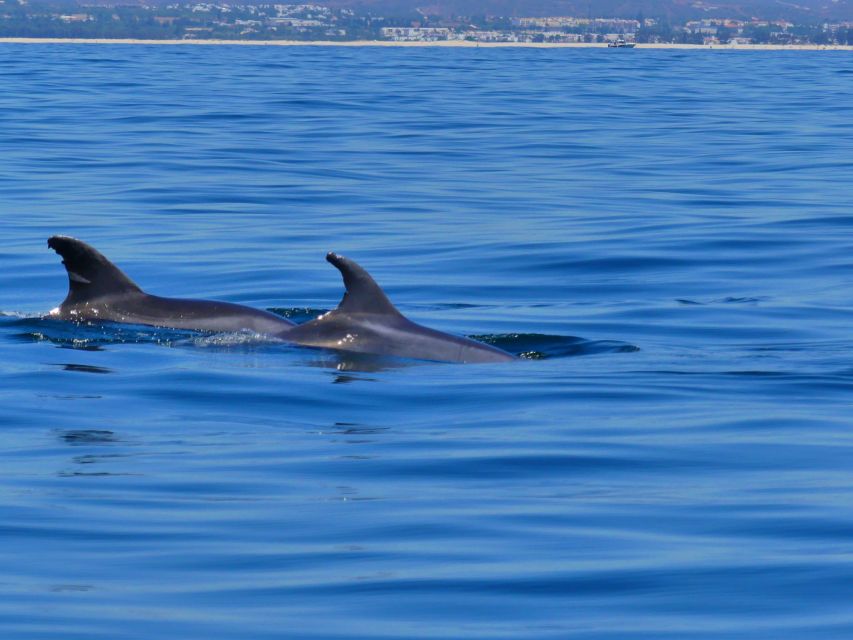
The most consistently praised feature is the crew. Guides are described as friendly, patient, funny, enthusiastic, and serious about animal welfare. That combination matters because wildlife watching includes quiet stretches when nobody knows where the next sighting will appear.
A good guide keeps the group informed without filling every second with noise. The marine biologists also know when to give the animals space. Their instructions about life jackets, approach distances, and watching limits help everyone follow the same rules.
The multilingual team offers tours in English, French, Portuguese, and Spanish. If you have a choice of language, select the one in which you will be most comfortable asking questions. The educational part is a major reason to choose this outing over a simple sightseeing cruise.
Who will enjoy this most?
This tour suits adults, older children, couples, and families with children over two who are comfortable on a moving boat. It is a good match for anyone interested in animal behavior, conservation, seabirds, or the working methods of marine scientists.
Photographers should bring equipment only if they can protect it from spray and handle a moving platform. The boat may rock, and sightings can be brief. A camera is useful, but binocular-style patience is just as important.
You should think twice if you dislike wind, motion, or uncertainty. The crew may search hard without finding much. The boat seats can become uncomfortable, and the open sea is not the right setting for anyone with serious mobility, back, or pregnancy concerns.
The experience is also better for people who can follow wildlife rules. You must not touch, feed, or try to force contact with the animals. The goal is observation, not performance.
Booking advice and final verdict
I would book this tour if you want an active, educational outing that treats wild animals with care. The resident dolphins make sightings reasonably likely, and the possibility of whales, orcas, sharks, turtles, sunfish, and seabirds gives the trip more range than its title suggests.
Choose February through May if whale watching is your priority. Choose any season for dolphins, while remembering that the water and weather can change the feel of the trip. Keep your afternoon or evening flexible because the crew may need extra time to locate animals.
The best reason to go is the combination of real wildlife and strong guiding. The main caution is the same thing that makes it authentic: nothing is guaranteed. If you can accept a bumpy ride, bring a jacket, and let the Atlantic set the schedule, this is a very good way to see Faro from the water.
FAQ
Where does the tour meet in Faro?
Meet at the Ocean Vibes Algarve office in Faro harbor or marina. Look for the shared store with an Ocean Emotions banner.
How long does the dolphin and wildlife tour last?
The scheduled duration is 2.5 hours. The crew may sometimes spend extra time searching or watching wildlife, so leave some spare time after the activity.
What animals might I see?
Possible sightings include dolphins, whales, porpoises, orcas, gannets, shearwaters, ocean sunfish, blue sharks, hammerhead sharks, marine turtles, and other fish. Sightings depend on nature and are not guaranteed.
Are dolphins present all year?
Dolphins are resident in the area throughout the year. Whale season is generally between February and May.
How long do we watch dolphins once they are found?
The tour allows about 30 minutes to watch a dolphin group. The guides follow respectful viewing practices and do not allow visitors to touch or feed the animals.
Is a wildlife sighting guaranteed?
No. Dolphins swim freely in the wild, so a 100 percent sighting rate cannot be promised. The stated normal success rate is about nine out of ten tours.
Which languages are available?
The live guides can conduct the tour in English, French, Portuguese, or Spanish.
What should I bring?
Bring comfortable clothes, water, sunscreen, and a jacket. You may get slightly wet on windy days, and the wind can feel cold even when the weather is warm.
Who should not take this tour?
The activity is not suitable for children under two, pregnant women, people with back problems, or people with mobility impairments. It is also not recommended for people with limited mobility.
Just added around Faro
- Sunset Dolphin Watching with Marine Biologists★ 5.0 · 25 reviews
- Observing Dolphins in Faro★ 5.0 · 21 reviews
- Dolphin Watching from Fuzeta★ 4.5 · 31 reviews
- Dolphin watching and wildlife from Faro★ 5.0 · 6 reviews
- FARO Fantastic Dolphin Observation Tour and Marine Life★ 5.0 · 8 reviews
- Dolphin Watching from Faro★ 4.5 · 22 reviews
- Algarve Dolphin Watching & Marine Life Eco Tour★ 5.0 · 16 reviews
- Faro: Funtastic Dolphin Watching Boat Tour★ 4.9 · 15 reviews
Faro Dolphin Watching Tours, compared.
Small Group Dolphin and Wildlife Watching Tour in Faro
Read our review →
Browse the lists this tour appears in