
Review · AUSTRALIA
Bunbury: Swim with Dolphins Tour
Dolphins make the morning memorable. This four-hour outing takes you into Koombana Bay, where more than 100 wild bottlenose dolphins live, and I like the close attention from guides and volunteers as much as the wildlife itself. I also like that your fee supports dolphin rescue, research, and education. The main catch is simple: the dolphins decide how close they come, and the bay can have murky water.
This is not a dolphin-petting show or a guaranteed performance. You cruise, watch, listen, and enter the water only when conditions and dolphin activity are suitable. Kathy, Cathy, Julie, Yvette, and other crew members have earned strong praise for calm instructions and encouragement, especially for first-time snorkelers. At $155 per person, the price is fair if you value a small-group wildlife encounter with equipment, refreshments, and a conservation purpose.
Key Points Before You Book
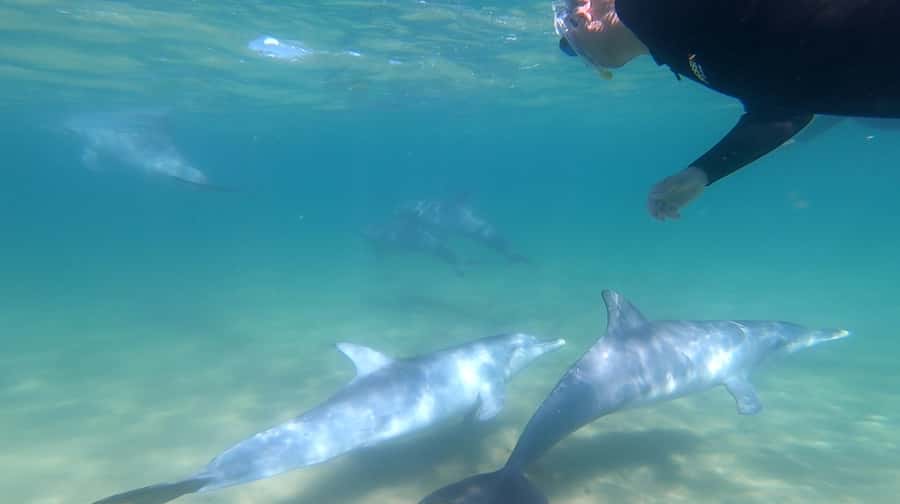
- Wild dolphins choose the interaction: You may swim near them, watch them pass below, or simply observe from the boat. The animals control the encounter.
- Koombana Bay is the setting: The protected waters near Bunbury are home to more than 100 bottlenose dolphins.
- Four hours gives the crew time: The outing includes a boat ride, wildlife viewing, and potentially several entries into the water rather than a rushed single attempt.
- Everything needed for the swim is supplied: You receive a warm wetsuit, mask, snorkel, fins, and a buoyancy vest if required.
- A free return is offered if no dolphins appear in the water: This remains subject to availability, but it reduces the risk of paying for a wildlife trip with no sighting.
- It suits beginners aged eight and up: Children from eight to eleven must have an adult with them in the water.
Setting Out From the Dolphin Discovery Centre
Your morning begins at the Dolphin Discovery Centre on Koombana Drive in Bunbury, Western Australia. Staff at the front counter direct you to the correct meeting point, so allow enough time to check in, find the changing facilities, and get ready without rushing.
The centre provides storage, changing rooms, and hot showers. Bring your own swimwear, towel, and warm clothing. That last item matters because you may spend time on the boat before or after entering the water, even with a wetsuit supplied.
The crew also provides a cold drink and snack on board. After the trip, you can have a hot barista-made coffee or another beverage at the centre. These are small touches, but they help on a four-hour outing where the timing of the dolphin encounter depends on the animals, not a fixed show schedule.
More Swim with Dolphins Trips in Australia:
- Swim with Wild Dolphins Day Tour
★ 4.5 · 669 reviews - Adelaide: 4-Hour Swimming with Dolphins Experience
★ 4.7 · 439 reviews - Perth: Swim with Wild Dolphins Tour
★ 4.7 · 326 reviews
Meeting Wild Bottlenose Dolphins in Koombana Bay
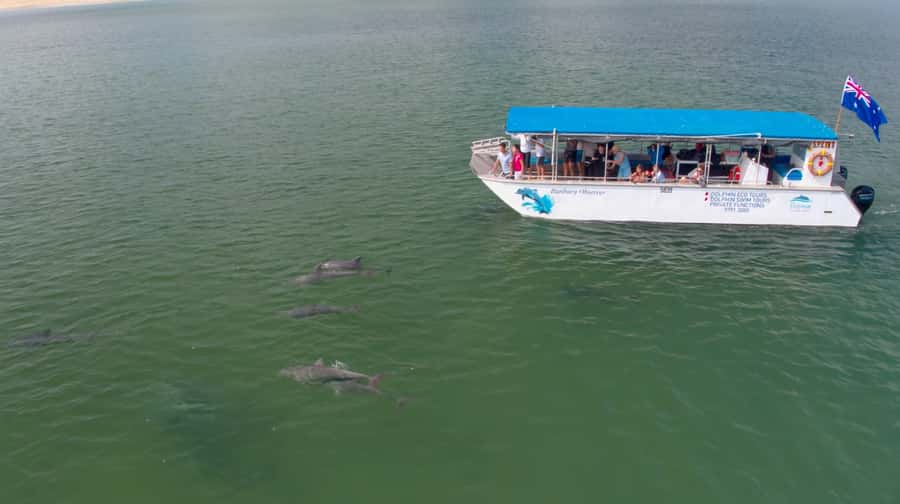
Koombana Bay is protected water, and it is the home range of more than 100 bottlenose dolphins. The boat ride gives you a chance to watch the bay and look for dolphin activity before the swimming portion begins.
Your guide explains dolphin behavior, life patterns, and identification. This is useful because the experience becomes more than a quick glimpse of fins. You learn to watch for dolphins feeding, playing, socializing, jumping, or resting. You may also hear about their echolocation, and if one comes close enough, you might sense the quick clicks and pulses as it checks out the people nearby.
The trip is led in English by an experienced guide, with trained volunteers helping in the water and on board. Kathy is singled out for her enthusiasm and clear knowledge of the dolphins. Cathy also receives praise for her explanations, while Julie and Yvette are noted for patient preparation and reassurance.
That staff support matters most if you are not a confident snorkeler. One participant who was new to the sea and snorkeling felt well looked after from the first fitting to the final swim. The crew encouraged people to stay together, guided them on when to look down, and swam beside less confident participants.
When You Enter the Water
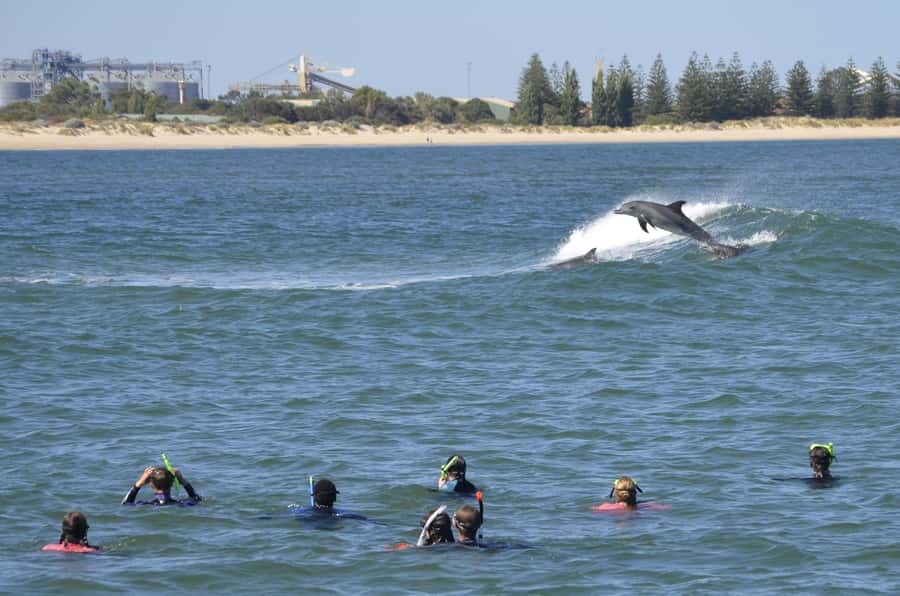
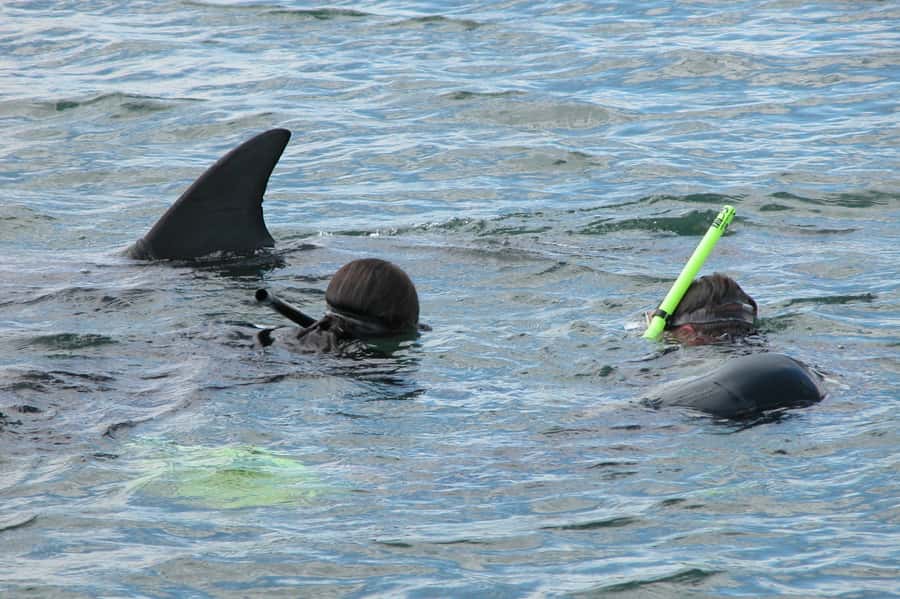
The guide decides when the group should enter the water, based on dolphin sightings and conditions. You do not simply jump in and chase the animals. The aim is to wait and allow the dolphins to approach if they want to.
That distinction is important. You can expect a genuine wildlife encounter, but you cannot expect a dolphin to swim beside you on command. Some days may bring several dolphins close to the group. On another day, you may see them in the water without much direct interaction.
The provided equipment includes a warm wetsuit, mask, snorkel, fins, and a buoyancy vest if needed. You should still bring swimwear and a towel, and warm clothing is wise for time spent out of the water. The crew handles the practical side of getting fitted, which makes the experience less stressful for beginners.
A particularly good feature is the possibility of more than one water entry. One outing included three dips into the bay, with the dolphins taking time to appear before the interaction became rewarding. That flexibility gives the crew a better chance to work with natural animal behavior instead of forcing the timing.
The water may not always be crystal clear. One participant described it as very murky, so you should prepare for moments when visibility is limited. If a dolphin passes beneath you, you may see only a brief shape or movement. On the other hand, murky water does not cancel the encounter, since you can still hear, sense, and watch dolphins at the surface.
What the Dolphin Encounter Feels Like
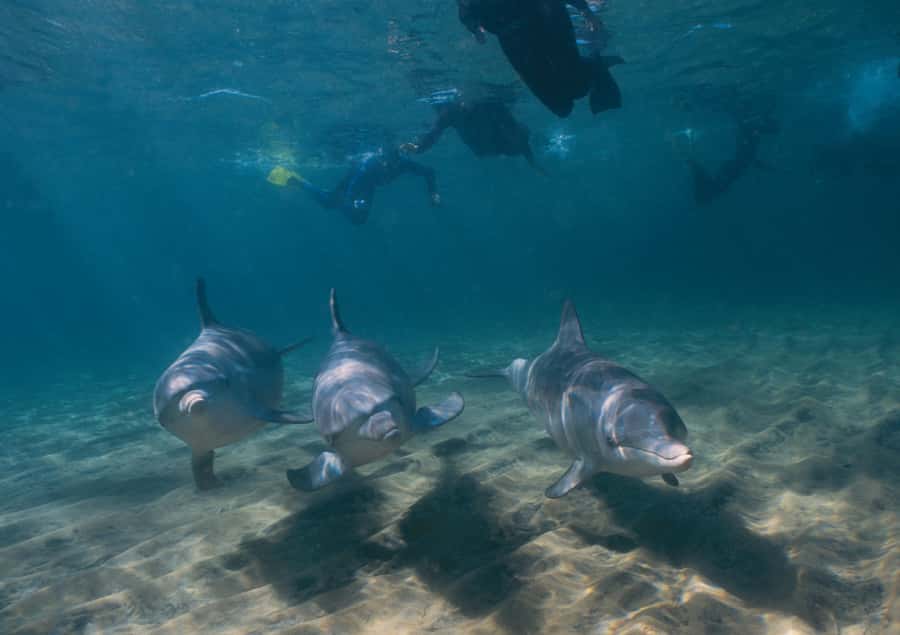
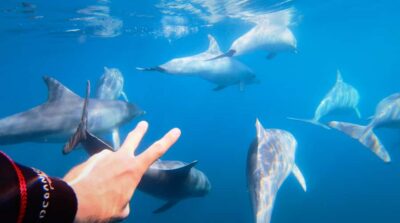
The best moment may be a dolphin passing directly under the group. Seven dolphins have been seen moving beneath a swimmer, and other outings have included dolphins swimming around and below people in the bay.
You might see them feeding, playing, socializing, leaping, or resting. You might also watch a dolphin inspect the group and then move away. That unpredictability is part of the value. You are observing wild animals in their own habitat, not entering a controlled tank for a scheduled trick.
The crew asks you to remain together and directs your attention at the right time. You may hear instructions to look down as dolphins approach, then turn your attention toward the surface when activity shifts. The guides also help you manage the excitement, which is useful when several people are trying to watch the same animal.
The encounter can feel especially rewarding because the animals make the choice. If a dolphin elects to swim near you, that behavior is not forced or staged. The experience is best understood as a chance to be accepted into a small part of the animals’ routine, not a promise of physical contact.
A few more dolphin trips around Australia worth a look
- Moreton Island: Dolphin & Tangalooma Wrecks Snorkel Cruise
★ 4.5 · 1,039 reviews - Port Stephens: Dolphin Discovery Cruise
★ 4.4 · 926 reviews - Mandurah: Dolphin and Views Cruise
★ 4.6 · 920 reviews - Sydney: Jervis Bay Day Trip with Dolphins, Roos & Beach Time
★ 4.5 · 643 reviews
A Wildlife Trip With a Conservation Purpose
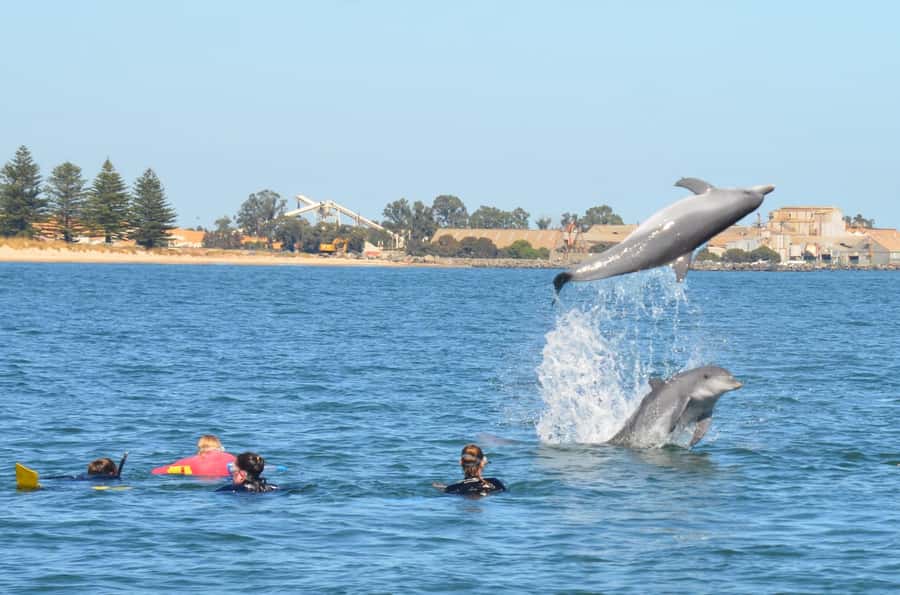
The Dolphin Discovery Centre is a not-for-profit environmental charity. The tour supports conservation, education, research, dolphin rescue, and rehabilitation work.
The staff and volunteers also document dolphin populations, behavior, and other observations during the outings. In practical terms, your morning is not just a sightseeing trip. The people running it are gathering information while teaching you how to notice individual dolphins and understand their behavior.
That purpose adds real value to the price. A portion of your payment supports the centre’s work, and volunteers help operate the experience. One participant specifically appreciated that the crew’s energy came from genuine care for the animals and the wider rescue program.
You also receive a 50 percent discount to the Marine Discovery and Interpretive Centre. Entry to that centre is not included, so you will need to pay separately if you want to visit it, but the discount gives you a useful follow-up activity. It can help you make sense of what you saw on the bay.
How the Four Hours Usually Unfold
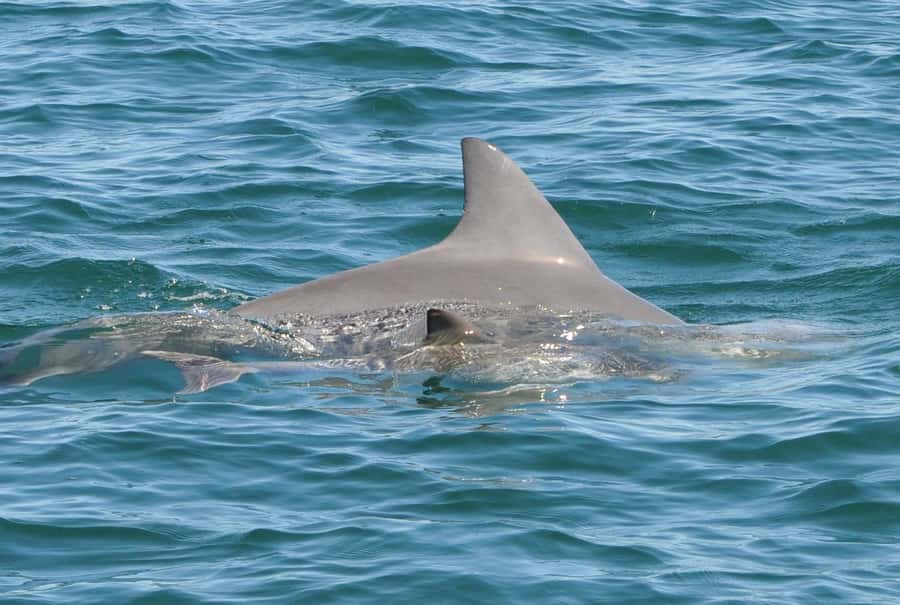
The timing is flexible because dolphin behavior cannot be scheduled. Still, you can expect a clear sequence:
- You check in at the Dolphin Discovery Centre and receive directions from the front desk.
- Staff help you prepare with a wetsuit, mask, snorkel, fins, and a buoyancy vest if required.
- The group boards the boat for dolphin watching and marine-life viewing around Koombana Bay.
- The guide explains dolphin identification, behavior, and the rules for entering the water.
- If dolphins are present and conditions allow, the group enters the water under close supervision.
- You may return to the boat and enter the water again, depending on sightings and activity.
- The boat returns to the Dolphin Discovery Centre after about four hours.
The order may change. You may spend a while searching before the first sighting, or see dolphins near the shore before boarding. One outing had a dolphin close to the beach even before the boat trip began, which shows how unpredictable the setting can be.
The four-hour length is useful because the crew has time to wait, watch, and try again. It is less suitable if you need a quick activity between tightly scheduled plans. Give yourself space around the tour rather than booking a rushed transfer or another fixed appointment immediately afterward.
Price, Comfort, and What You Receive
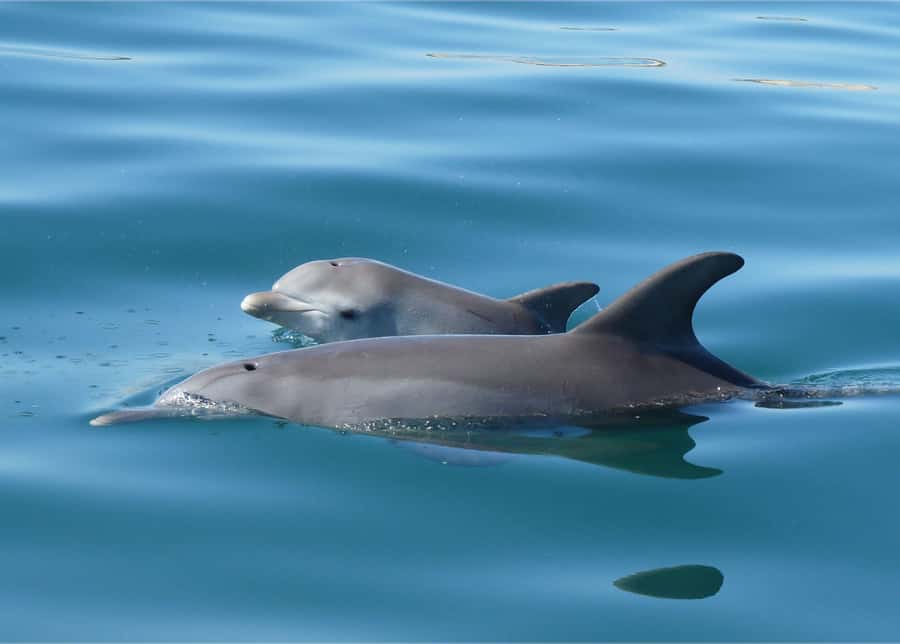
At $155, this is not a low-cost boat ride. The price makes more sense once you count the four-hour duration, guide, boat trip, wetsuit, snorkeling equipment, buoyancy aid if needed, snack, drink, hot showers, changing rooms, and storage.
The conservation work also matters. You are paying an environmental charity rather than a standard sightseeing operator, and the trip doubles as a research and education outing. If you want a simple dolphin photograph from a boat, you may find the price harder to justify. If you want a guided wildlife encounter with a chance to enter the water, the package is stronger.
The included wetsuit is especially useful because the water may feel cool, and the boat time can leave you chilled. The hot shower afterward is another practical benefit. Bring warm clothing anyway, since comfort depends on weather, wind, and how long you spend waiting between water entries.
The free return policy also helps. If you do not see dolphins in the water, you can take part in another tour at no extra charge, subject to availability. It does not guarantee a particular level of interaction, but it does offer some protection against a disappointing wildlife day.
Free cancellation is available up to 24 hours before departure, and you can reserve now and pay later. Check the available start time before booking, since the duration is four hours and schedules can change.
Who Should Book This Experience?
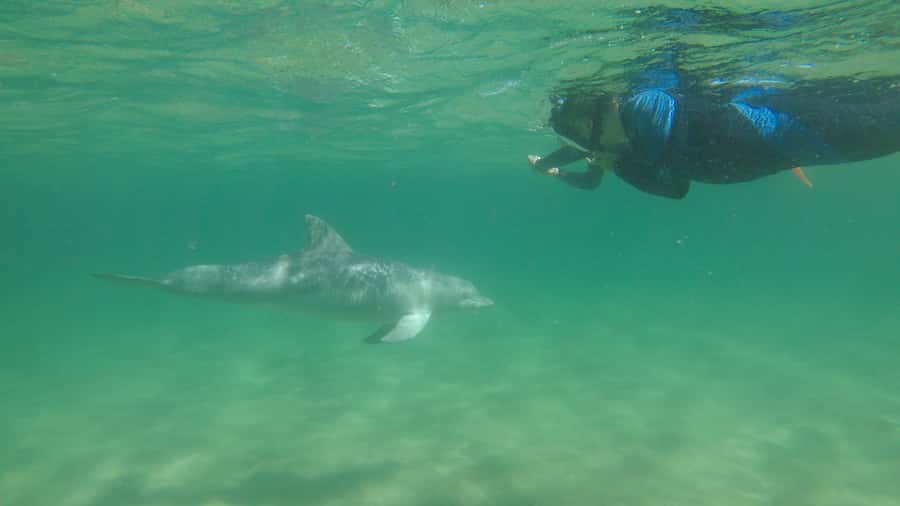
I would recommend this tour to anyone who wants a respectful, active wildlife outing rather than a passive boat cruise. It suits confident swimmers, first-time snorkelers, families with older children, and people who care about conservation.
Children must be at least eight years old. Those aged eight to eleven need an adult with them in the water, so families should be ready to provide close support even though the crew is attentive.
This is also a good choice if you are nervous around snorkeling. The crew receives repeated praise for reassurance, careful equipment fitting, and staying close to less confident swimmers. You still need to be comfortable entering the water, but you do not need advanced snorkeling experience.
I would think twice if you need guaranteed clear visibility, guaranteed close contact, or a tightly timed activity. The water may be murky, and the dolphins may remain at a distance. The tour promises wild dolphin sightings in the water, but the quality of the interaction belongs to the animals.
Practical Tips for a Better Morning
Arrive ready to change, with swimwear under your clothing if that makes preparation easier. Pack a towel and warm layers, even in warm weather, because boat rides and wet clothing can leave you cold.
Listen closely to the crew’s instructions about staying together and looking down at the right moment. A dolphin may appear only briefly, and watching in the wrong direction can mean missing it.
Keep your expectations flexible. You may have a spectacular swim with dolphins passing underneath, or you may spend more time watching from the boat. Both are valid wildlife experiences, and the free return option helps if no dolphins enter the water during your trip.
If you have time afterward, use the 50 percent discount for the Marine Discovery and Interpretive Centre. It gives you a chance to extend the learning beyond the bay, though the centre entry itself is not included.
Should You Book the Bunbury Dolphin Swim?
Book this tour if you want a well-supported chance to swim with wild bottlenose dolphins in their natural home. The strongest reasons are the caring crew, the beginner-friendly equipment and guidance, the four-hour schedule, and the conservation work behind the operation.
Skip it if you need a guaranteed close encounter or clear water. Dolphins are free to approach or leave, and conditions may limit visibility. For most people who accept those limits, the chance to float in Koombana Bay while wild dolphins pass nearby is worth the $155, especially with a free return available if no dolphins appear in the water.
FAQ
Where does the Bunbury dolphin tour begin?
The tour begins at the Dolphin Discovery Centre on Koombana Drive, Bunbury, Western Australia. Staff at the front counter direct you to the meeting point.
How long does the dolphin swim experience last?
The experience lasts four hours, including the boat trip, dolphin watching, marine-life viewing, and possible swimming and snorkeling.
What equipment is included?
The tour provides a warm wetsuit, mask, snorkel, fins, and a buoyancy vest if required. A snack and cold drink are also provided on board.
What should I bring?
Bring swimwear, a towel, and warm clothing. Storage facilities, changing rooms, and hot showers are available at the centre.
What happens if I do not see dolphins in the water?
You can take part in another tour for free if you do not see dolphins in the water. The return trip is subject to availability.
What is the minimum age for the tour?
The minimum age for swimmers is eight. Children aged eight to eleven must be accompanied by an adult in the water.
Just added around Australia
- Private Port Stephens Day Trip from Sydney incl Dolphin Cruise★ 5.0 · 3 reviews
- Port Stephens Private Tour From Sydney, with Dolphin/ Whale Cruise Options★ 5.0 · 8 reviews
- Sydney: Port Stephens Sandboarding, Dunes & Dolphin Cruise option★ 3.5 · 5 reviews
- Rainbow Beach: Dolphin & Wildlife Ocean Kayak & Beach 4WD Tour★ 5.0 · 59 reviews
- Small Group Port Stephens + Dolphins + 4WD/sandboarding ex Sydney★ 4.5 · 18 reviews
- Dolphin & Whale Cruise★ 5.0 · 23 reviews
- 4-Day Monkey Mia Dolphins Pink Lake Pinnacles Comfort-Level Tour★ 5.0 · 25 reviews
- 3 Island Wildlife Snorkel★ 4.5 · 11 reviews
Australia Dolphin Watching Tours, compared.
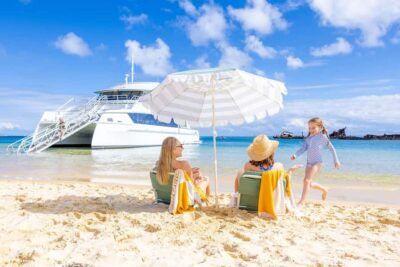
Moreton Island: Dolphin & Tangalooma Wrecks Snorkel Cruise
Read our review →

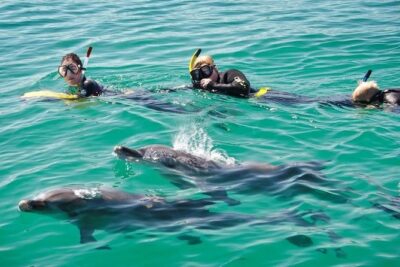

Jervis Bay Day Trip with Dolphins, Roos & Beach Time
Read our review →
Browse the lists this tour appears in