Review · PORTUGAL
Horta: University Startup Whale and Dolphin RIB Boat Trip
Big whales make small boats feel tiny. Horta’s three-hour RIB trip pairs fast sea travel with marine researchers from the University of Lisbon and the Azores, giving you more than a quick animal sighting. The crew uses land-based whale spotters around Faial and Pico to help locate wildlife before heading out.
I especially like the chance to see sperm whales year-round and the thoughtful, research-minded approach to wildlife watching. The waterproof clothing, careful skipper, and small boat also earn high marks. The main catch is the sea itself: the RIB can be bumpy, and sightings are never guaranteed.
Key points to know before booking
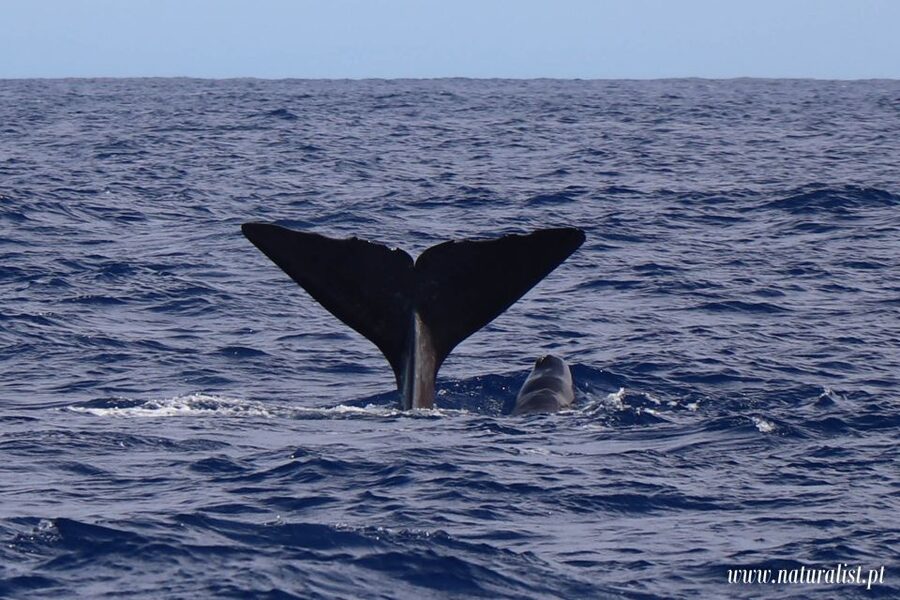
- Sperm whales live here year-round, while blue, fin, humpback, sei, and Bryde’s whales appear at different times.
- University marine researchers ride along, explaining animal behavior and helping collect current data.
- The RIB carries about 16 people, though some departures have had only around 11 or 12 passengers.
- Expect more than whales, with dolphins, turtles, seabirds, flying fish, sharks, squid, octopus, and sunfish all possible.
- The trip lasts about three hours, with morning departures at 9:00 and afternoon departures at 2:00.
- Rough water matters: this outing is not suitable for pregnant women, people with serious back problems, recent surgery, or children under five.
Why Horta is a strong place for whale watching
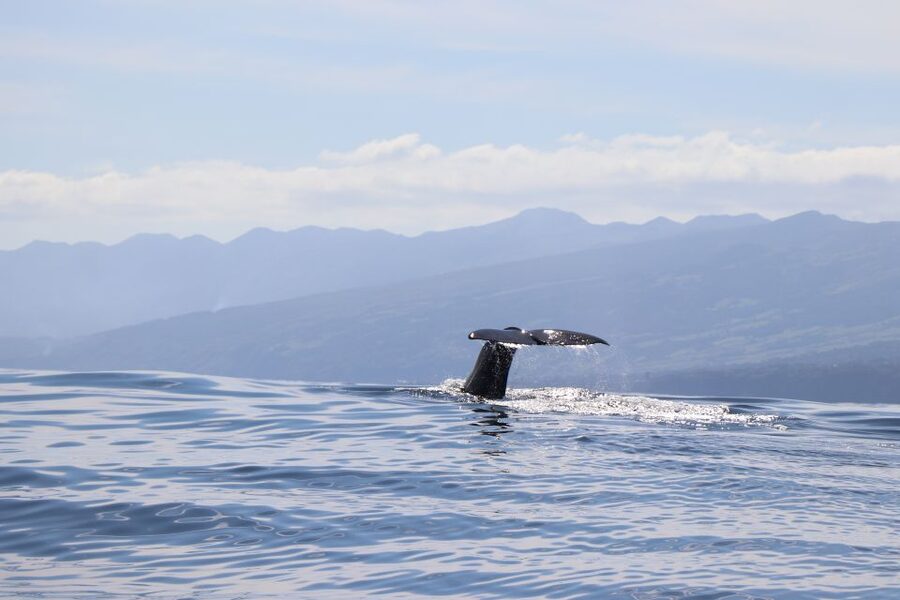
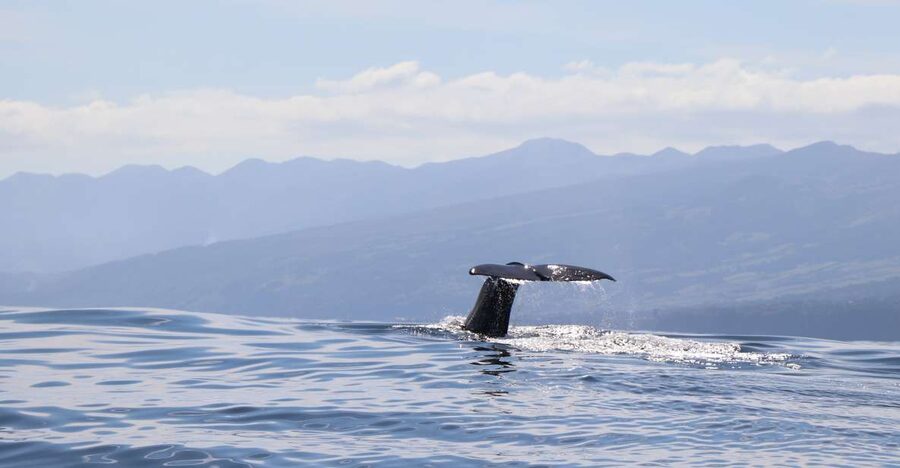
The waters around Faial and Pico sit in a productive part of the Atlantic. That helps explain the long species list, which includes more than 25 kinds of cetaceans in the wider region.
You are most likely to think of sperm whales first, and with good reason. They are present throughout the year. Blue and fin whales are associated especially with spring, while sei and Bryde’s whales can appear in summer. Humpback whales are migratory, so their presence depends on timing and conditions.
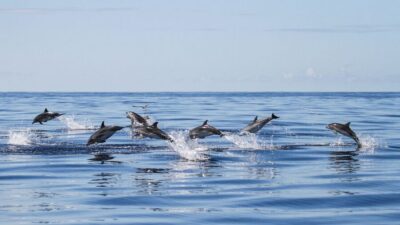
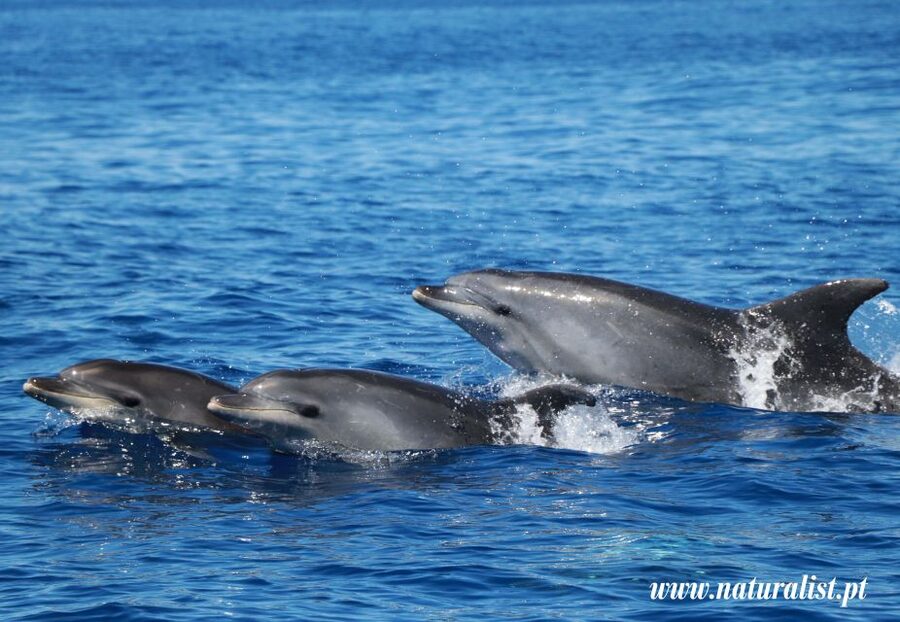
Dolphins add another layer to the trip. Bottlenose, Risso’s, and common dolphins are resident species, while other kinds pass through. One outing produced dozens of dolphins, while another included hundreds feeding alongside whales and huge numbers of birds. Those are exceptional moments, but they show how quickly the ocean can change once food gathers in one place.
I also like that the wildlife list does not stop at large mammals. Loggerhead and green turtles live in the Azores, and leatherback and Kemp’s ridley turtles can also occur. Flying fish, squid, octopus, hammerhead sharks, blue sharks, and ocean sunfish may appear. You need luck for any one of these, but the range gives you plenty to watch for between whale sightings.
More Speedboat and RIB Dolphin Trips in Portugal
- Albufeira: Benagil Caves & Dolphin Watching Speed Boat Tour
★ 4.6 · 6,316 reviews - Funchal: Whale and Dolphin Watching Speed Boat Tour
★ 4.6 · 526 reviews - Pico Island: Azores Whale & Dolphin Watching on Zodiac Boat
★ 4.8 · 408 reviews
Meeting the crew at Horta Marina
You meet at Naturalist, Science and Tourism, Whale Watching, in the marina. Arrive 15 minutes early, at 8:45 for the 9:00 departure or 1:45 for the 2:00 departure.
That early arrival matters. You need time to find the operator, receive clothing, and settle into the briefing without turning the start into a rush. Hotel pickup is not included, so plan your own way to the marina.
The group boards a semi-rigid inflatable boat, often called a RIB. The advertised capacity is 16 people. Some departures have been smaller, with around 11 or 12 passengers, which makes it easier to hear the guide and gives you a little more room to watch the water.
The boat is built for speed, not comfort. That is useful when the crew needs to reach another area, but it also means a more physical ride than you would get on a large sightseeing vessel. One passenger compared the fast Zodiac ride to an amusement park attraction, while another found the sea turbulent in April. Both descriptions can be true on the same type of boat, depending on the weather.
The first 10 minutes: safety and sea briefing
The formal safety briefing lasts about 10 minutes. You will receive an explanation of the boat, the trip, and the marine life that may occur in the region.
The crew supplies waterproof jackets and trousers. This is important, since spray can reach the front seats even when the weather is pleasant. Bring shoes that can handle water or dry quickly. The supplied clothing helps, but it does not make the boat dry, and you should expect at least some spray in lively conditions.
The briefing also sets a useful expectation: the crew gives information about which species are present before departure. That does not guarantee a sighting, but it helps you understand what the spotters and skipper are looking for that day.
From harbor to open water
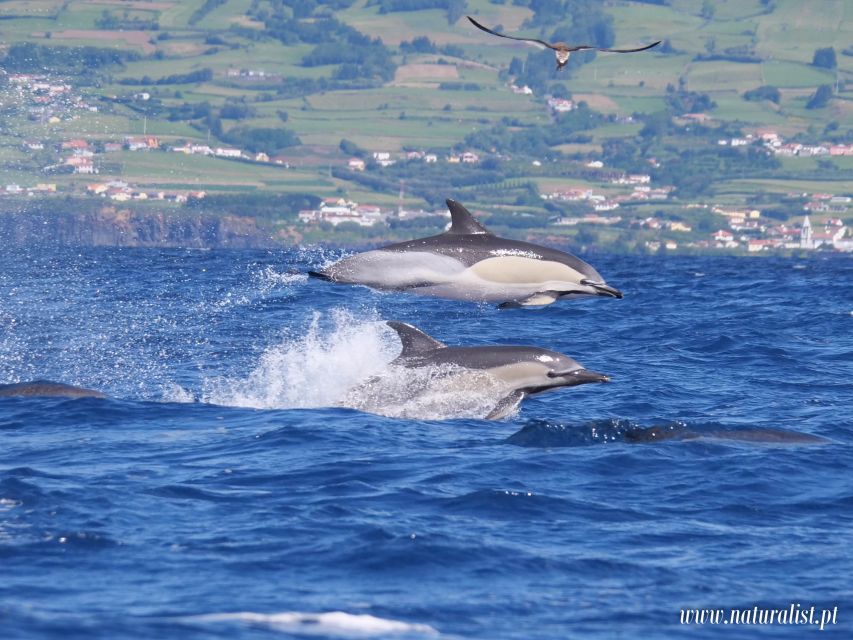
Once you leave Horta, the trip becomes a moving search. Land-based whale spotters help identify activity from shore around Faial and Pico, and the boat uses that information to head toward likely sightings.
This is one of the best parts of the operation. You are not simply sent into the ocean with a hope and a prayer. The spotters, skipper, guide, and marine researcher work together, then adjust the route when conditions change.
The boat may stop for scenic views, animal watching, and photographs. The activity description lists a 30-minute wildlife viewing and photo portion, but the full expedition lasts about three hours. Think of the stop as one part of a longer sea outing, not the entire time on the water.
You may spend stretches scanning the horizon. That is normal whale watching, not wasted time. A blow can appear far away, and the skipper may need to reposition the boat carefully. One successful trip involved moving to a different area after waiting, then approaching from a better angle to meet the whales.
More Whale and Dolphin Watching Tours in Portugal
- From Funchal: Ecological Catamaran Dolphin Whale Watching
★ 4.5 · 8,204 reviews - Funchal: Dolphin and Whale Watching Catamaran Cruise
★ 4.5 · 5,697 reviews - From Ponta Delgada: Whale and Dolphin Watching Trip
★ 4.7 · 4,109 reviews - Funchal Bay: Dolphin & Whale Watch Luxury Catamaran Cruise
★ 4.2 · 2,684 reviews
What seeing the animals is really like
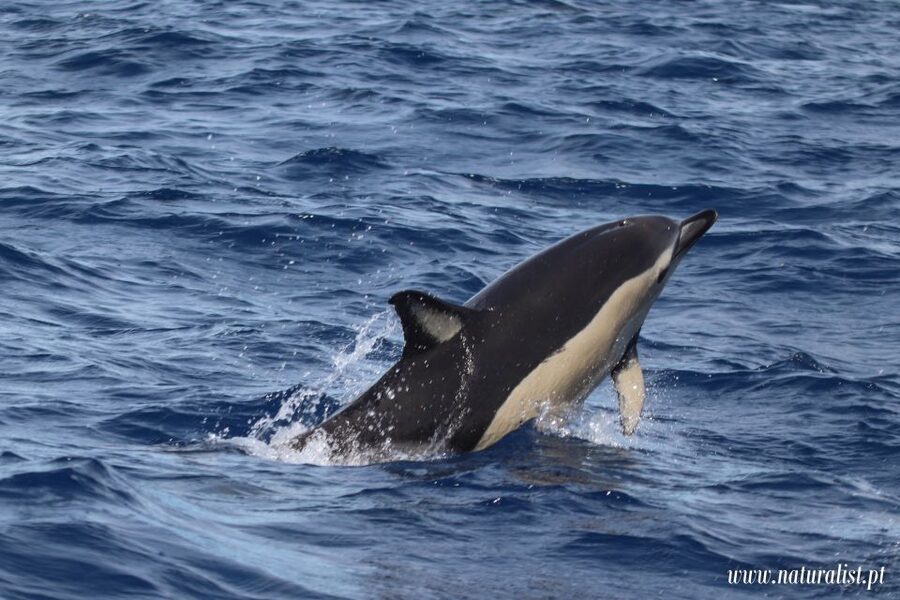
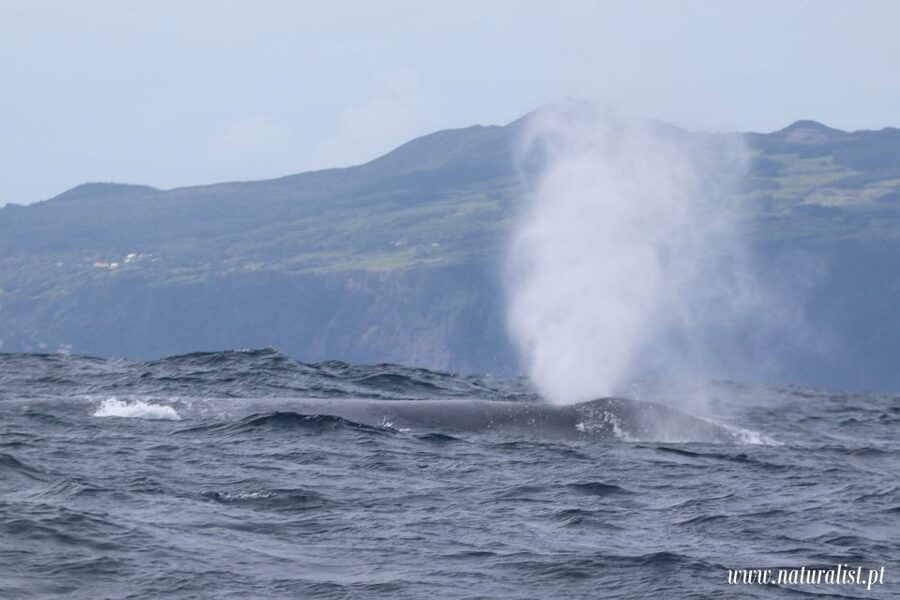
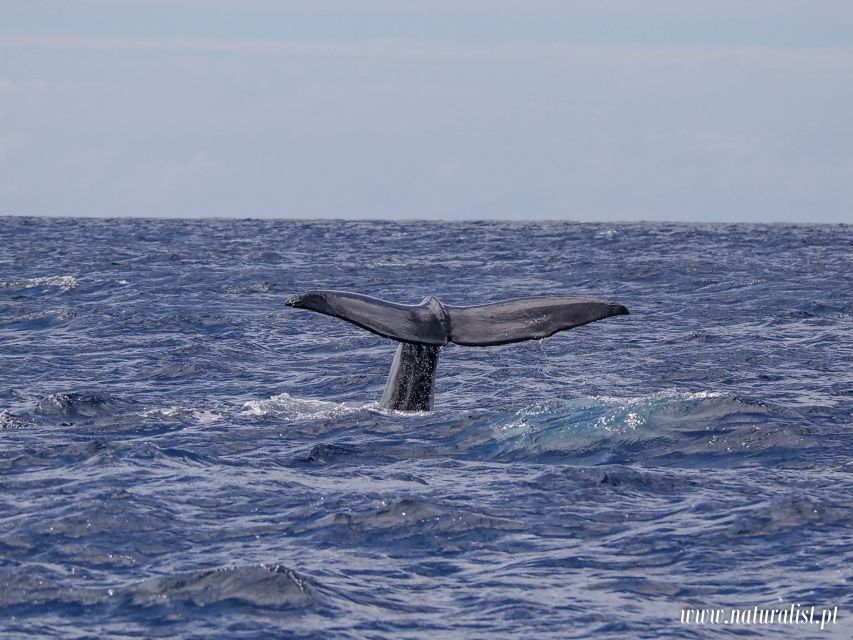
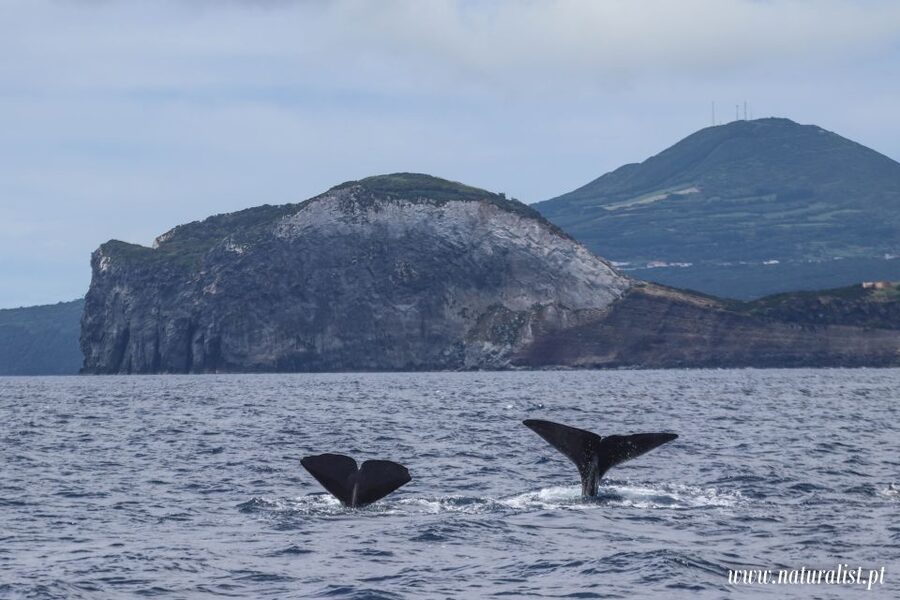
A whale sighting is often brief and quiet at first. You might see a blow, then a dark back, then a tail as the animal goes down. The marine biologist helps explain what you are seeing, including behavior and species differences.
Sperm whales may be the most reliable large whale target because they remain in the area through the year. A spring trip could produce blue or fin whales, while summer may bring sei or Bryde’s whales. Humpbacks are possible during migration, but the exact mix belongs to the day and season.
Several departures produced three different kinds of whales. One included sperm, sei, and humpback whales, along with hundreds of dolphins and thousands of birds. Another produced five sperm whales with a large dolphin group. These are outstanding sightings, but the more honest promise is the chance to see two or three cetacean species, not a guaranteed whale parade.
Dolphins can provide faster action. Common, bottlenose, and Risso’s dolphins are resident, and they may travel in large groups. They can appear close to the boat, moving through the waves or feeding. If whales are resting or traveling below the surface, dolphins may keep the ride lively.
The crew’s handling of the boat matters here. A good skipper does not simply race toward an animal. The best approach is controlled and respectful, leaving the wildlife room to choose its direction. Reports from several outings praised careful positioning and attention to the animals’ welfare.
A marine biology lesson that earns its place
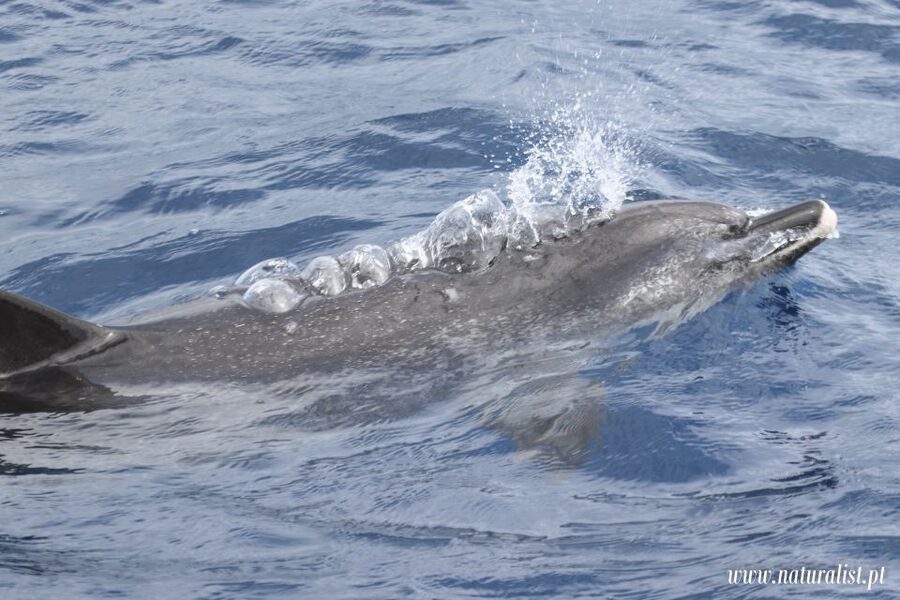
The University connection is not just a label on the booking page. A marine researcher or biologist rides on board to collect data and explain what you see.
Anna received especially strong praise for her explanations, while Cristiana provided detailed information on whales and dolphins during another trip. On one departure, two marine biologists joined the group, with one explaining the sightings and the other taking photographs.
This adds real value. You learn why a whale surfaces in a certain way, how dolphins behave around food, and what makes one species different from another. The lesson stays tied to the animal in front of you, rather than becoming a long classroom talk.
The research element also gives the trip a purpose beyond entertainment. Some of the money supports research, and the team collects information during the expedition. If you like wildlife experiences that connect tourism with conservation and fieldwork, this is a meaningful advantage.
Birds, turtles, and smaller surprises
Keep scanning after the first whale. Cory’s, great, and Manx shearwaters may cross the water, along with common and roseate terns. Birds can point toward feeding activity, especially when they gather over fish.
One outing included shearwaters, tuna, and other wildlife. Another produced thousands of birds feeding near whales and dolphins. These mixed feeding scenes are among the most memorable possibilities because they show the food chain working in real time.
Turtles are also possible. Loggerheads and green turtles live in the Azores, while leatherback and Kemp’s ridley turtles can occur in the area. Two loggerhead turtles were seen on one trip, a pleasant bonus after the dolphin encounters.
You may also spot flying fish, sunfish, sharks, squid, or octopus. Do not book expecting a checklist of every animal. Book because the ocean is varied, and every three-hour outing has the chance to become more interesting than its main title suggests.
RIB comfort, clothing, and rough-water reality
A semi-rigid boat gives you a close-to-the-water view and fast transport. It also transmits more motion than a larger boat. The ride can be turbulent, particularly when the wind rises or the sea is unsettled.
People with severe back problems should avoid this experience. It is also not suitable for pregnant women, anyone with recent surgery, or children under five. These restrictions are sensible for a boat that can bounce over waves.
Wear quick-drying footwear and clothing that works under the waterproof jacket and trousers. The crew provides the outer waterproof layers, but you control what you wear underneath. A cold ride can feel much longer than a warm one, so dress for wind and spray rather than only the temperature on land.
The company can reschedule trips when weather makes conditions unsuitable, with a full refund if the trip is canceled. That flexibility is useful in the Azores, where the sea can change plans. Keep some room in your itinerary instead of scheduling this on the final possible day.
Is $101 a fair price?
At $101 per person, this is not the cheapest way to spend three hours in Horta. It is also more than a basic boat ride with a captain pointing toward distant fins.
The price includes the marine researcher, safety insurance, waterproof clothing, and the animal briefing. You are paying for a small RIB, trained wildlife staff, land-based spotting support, and a research connection. Photos may also be provided afterward, as happened on several trips, though you should not treat that as the main reason to book.
For me, the price makes the most sense if you value interpretation and responsible wildlife watching. A low-cost outing may still find whales, but the university biologist helps you understand what you are seeing and why the crew behaves as it does.
Food and drinks are not included. Since the expedition lasts three hours, bring anything you need before or after the trip, but do not assume refreshments are part of the standard package. One cold-weather outing ended with hot tea and lemon cookies, but that should be treated as an occasional kindness rather than a guaranteed inclusion.
Who should book this experience?
You are a good match if you want close views of wildlife, do not mind a fast and bumpy boat, and enjoy learning from a marine specialist. It suits adults, older children aged five and up, photographers, birdwatchers, and anyone interested in ocean research.
It is less suitable if you need a smooth ride, dislike spray, or want a guaranteed whale sighting. The company has had excellent days with several whale species and large dolphin groups, but one outing saw no whales. That possibility is part of honest whale watching.
Choose the morning or afternoon slot based on your wider schedule and the available forecast. Since the trip depends on weather, an earlier booking in your stay gives you more room to reschedule.
Should you book the Horta RIB trip?
I would book it if the sea conditions look reasonable and you want a serious wildlife outing rather than a simple sightseeing ride. The combination of sperm whales, dolphins, seabirds, possible turtles, and university-linked research gives the trip strong value at $101.
Before paying, check the day’s species information, confirm the language you need, and leave flexibility for weather changes. Pick quick-drying shoes, arrive 15 minutes early, and do not sit in the front expecting a dry ride.
Skip it if pregnancy, back trouble, recent surgery, or motion concerns make a hard RIB ride unsafe. Otherwise, this is a well-supported choice for seeing the Azores from the water, with the added benefit of having a biologist explain the animals as they appear.
FAQ
Where does the whale and dolphin trip start?
It starts at Naturalist, Science and Tourism, Whale Watching, in Horta Marina.
How early should I arrive?
Arrive 15 minutes before departure. That means 8:45 for the 9:00 morning trip or 1:45 for the 2:00 afternoon trip.
How long does the experience last?
The expedition lasts about three hours.
What languages are available?
Tours are conducted in English or Portuguese. French may be available if requested in advance and subject to availability. The activity information also describes Spanish expeditions.
What animals might I see?
Possible sightings include sperm, blue, fin, humpback, sei, and Bryde’s whales; bottlenose, Risso’s, common, and other dolphins; loggerhead, green, leatherback, and Kemp’s ridley turtles; seabirds; tuna; sharks; sunfish; flying fish; squid; and octopus.
Are whales guaranteed?
No. The company provides information about species present before each trip, but wildlife sightings depend on nature and weather. One recorded outing saw no whales.
Is waterproof clothing included?
Yes. Waterproof clothing is included. You should still bring suitable footwear, since the RIB can get wet and shoes may be splashed.
Who should not take this trip?
The experience is not suitable for children under five, pregnant women, people with back problems, or people with recent surgeries.
Can the trip be canceled or rescheduled because of weather?
Yes. Trips depend on weather conditions and may be rescheduled. If the company cancels the trip, a full refund is available. You can also cancel up to 24 hours before departure for a full refund.
Just added around Portugal
- Terceira Island: Swimming with Wild Dolphins | Natural Habitat★ 5.0 · 17 reviews
- Terceira Island: Whale & Dolphin Watching | Best Wildlife Tour★ 4.0 · 24 reviews
- Observation of Dolphins in Setúbal★ 4.5 · 12 reviews
- Sesimbra Observation of Dolphins with Biologist in Marine Park★ 5.0 · 17 reviews
- Become a dolphin protector! Lisbon Eco-dolphin watching★ 5.0 · 6 reviews
- Guided Dolphin Watching in the Arrábida Natural Park★ 5.0 · 4 reviews
- Dolphin Watching in Sesimbra★ 5.0 · 40 reviews
- Dolphin watching in Setúbal★ 5.0 · 146 reviews
Portugal Dolphin Watching Tours, compared.

Benagil Caves & Dolphin Watching Speed Boat Tour
Read our review →
Dolphins Search and Benagil Caves from Albufeira
Read our review →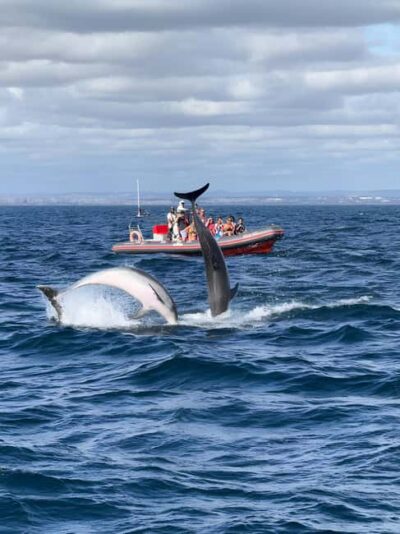
Dolphin Watching and Benagil Cave Boat Cruise
Read our review →