
Review · PORTUGAL
São Miguel, Azores: Whale and Dolphin Watching Tour
Wildlife sightings here come with a volcanic finale. This 3.5-hour outing from Vila Franca do Campo takes you into the Atlantic with marine biologists and experienced guides, giving you a real chance to see sperm whales, dolphins, and seasonal visitors such as blue whales. I especially like the choice between a lively RIB boat and a steadier catamaran, and I like that the trip ends with a close look at the protected Ilhéu de Vila Franca do Campo. The main caution is simple: the ocean makes no promises, and seasickness can turn a lovely morning into a long one.
The tour costs $69 per person, which is a fair price for three and a half hours on the water, expert interpretation, safety equipment, and a scenic pass by the volcanic islet. You should also know that sightings can require patience, and the RIB option can be brisk and bumpy. Pregnant women and people with back problems are advised not to book.
Key points to know before you book
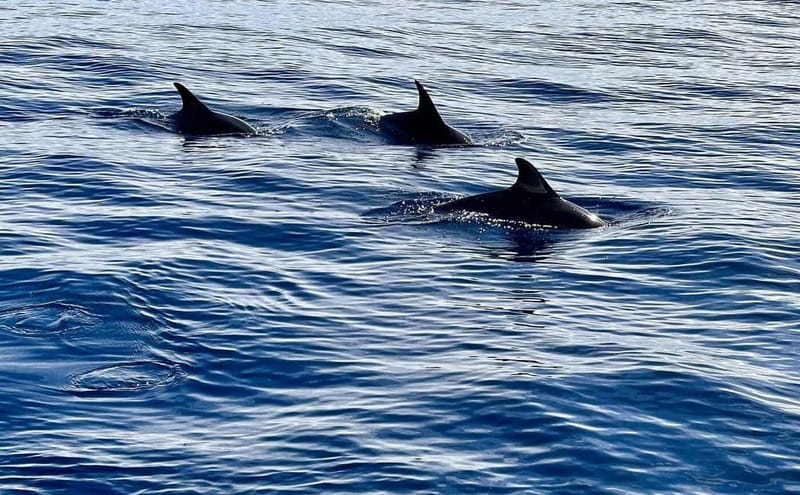
- More than 25 whale and dolphin species pass the Azores: Four resident species can be seen year-round, including sperm whales, bottlenose dolphins, Risso’s dolphins, and common dolphins.
- You choose your boat: The RIB is fast and close to the water, while the catamaran offers a more stable ride, a bathroom, and more room to sit.
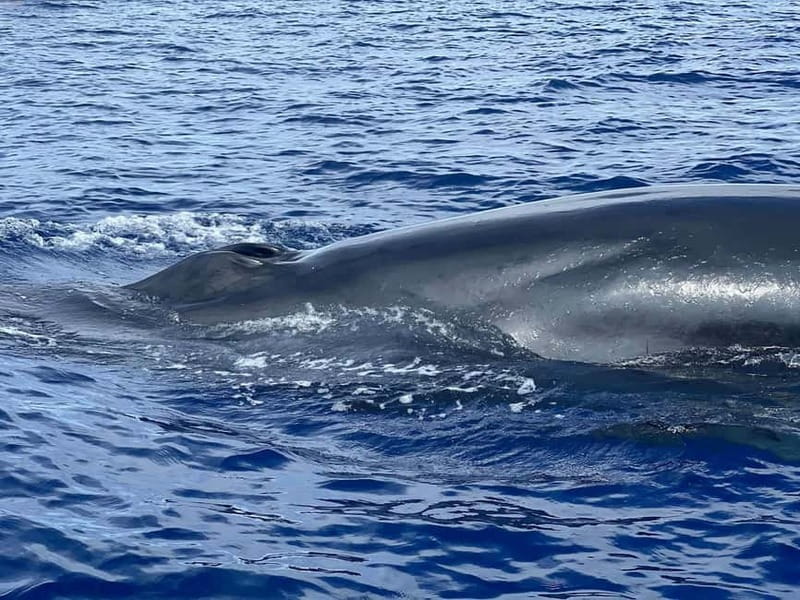
- The wildlife is never guaranteed: Seasonal visitors may include blue whales and sei whales, but sightings depend on conditions and animal movement.
- Vila Franca do Campo is part of the tour: The return route circles an ancient volcanic crater that is now a protected nature reserve.
- Edmundo and Alex received especially warm praise: Their enthusiasm, care, and effort to give everyone a good view were singled out in recent feedback.
- Bring protection from the sun and sea: Sunglasses, a hat, sunscreen, water, spare clothes, and motion sickness prevention all make sense.
Why São Miguel is a strong whale-watching base
The Azores sit in the Atlantic on routes used by many whales and dolphins throughout the year. More than 25 species pass through these waters, giving you a better range of possible sightings than a trip focused on one resident animal.
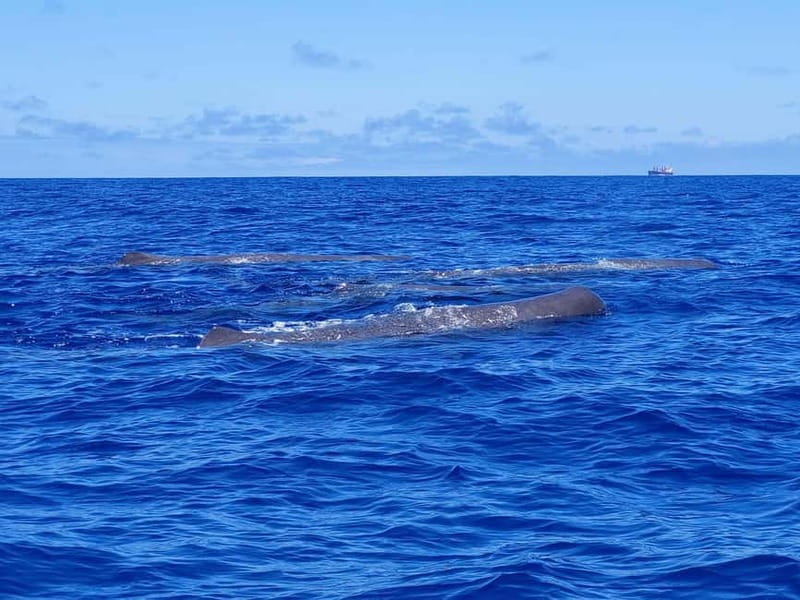
Four species are present year-round: sperm whales, bottlenose dolphins, Risso’s dolphins, and common dolphins. Sperm whales are the signature sighting here. They are large, powerful animals, and even a brief appearance can make the boat go quiet.
Seasonal visitors add another layer of luck. Depending on the time of year, you might see blue whales, sei whales, or other dolphins. The blue whale is the largest animal on the planet, so even a distant sighting would be a major moment. Still, keep your expectations sensible. A wildlife trip is not a marine show. You may see several animals quickly, or you may spend a long stretch scanning open water.
That uncertainty is part of the value. The guides are not simply pointing out creatures for a quick photograph. They explain the animals and the wider Azorean ecosystem, helping you understand why the species are here and how they use the sea.
More Whale and Dolphin Watching Tours in Portugal
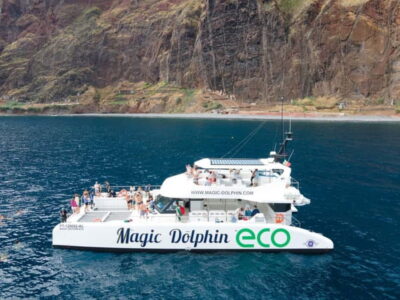
- From Funchal: Ecological Catamaran Dolphin Whale Watching
★ 4.5 · 8,204 reviews - Funchal: Dolphin and Whale Watching Catamaran Cruise
★ 4.5 · 5,697 reviews - From Ponta Delgada: Whale and Dolphin Watching Trip
★ 4.7 · 4,109 reviews
Meeting at the OceanEye kiosk in the marina
Plan to arrive 15 minutes before departure for a short briefing. The meeting point is the company kiosk in the marina, opposite the bar. Look for the branded OceanEye Azores, Kayak Azores, or Azoreaneye store, and confirm your booking with staff there.
This detail matters because the operator specifically warns you to ignore anyone who approaches while pretending to represent the company. Stay with the branded kiosk and let the staff check you in.
There is a free changing room at the facilities, which is useful if you arrive in ordinary sightseeing clothes and want to prepare for the boat. Bring a change of clothes anyway. Atlantic spray has a way of finding you, especially on the RIB.
The tour runs in Portuguese and English. Food and drinks are not included, so eat beforehand and carry water. A small breakfast is sensible, particularly if you are prone to motion sickness.
Picking between the RIB and catamaran
Your boat choice changes the character of the trip.
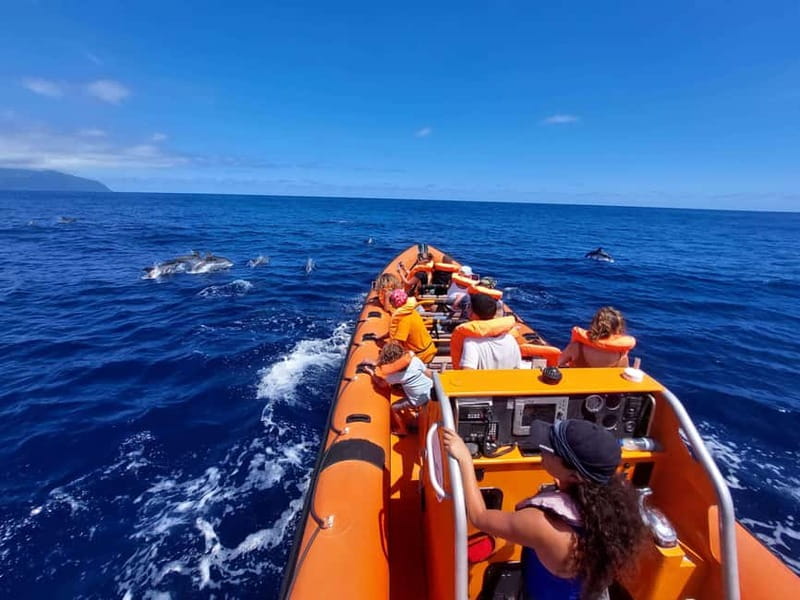
The RIB or speed boat puts you close to the water. It is the more exciting option, with a faster ride and a stronger sense of being out in the open sea. You may feel more connected to the animals and the waves, but the ride is also less forgiving if the ocean is rough. People with back problems should not choose this outing, and anyone prone to seasickness should think carefully before booking.
The catamaran is the calmer choice. It offers a more stable ride, room to enjoy the views, and a bathroom onboard. That makes it a better fit if comfort matters more than speed, or if you are traveling with someone who would prefer to sit and watch rather than brace against every movement.
Check the booking screen closely. If only the RIB or speed boat appears, the catamaran is not available for that departure. You cannot assume you will choose your preferred boat after arriving.
Both boats include life vests, and the tour has a sightseeing warranty policy. The supplied information does not explain the exact terms of that policy, so ask the operator for details before departure if a guaranteed second outing matters to you.
Heading into the Atlantic in search of whales
Once the briefing is complete, the boat leaves the marina and heads out into open water. The first part of the trip is about watching, listening, and learning how to spot movement on the surface.
Your guide and captain will help you read the sea. A blow, a fin, a dark back, or a group of birds can all draw attention to an area where animals may be nearby. On a good day, the first sighting can come quickly. One recent trip reported two whales fairly soon after departure, followed later by a large group of dolphins.
Other departures may require more searching. That is not a flaw in the tour. Whales and dolphins are wild, moving animals, and the crew cannot place them on a schedule. The most useful attitude is to treat the ride itself as part of the outing rather than a transfer to a guaranteed photo stop.
Recent feedback gives you a sense of the possible range. One September trip saw several sei whales early on, followed by many spotted dolphins. Another group saw whales and a large pod of dolphins after a longer search. Some trips lasted close to four hours instead of the listed 3.5 hours, apparently because the crew kept working to give people a worthwhile outing. The official duration remains 3.5 hours, so do not plan a tight connection immediately afterward.
Same stretch of coast, a different way out:
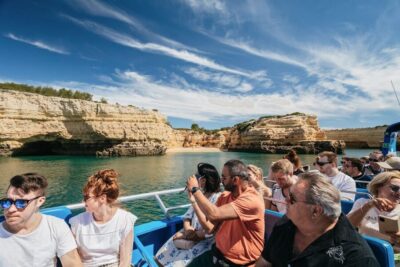
- Albufeira: 2.5-Hour Benagil Caves & Dolphin Watching
★ 4.6 · 10,710 reviews - Albufeira: Benagil Caves & Dolphin Watching Speed Boat Tour
★ 4.6 · 6,316 reviews - Albufeira: Dolphin Watching and Benagil Cave
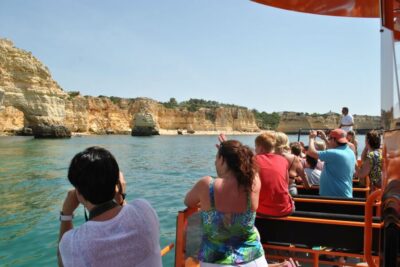
★ 4.7 · 5,658 reviews - Dolphins Search and Benagil Caves from Albufeira
★ 5.0 · 4,814 reviews
What the dolphin encounters can be like
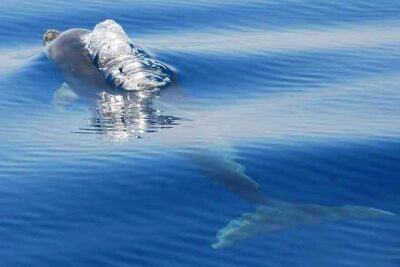
Dolphins often provide the most active sightings. They may move beside the boat, play in the waves, and appear close enough for clear views. Common dolphins, bottlenose dolphins, and Risso’s dolphins are among the year-round possibilities.
Several recent outings included large groups of dolphins. In especially fortunate conditions, dolphins swam close to the boat and stayed nearby for a while. That kind of encounter is much more engaging than spotting one distant fin and immediately moving on.
Some feedback also describes passengers swimming with dolphins after receiving instructions from the captain. Treat this as an exceptional possibility, not a promised part of the tour. It is not guaranteed, and the supplied rules clearly say not to touch marine life. If a swim is permitted during your outing, follow the crew’s instructions exactly and keep your distance from the animals.
That distinction matters. A good wildlife trip lets you watch animals behaving naturally rather than chasing, feeding, or handling them. The stated rules also prohibit touching plants, so the emphasis is on observation, not physical contact.
Learning from the guide and crew
The presence of marine biologists and expert guides adds real value. You are not left to guess whether the fin in the distance belongs to a dolphin or a whale. The crew explains what you are seeing and places it in the context of the Azorean marine environment.
The strongest personal praise has gone to captain Edmundo and guide Alex. Their energy and care helped make the trip feel personal, with attention given to ensuring everyone had a good view. One group said each person was allowed time at the front of the boat, and another noted that the crew remained committed even after several hours at sea.
Those details matter because boat position can shape your experience. On a crowded vessel, one person may get a clear look while someone else sees only backs and heads. The feedback suggests this operator works to share the viewing spots, though the supplied information does not give a fixed maximum group size.
One unusually friendly detail also appeared on recent trips: passengers were allowed to steer the boat briefly, and one outing ended with a small serving of dessert wine. Do not book expecting either extra. They are occasional touches, not listed inclusions.
Circling Ilhéu de Vila Franca do Campo
The wildlife search is only part of the outing. On the return route, the boat circles Ilhéu de Vila Franca do Campo, an ancient volcanic crater rising from the sea just off São Miguel.
The islet is now a protected nature reserve. Its bowl-shaped volcanic form and unusual rock formations make it one of the most recognizable sights in this part of the Azores. From the boat, you get a different view than you would from land, with the crater walls forming a natural frame around the water inside.
This final pass is a smart addition to the tour. If the whales remain shy, you still finish with a striking geological sight. If the animal sightings have been excellent, the islet gives you time to settle down, take photographs, and enjoy the scenery without scanning constantly for a fin.
The boat does not present this as a separate land visit. You circle the islet from the water, so do not expect time to walk ashore or swim there. The value is the view and the chance to see an important protected site from a boat.
What the $69 price gets you
At $69 per person, this is a reasonable half-day expense in the Azores. You receive a 3.5-hour marine wildlife trip, a guide, life vest, access to a free changing room, and the Vila Franca do Campo route. The catamaran also has a bathroom, which is a useful comfort on a longer outing.
The price is strongest if you value interpretation and time on the water. A short boat ride built around a single viewpoint would be less compelling. Here, you are paying for the search, the natural setting, the crew’s knowledge, and the possibility of multiple species.
Still, value depends on your expectations. You are not paying for a guaranteed whale encounter, a meal, or a private boat. Food and drinks cost extra, and the ocean may produce fewer sightings than you hoped. A trip with excellent wildlife can feel like a bargain. A quiet day will test your patience, even though the crew may work hard to find animals.
Free cancellation up to 24 hours before departure and a reserve-now, pay-later option make the booking easier to fit into a changing itinerary. Bad weather can cancel the trip. In that case, the operator says it will reschedule you or provide a refund.
Who should book this trip
I would recommend this outing to nature lovers, photographers, families with older children, and anyone who wants a strong São Miguel experience beyond hot springs and viewpoints. It suits people who are happy to spend time watching the sea and waiting for something unscripted to happen.
Choose the catamaran if you want a smoother ride, need a bathroom, or prefer a more relaxed way to view the coast and ocean. Choose the RIB if speed, spray, and a close-to-the-water feel sound like fun.
I would be cautious if you are pregnant, have back problems, or regularly become seasick. The operator lists these groups as unsuitable, and the open Atlantic can be demanding even on a pleasant day. Take motion sickness prevention before departure if that is normally an issue for you, and ask a medical professional about what is appropriate for you.
Wear comfortable clothes and bring a hat, sunglasses, sunscreen, water, and spare clothing. Smoking is not allowed. Keep your hands to yourself around animals and plants, even if a close encounter makes that difficult.
Should you book the São Miguel whale tour?
Book it if you want a real wildlife search with a scenic volcanic finish, and if you can accept that nature controls the schedule. The combination of resident whales and dolphins, seasonal possibilities, two boat styles, and Ilhéu de Vila Franca do Campo gives the trip more substance than a simple sightseeing cruise.
I would lean toward the catamaran for comfort and the RIB for excitement. I would also leave a little space in your schedule afterward, since some outings run longer when the crew is still finding animals.
The best reason to book is the chance to see São Miguel from the sea while learning about the animals that live around the islands. The best reason to hesitate is seasickness, not the price. If you can handle the Atlantic and arrive with realistic expectations, $69 is a fair cost for one of the island’s most memorable nature outings.
FAQ
How long is the whale and dolphin tour?
The listed duration is 3.5 hours. Some outings may last longer, so avoid scheduling an immediate activity afterward.
How much does the tour cost?
The price is $69 per person.
Where do I meet the tour?
Meet at the OceanEye Azores kiosk in the marina, opposite the bar. Look for the branded OceanEye Azores, Kayak Azores, or Azoreaneye store.
How early should I arrive?
Arrive 15 minutes before the scheduled starting time for a short briefing.
Which languages are available?
The live guide is available in Portuguese and English.
What animals might I see?
Possible sightings include sperm whales, bottlenose dolphins, Risso’s dolphins, common dolphins, and seasonal species such as blue whales and sei whales.
Can I choose the type of boat?
Yes. You can choose between a catamaran and a RIB or speed boat when booking. If only the RIB option appears, the catamaran is not available for that departure.
Does the catamaran have a bathroom?
Yes. A bathroom is available on the catamaran.
Is swimming with dolphins guaranteed?
No. Dolphin swimming is not guaranteed. If the crew permits any water entry, follow all instructions and do not touch marine life.
What happens if bad weather cancels the trip?
The operator says it will reschedule the tour or provide a refund if weather prevents the trip from operating.
Just added around Portugal
- Terceira Island: Swimming with Wild Dolphins | Natural Habitat★ 5.0 · 17 reviews
- Terceira Island: Whale & Dolphin Watching | Best Wildlife Tour★ 4.0 · 24 reviews
- Observation of Dolphins in Setúbal★ 4.5 · 12 reviews
- Sesimbra Observation of Dolphins with Biologist in Marine Park★ 5.0 · 17 reviews
- Become a dolphin protector! Lisbon Eco-dolphin watching★ 5.0 · 6 reviews
- Guided Dolphin Watching in the Arrábida Natural Park★ 5.0 · 4 reviews
- Dolphin Watching in Sesimbra★ 5.0 · 40 reviews
- Dolphin watching in Setúbal★ 5.0 · 146 reviews
Portugal Dolphin Watching Tours, compared.

Benagil Caves & Dolphin Watching Speed Boat Tour
Read our review →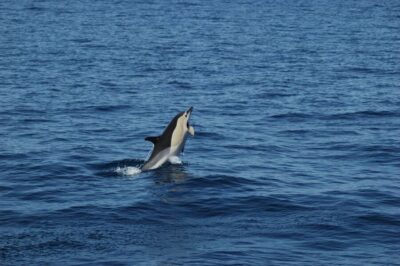
Dolphins Search and Benagil Caves from Albufeira
Read our review →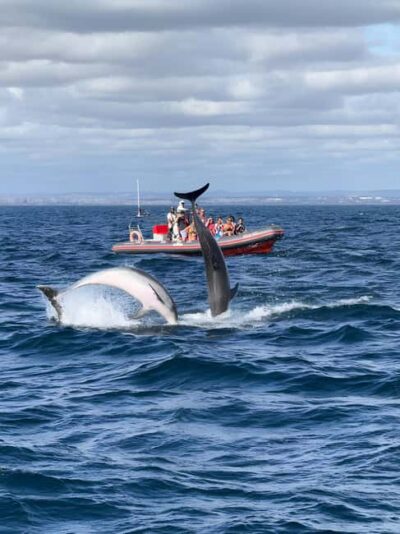
Dolphin Watching and Benagil Cave Boat Cruise
Read our review →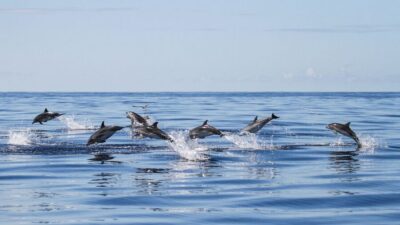
Browse the lists this tour appears in