Review · PUERTO VALLARTA
Whale and Dolphin Watching with a Biologist in Puerto Vallarta
Whales do not follow a timetable. That is part of the fun of this four-hour Puerto Vallarta wildlife trip, where a marine biologist helps you read the water, spot humpback whales, and understand their behavior. I like the small boat setup and the chance to support real whale and dolphin research. The main tradeoff is simple: wildlife is unpredictable, and there is no bathroom aboard.
The tour costs $105 per person, which is not the cheapest boat outing in Puerto Vallarta. Still, the price makes more sense when you factor in the specialist guide, small-group format, hydrophone recordings of whale songs, and citizen-science work. Guides such as Jemma, Gemma, Gema, and Camilla have earned especially warm praise for their enthusiasm and skill, though the exact guide depends on the departure.
Key points at a glance
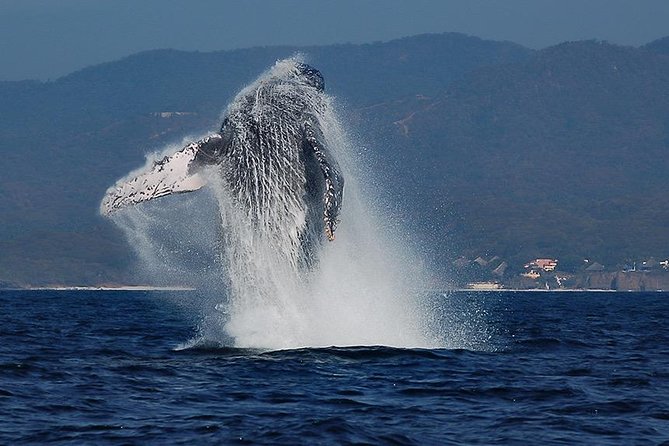
- Humpback whales arrive for winter: Puerto Vallarta’s seasonal visitors include mothers with calves, adult males, and whales competing for a mate.
- A biologist leads the trip: Guides trained in marine ecology explain whale communication, parenting, migration, and behavior as you watch.
- The hydrophone adds another layer: You may hear whale songs underwater, not just see blows and tails at the surface.
- The boat is small and covered: A maximum of 20 people allows better sightlines than a large sightseeing vessel, with shelter from sun and spray.
- The wildlife list goes beyond whales: Dolphins, turtles, giant manta rays, sea lions, and blue-footed boobies have all been seen on outings.
- Your ticket supports research: You can take part in a citizen-science project focused on whales and dolphins.
Meeting your biologist at Marina Vallarta
The tour begins at Opequimar Centro Marino, at Av. Paseo de la Marina Sur 214 in Marina Vallarta. You return to the same place after roughly four hours on the water.
The meeting point is useful if you are staying near the marina, and the site is close to public transportation. Confirmation arrives within 48 hours of booking, subject to availability, so I would not leave this reservation until the last minute. The experience is often booked well ahead, with an average booking lead time of 26 days.
Before boarding, you may receive an educational introduction to the animals and the research project. This is one of the tour’s best features. Instead of simply pointing at a whale and naming it, the guide can explain what you are looking at and why the animal may be surfacing, tail-slapping, breaching, or traveling with another whale.
Past introductions have included whale baleen and a vertebra for scale. Those objects help you understand the size of a humpback before you see one in the water. A short presentation also gives the trip more purpose: you are not just collecting photographs, you are helping gather observations that can support marine research.
More Whale and Dolphin Watching Tours in Mexico
- Dolphin & Whale Watching in Puerto Escondido
★ 5.0 · 278 reviews - Whale & Dolphin Watching Cruise in Puerto Vallarta All Inclusive
★ 4.0 · 212 reviews - Ocean Safari: Sea Lions, Mobula Rays, Dolphins, Orcas & Whales
★ 5.0 · 85 reviews
A small covered boat makes a real difference
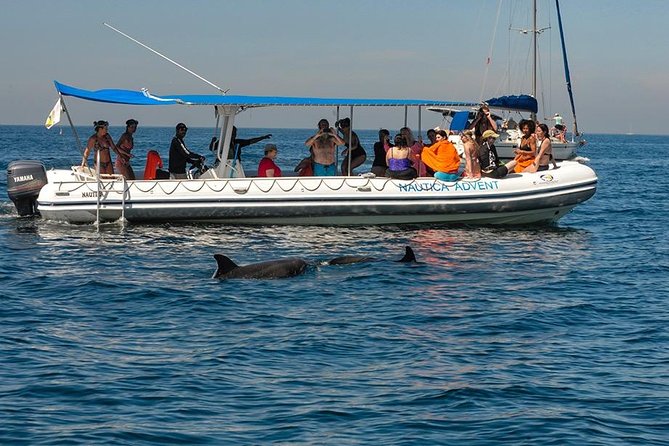
The boat is described as small, covered, and suitable for this type of wildlife outing. The maximum capacity is 20 people, while some departures have had around 12 or 16 passengers. That matters because you can usually look over either side without fighting for a view from a large crowd.
The vessel is also small enough for the captain to position it carefully near the animals. Several outings have been praised for smooth handling and safe maneuvering, especially by captains named Jorge and Cesar. The crew fits life jackets before departure, and the guide and captain work as a team rather than treating the trip as a simple transport ride.
A covered boat gives you some protection from the strong sun. It does not turn the outing into a dry, quiet cruise, however. You are on an active wildlife boat, and conditions can change. Bring sun protection and clothing that can handle spray. Since there is no bathroom aboard, use facilities before departure and plan accordingly.
The small format is a strength, but it can also mean a livelier ride than a large vessel. If you are prone to motion sickness, prepare carefully. The supplied information does not specify medication advice, so speak with a medical professional if you need guidance.
Finding winter humpback whales
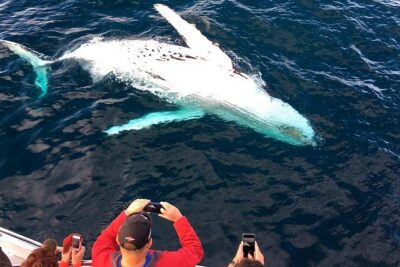
The main attraction is the humpback whale population that visits Puerto Vallarta during the winter months to mate and give birth. You might see a single whale traveling alone, a mother with a calf, or several males competing for access to a female.
The sightings can begin quickly. Some outings have reached whales within 15 to 20 minutes of leaving the marina. Other trips have started slowly, with about an hour passing before the first sighting. That contrast is worth keeping in mind. Wildlife watching is not a stage show, and a quiet start does not mean the trip has failed.
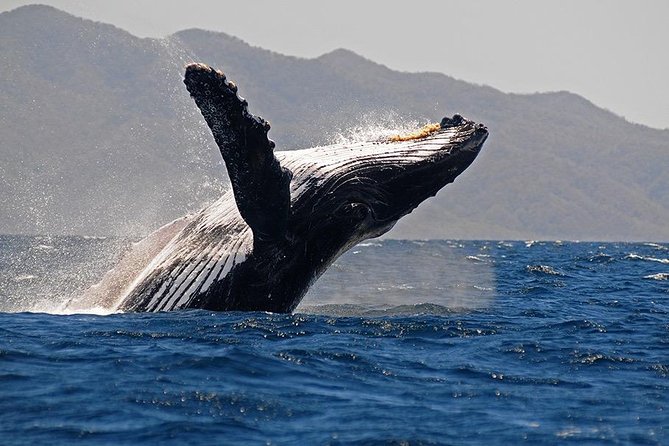
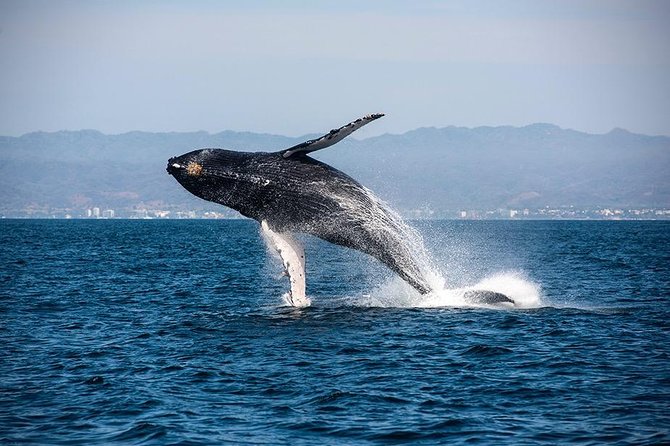
Once whales are found, the pace can change fast. You may watch a blow, wait for the next surfacing, and then suddenly see a tail, pectoral fin, or full breach. The most memorable encounters described on this tour include mothers and calves traveling together, baby whales playing near their mothers, and adult whales breaching close to the boat.
A guide can help you understand the behavior rather than simply react to it. A mother repeatedly tail-slapping near her calf, for example, may be communicating. A male whale surfacing near a female may be part of a mating group. Those details turn scattered wildlife sightings into a clearer story.
The crew also works for the classic photograph: a whale’s fluke rising from the water, a breach near the bow, or a calf surfacing beside its mother. Even the best captain cannot control where an animal appears. Still, experienced guides and captains improve your odds by recognizing patterns and reading the water.
Hearing whale songs with a hydrophone
The hydrophone is one of the features I value most. It lets you hear sounds beneath the surface, including the songs of male humpback whales. That changes the experience from a visual search into a fuller sense of the animals’ world.
You may hear one whale nearby and other calls echoing farther away. The guide can explain how communication fits into whale behavior and migration. It is also a useful reminder that much of the action happens below the surface, out of sight.
The hydrophone cannot guarantee a dramatic musical moment. Sound conditions and whale behavior vary. But when the guide lowers it and the boat grows quiet, the experience gains an unusual sense of focus. This is exactly the kind of detail that separates a research-minded trip from a quick ride past a whale.
More Dolphin Watching with a Marine Biologist in Mexico:
- Portimão: Benagil Caves & Dolphins Watching with Biologist
★ 4.8 · 3,795 reviews - Lagos: Combo Dolphin and Benagil Tour with Marine Biologist
★ 4.7 · 2,352 reviews - Lisbon: Dolphin Watching with Marine Biologist
★ 4.9 · 1,853 reviews - Lagos: Dolphin Watch Tour with Professional Marine Biologist
★ 4.9 · 1,500 reviews
Dolphins, turtles, mantas, and other marine life
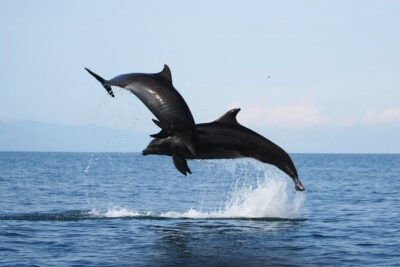
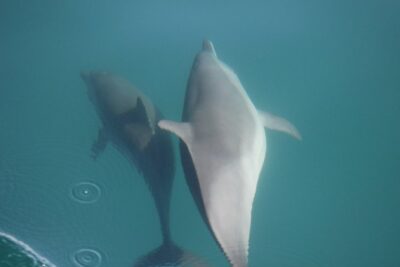
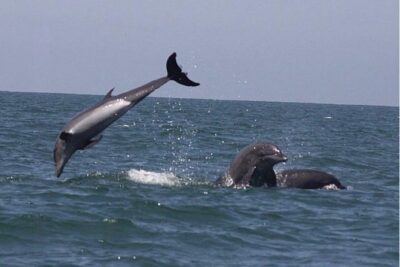
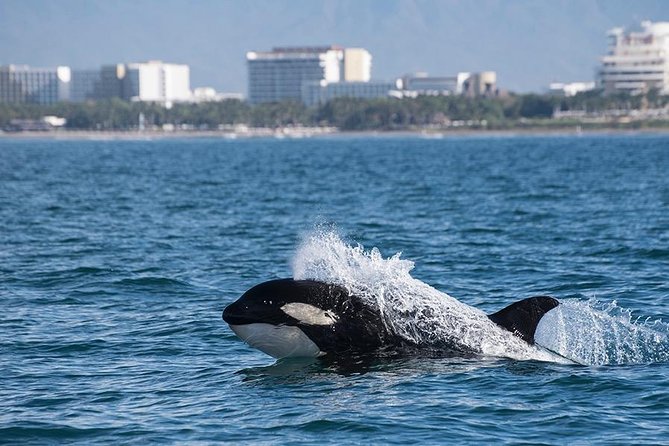
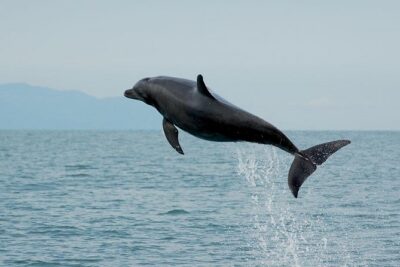
The winter outing combines whale watching with dolphin watching. Possible dolphin species include bottlenose, spotted, spinner, and rough-toothed dolphins. Orcas and false orcas are mentioned as occasional possibilities, so treat those as a lucky bonus rather than an expectation.
Dolphin sightings can provide a different kind of action. They may travel in groups, move near the boat, or appear around whale activity. The guide can also discuss their territorial behavior and help you tell one species from another.
You might also see marine turtles and giant manta rays. Additional sightings have included a sea lion and blue-footed boobies. These animals are not promised, and the time spent looking for them depends on what is happening in the bay that day.
That variety is another reason I like the trip. Even if the whales are slow to appear, you have several possible subjects to watch. Still, book this for humpback whales first. Dolphins, turtles, mantas, and seabirds are welcome additions, not a substitute for a guaranteed wildlife checklist.
Citizen science gives the outing a purpose
Wildlife tours can sometimes feel like passive sightseeing. This one adds a research element. The guides work on whale and dolphin programs, and your participation helps make that work possible.
The exact research tasks are not fully specified, so I would not expect a formal laboratory session. Instead, the value comes from being with specialists who can share field information and invite you to take part in observations. The experience connects your holiday spending with conservation work in a practical way.
The guides’ backgrounds add weight to the educational side. The team includes biologists with master’s degrees in marine ecology, a science journalist, and a professional wildlife photographer whose work has appeared with National Geographic and Animal Planet. Names and crew combinations vary, but the strongest praise has centered on guides such as Jemma, Gemma, Gema, and Camilla.
Camilla in particular has been described as warm, energetic, and generous with explanations. Jemma has been praised for discussing whale communication, parenting, and local behavior. The captain matters just as much. A guide can explain the animals, but a skilled captain must place the boat at a respectful distance while giving you a clear view.
The company states that it can find the animals and offers your money back if it does not. Even with that policy, remember that no human can command a whale to breach beside a boat. The quality of the trip comes from good searching, responsible positioning, and useful interpretation, not from a promised performance.
What four hours feels like on the water
Four hours is a sensible length for this activity. It gives the crew time to travel away from the marina, search several areas, watch active animals, and return without turning the day into an exhausting full-day expedition.
A typical rhythm might look like this:
- Safety briefing, life jackets, and departure from Marina Vallarta
- Search for humpback whales and discussion of their behavior
- Time near whale groups, mothers, calves, or individual adults
- Hydrophone listening when conditions allow
- Search for dolphins and other marine life
- Return to the marina after roughly three and a half to four hours
That outline is flexible. You might find whales almost immediately, or you might spend the first hour searching. One afternoon trip produced a long series of breaches, while another began quietly before finding mothers, calves, and adult males. Do not judge the outing by the first 30 minutes.
Food has also been a pleasant part of some departures. Sandwiches and soft drinks have been provided, and one guide even prepared a birthday treat. I would treat refreshments as a welcome possibility rather than a fixed menu, since the supplied details do not promise a specific meal.
Bring cash if you want to tip the crew. That suggestion comes directly from the practical experience of past passengers, and it is especially reasonable when the guide and captain spend hours working hard to find animals and explain what you see.
Is $105 a fair price?
At $105 per person, this tour costs more than a basic boat ride. I think the price is fair for the right kind of visitor.
You are paying for a four-hour outing, a small group capped at 20 people, a covered boat, specialist interpretation, and participation in whale and dolphin research. You also get a better chance of seeing the action clearly than you might on a large vessel.
The value is strongest if you care about marine life and want to understand behavior. It is less compelling if your only goal is a cheap cruise or a guaranteed photograph. A wildlife trip can deliver 20 whales and several breaches one day, then require patience the next.
The price also covers something less visible: the crew’s experience. Guides who understand cetacean behavior can tell the difference between a whale that is traveling, feeding, resting, or interacting with another animal. That context makes each sighting more meaningful.
Who should book this Puerto Vallarta tour?
I would recommend it to couples, families with older children and teenagers, photographers, and anyone who prefers a small, educational outing. The family accounts are especially encouraging: teenagers enjoyed the trip, and the crew paid attention to comfort and safety.
It also suits first-time whale watchers. You do not need prior knowledge of marine biology because the guide explains the basics before and during the trip. The experience works well for people who want both excitement and interpretation.
You should think twice if you dislike small boats, need regular bathroom access, or want a tightly scheduled activity with guaranteed sightings at a particular minute. Pregnant people beyond seven months are advised not to participate. Service animals are allowed, and most people can take part, but contact the operator if you have a specific mobility or medical concern.
Free cancellation is available up to 24 hours before the start time. Cancellations within 24 hours are not refunded, and changes during that period are not accepted. Poor weather or failure to meet the minimum number of participants can lead to a new date, another experience, or a full refund.
Should you book it?
Book this tour if you want more than a quick look at a whale. The combination of a marine biologist, a small covered boat, hydrophone listening, and citizen science gives the trip real substance.
I would choose it during the winter whale season, reserve well ahead, and keep the rest of the day flexible. Expect wildlife to set the schedule. If you can accept that uncertainty, this is a strong choice for seeing humpbacks in their natural setting while learning why their behavior matters.
FAQ
Where does the whale-watching tour meet?
The tour meets at Opequimar Centro Marino, Av. Paseo de la Marina Sur 214, Marina Vallarta, Puerto Vallarta, Jalisco, Mexico.
Where does the tour end?
The activity ends back at the same meeting point in Marina Vallarta.
How long does the tour last?
The tour lasts approximately four hours.
How much does the tour cost?
The listed price is $105 per person.
How many people can join the tour?
The maximum group size is 20 people. Some departures have had smaller groups of about 12 or 16 passengers.
What animals might I see?
You may see humpback whales, bottlenose dolphins, spotted dolphins, spinner dolphins, rough-toothed dolphins, marine turtles, and giant manta rays. Orcas, false orcas, sea lions, and blue-footed boobies are possible additional sightings.
Is there a bathroom on the boat?
No. You should use the facilities before boarding.
What happens if the weather is poor or the tour does not operate?
If poor weather causes cancellation, you can receive a different date or a full refund. If the minimum number of participants is not met, you can receive a different date or experience, or a full refund.
Just added around Mexico
- Must-DO The only and Unique Natural Space Dolphin Encounter Cabo★ 4.5 · 3 reviews
- Swim and Paddle Board with Wild Dolphin Pods in Puerto Vallarta★ 5.0 · 12 reviews
- Wild Dolphin Encounter in Puerto Vallarta★ 5.0 · 20 reviews
- Whale & Dolphin Watching★ 4.5 · 8 reviews
- Private Wild Dolphin Encounter in Puerto Vallarta★ 5.0 · 13 reviews
- Dolphin and Whale Watching Boat Trip in Puerto Escondido★ 5.0 · 11 reviews
- Dolphin & Whale Watching★ 5.0 · 45 reviews
- Beaches Dolphins And Viewpoints Discovering The Hidden Port By Sea And Land★ 4.0 · 5 reviews
Puerto Vallarta Dolphin Watching Tours, compared.
Whale & Dolphin Watching Cruise in Puerto Vallarta All Inclusive
Read our review →